The greatest advantage of exploring Scotland by campervan is flexibility. On my first campervan road trip through the Scottish Highlands, I travelled with my dog, Fudge, and photographed locations including Loch Lomond, Glencoe, Glenfinnan, Arisaig, Mallaig, the Isle of Skye, Eilean Donan Castle and Oban.
Travelling this way allowed me to respond to Scotland’s unpredictable weather rather than fight it. If the light improved, I could stay longer. If cloud covered a mountain, I could photograph something closer or continue along the route.
This guide covers the places I visited, what made each location worth photographing and the practical lessons I took from travelling through western Scotland in a campervan.
Originally published November 2025. Last updated July 2026.
About this Scotland photography guide
I have worked as a professional photographer for more than 16 years, including nine years with TUI, where I became the company’s Global Photography Manager and sole in-house photographer.
My travel work has included destinations, hotels, excursions, visitor experiences and commercial campaigns around the world. You can read more about how I became a professional travel photographer or view my travel and tourism photography portfolio.
This was a personal road trip rather than a commissioned assignment, but I approached it in much the same way: looking for establishing photographs, distinctive details, changing conditions and images that communicated how each place felt.
My Scotland campervan route at a glance
The main photography stops covered in this guide are:
- Moffat
- Luss and Loch Lomond
- Glencoe
- Fort William and Glenfinnan
- Arisaig and Mallaig
- The Isle of Skye
- Eilean Donan Castle
- Oban
This is a summary of my main photography locations rather than turn-by-turn driving instructions. Scotland’s weather, road conditions and available overnight stops can change, so it is worth keeping the route flexible.
Why is a campervan useful for a Scotland photography road trip?
A campervan gives a photographer more control over timing.
The best landscape light rarely appears according to a convenient sightseeing schedule. It might arrive after a rain shower, during a brief gap in the clouds or just as most visitors are leaving. Having everything with me made it easier to wait, change plans and make the most of those short windows.
There are compromises. Campervans take longer to manoeuvre, some Highland roads are narrow, and overnight parking needs to be planned responsibly. However, the freedom to adapt the journey to the light was one of the most valuable parts of the trip.
Moffat: a quieter beginning
Moffat was a gentle introduction before the larger Highland landscapes.
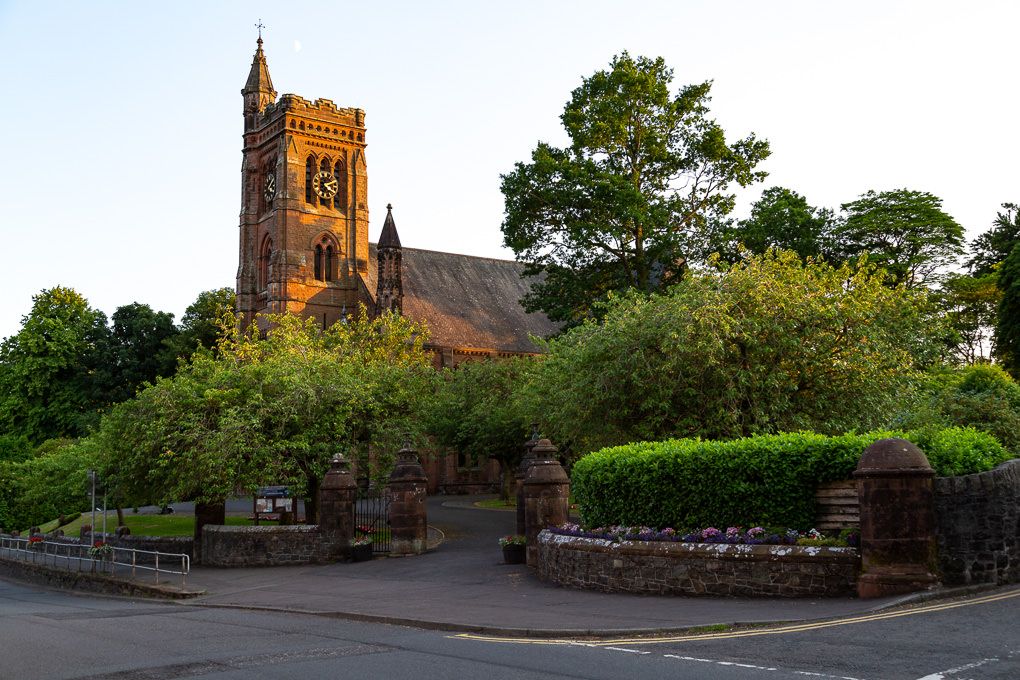
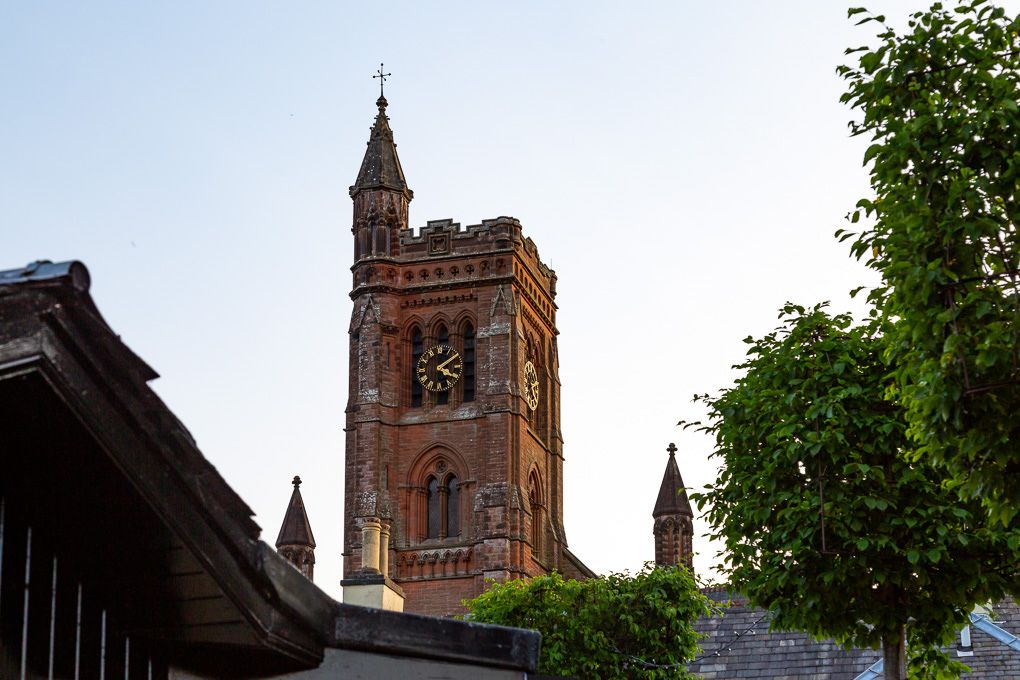
Rather than chasing a dramatic viewpoint, I concentrated on the character of the town: historic stonework, the church, the high street and the hills surrounding it. These quieter locations are useful at the start of a travel story because they provide context before the scenery becomes more dramatic.
The evening light helped bring warmth into the stone buildings. I looked for simple compositions and allowed the architecture to carry the photographs instead of trying to force every image into a sweeping landscape.
Photography lesson: Not every stop needs to produce a hero photograph. Smaller details and transitional locations help a collection tell a more complete story.
Luss and Loch Lomond
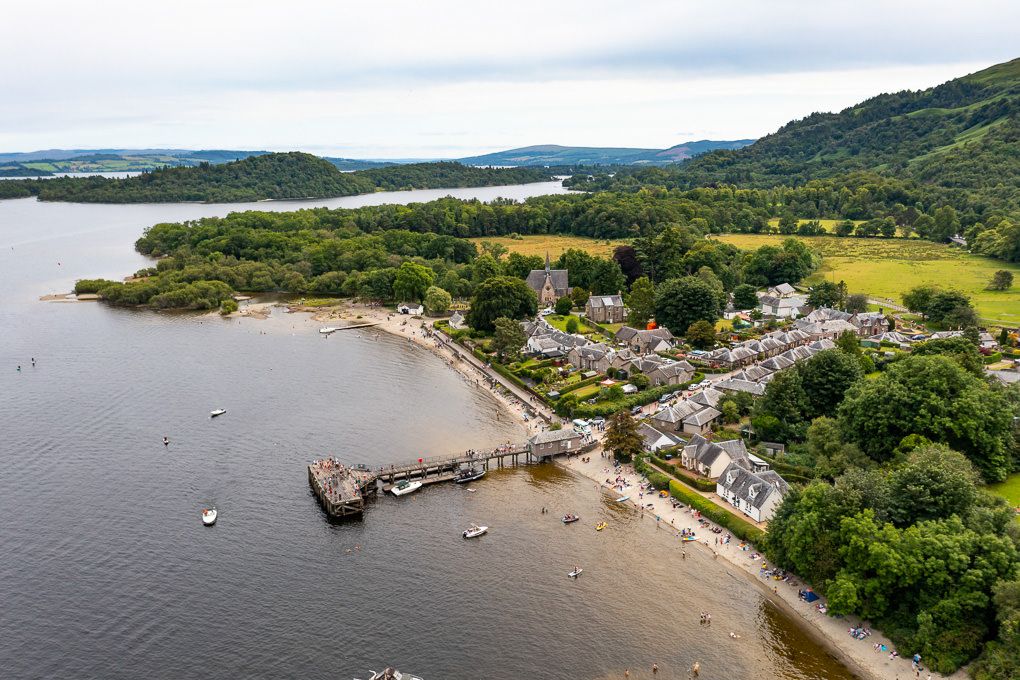
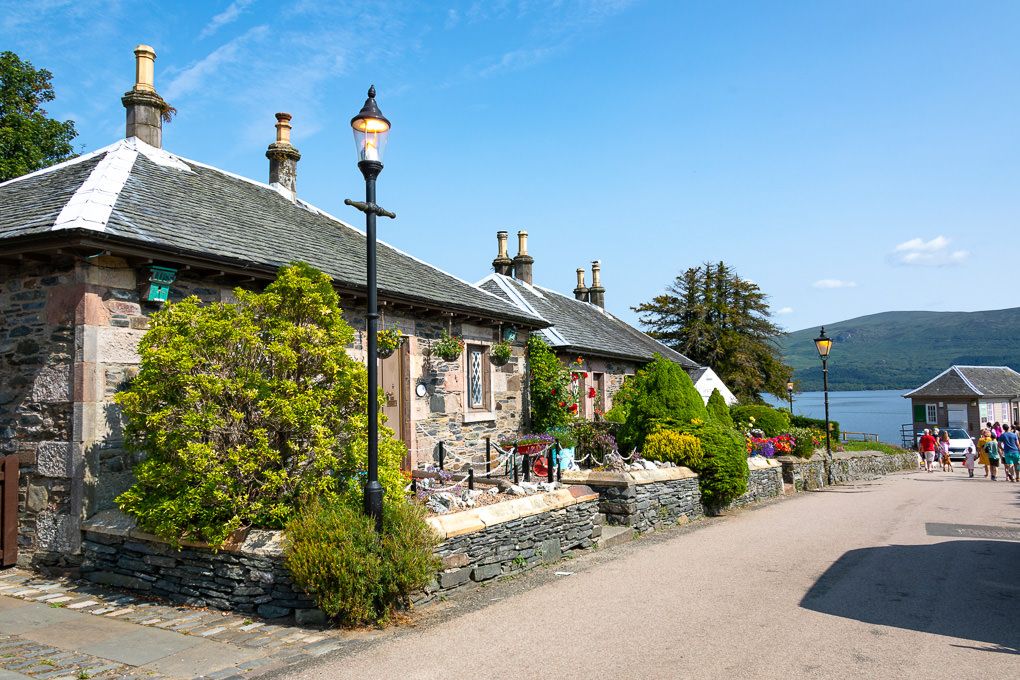
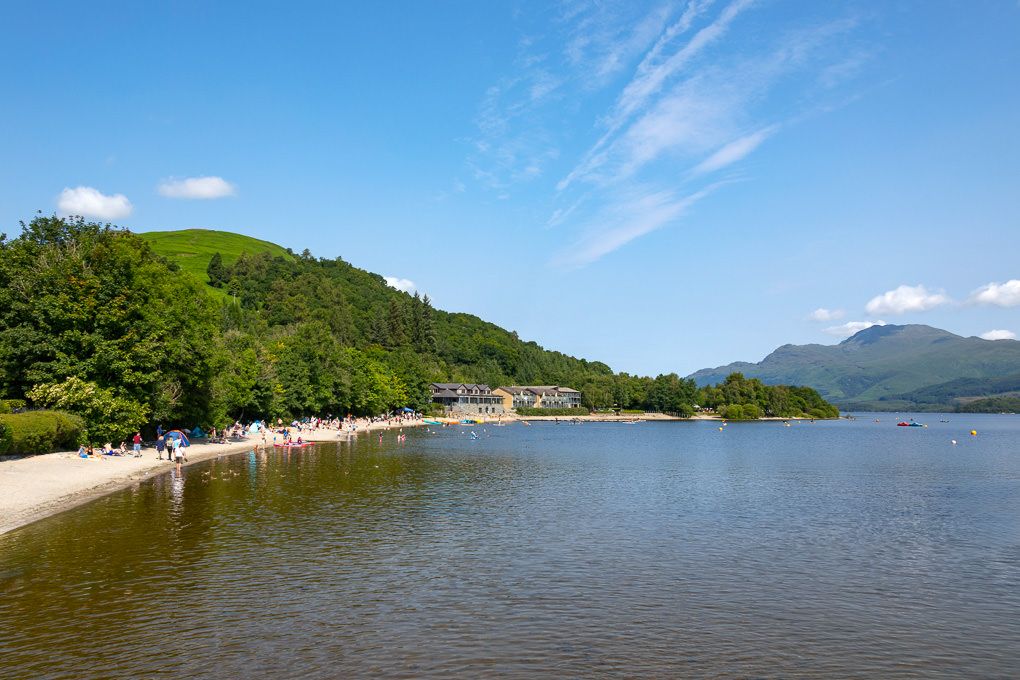
Luss combines traditional cottages, narrow paths, a historic church and open views across Loch Lomond.
The waterfront changes constantly with the weather. When the water is calm, reflections can simplify the scene and create symmetry. Passing cloud produces a different result, breaking up the reflections and adding layers of light across the surrounding hills.
I spent time moving between the waterfront and the village rather than photographing only the obvious view from the pier. The cottages, gardens and paths provided closer details that complemented the wider loch photographs.
For the landscape images, I looked for jetties, boats and sections of shoreline that could lead the eye into the frame. When photographing the village, I used paths, doorways and the shape of the buildings to create structure.
Photography lesson: Photograph the recognisable view, but also turn around and record the details that explain where you are.
Glencoe: working with changing Highland weather
Glencoe was one of the most visually dramatic parts of the road trip.
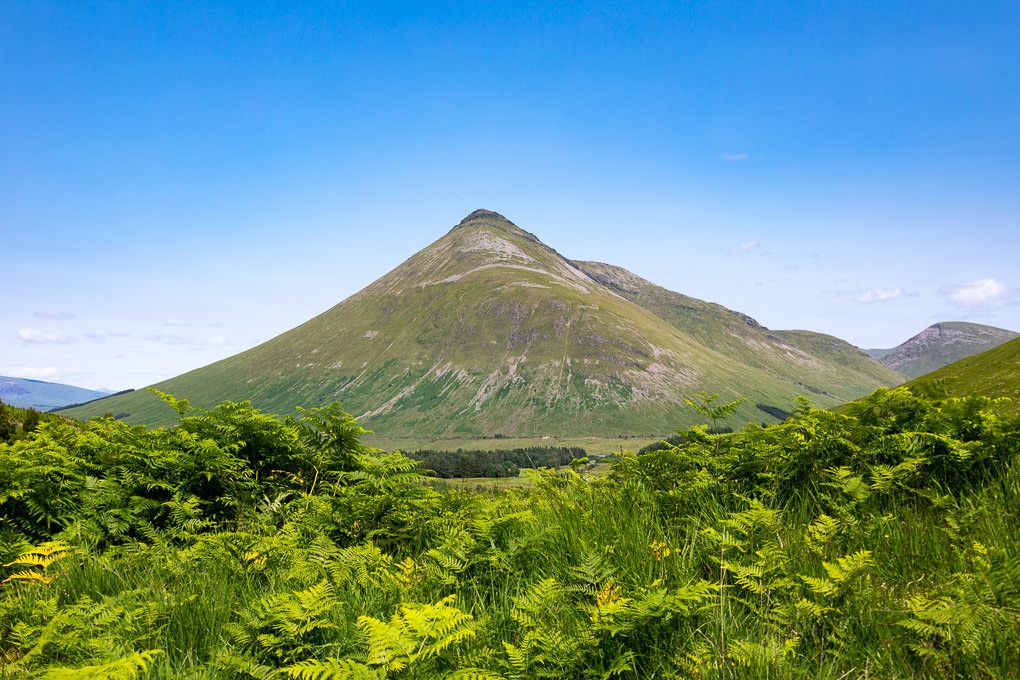
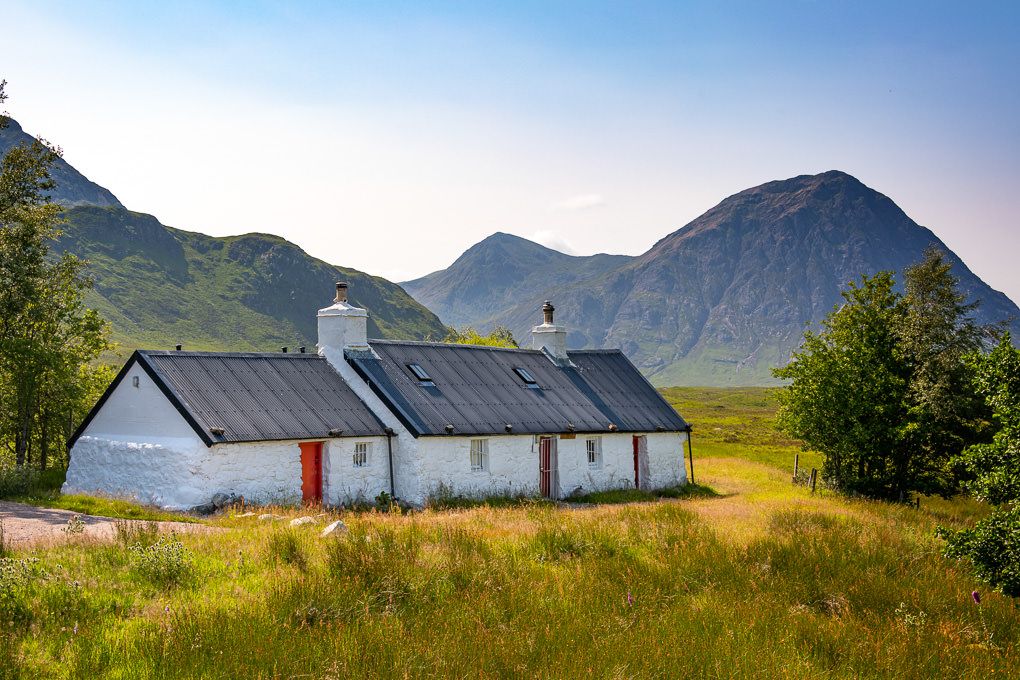
Mountains rise steeply on either side of the road, while waterfalls, rock, grasses and low cloud create strong foreground and background layers. The scene can change within minutes as weather moves through the glen.
Rather than waiting for completely clear conditions, I used the cloud to give the mountains scale and atmosphere. Moving even a short distance changed the relationship between the foreground and the ridges, so I took time to explore instead of relying on the first roadside viewpoint.
A campervan was particularly helpful here. It gave me the freedom to stop when conditions looked promising and wait for a break in the light.
Photography lesson: Scotland does not need perfect blue skies. Rain, mist and low cloud can give the landscape much more character, provided you protect your equipment and remain patient.
Fort William, Glenfinnan and the Jacobite steam train
Fort William is a useful base for exploring the western Highlands and the route towards Glenfinnan, Arisaig and Mallaig.
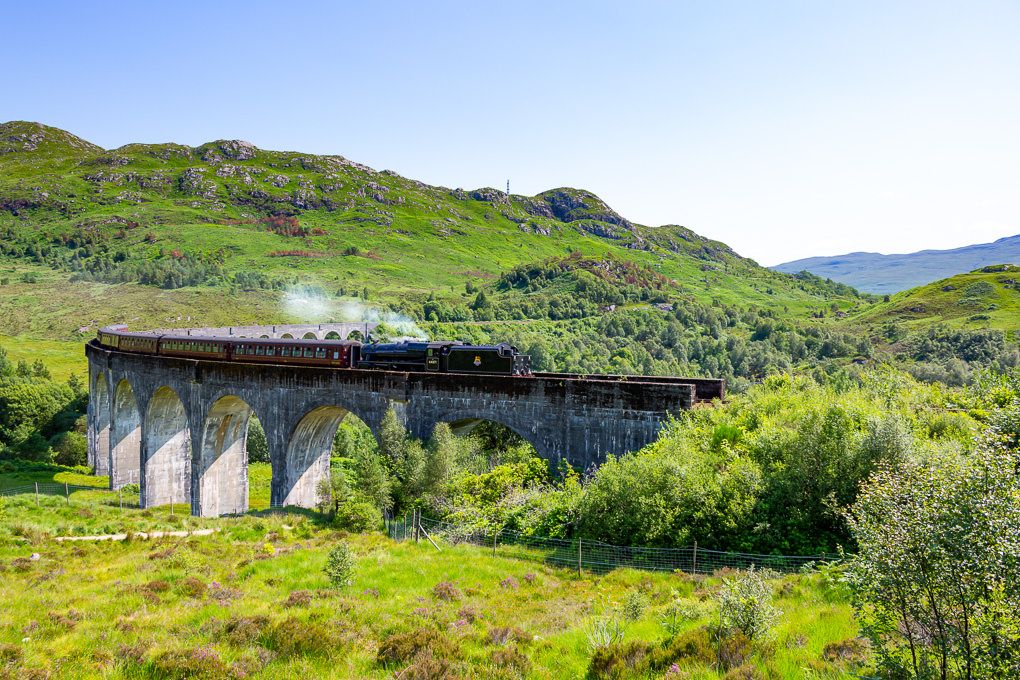
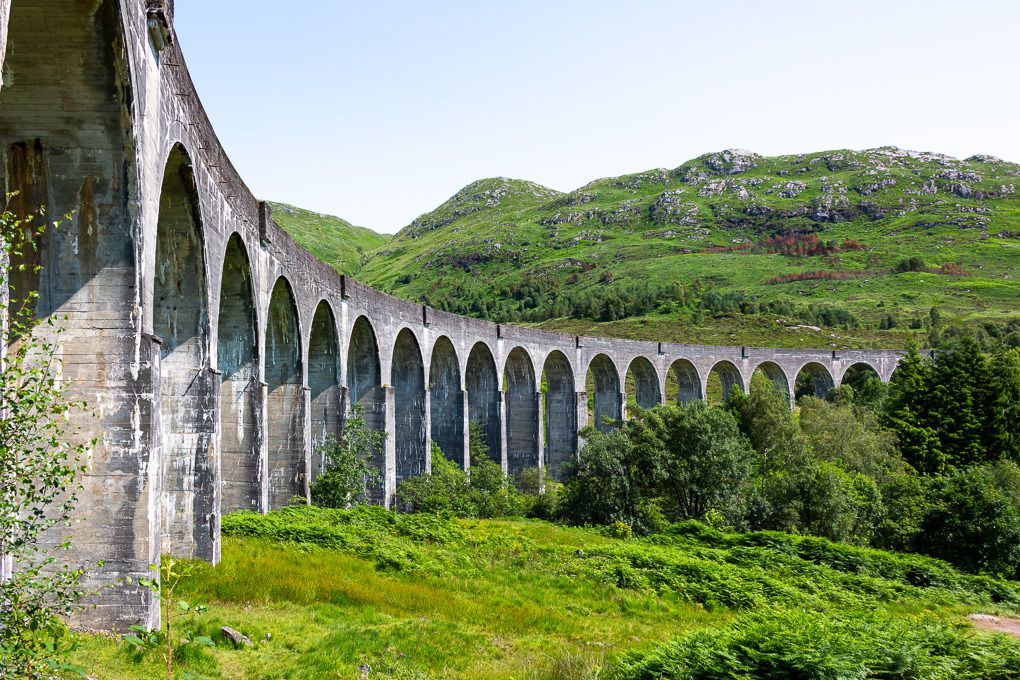
The Glenfinnan Viaduct is one of Scotland’s most recognisable railway photographs. If you hope to include the Jacobite steam train, check the operator’s current timetable and allow enough time to reach your chosen viewpoint. Schedules can change, and the walk normally takes longer than visitors expect when paths are busy.
The challenge is creating an image that shows more than the train. I wanted the landscape and the curve of the viaduct to remain important, with the steam helping lead the viewer through the photograph.
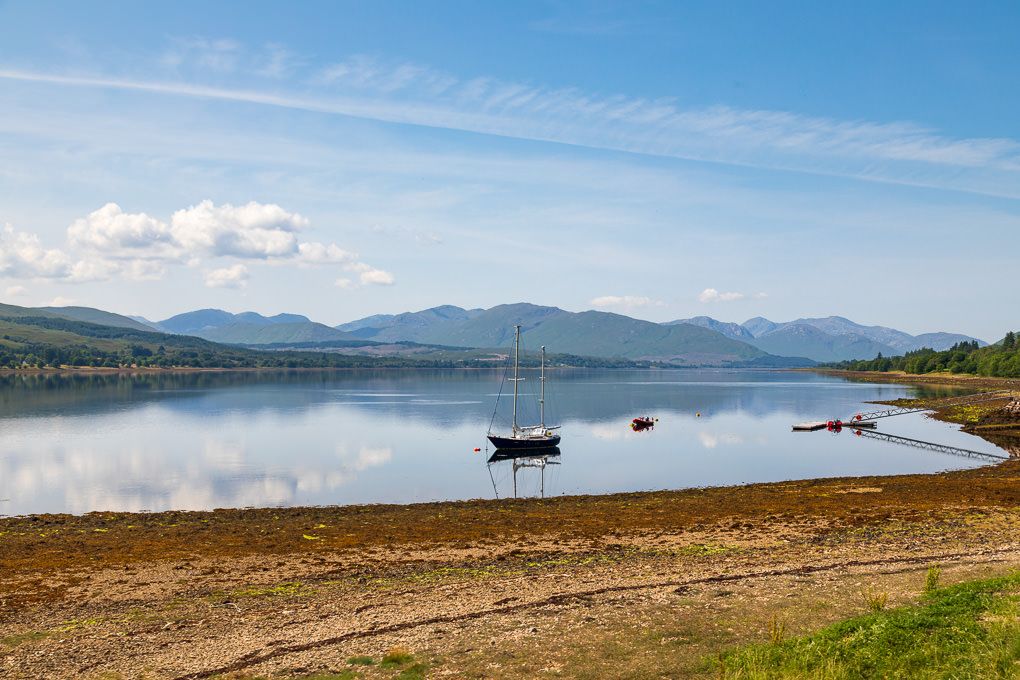
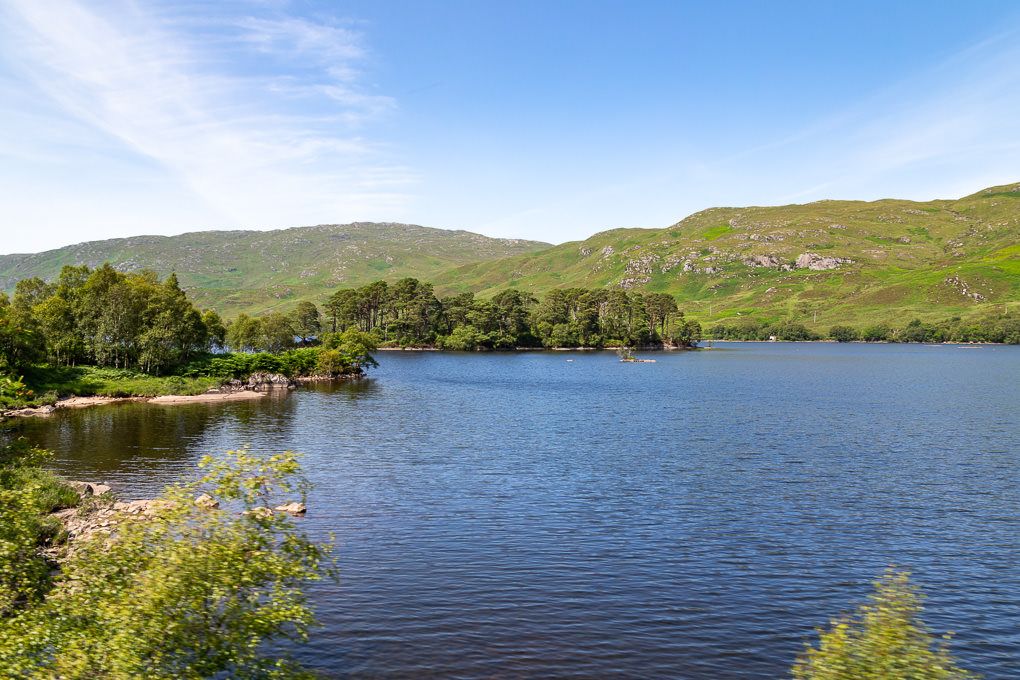
The area also offers wider views towards Loch Shiel and the surrounding mountains, so it is worth allowing time beyond the train’s arrival.
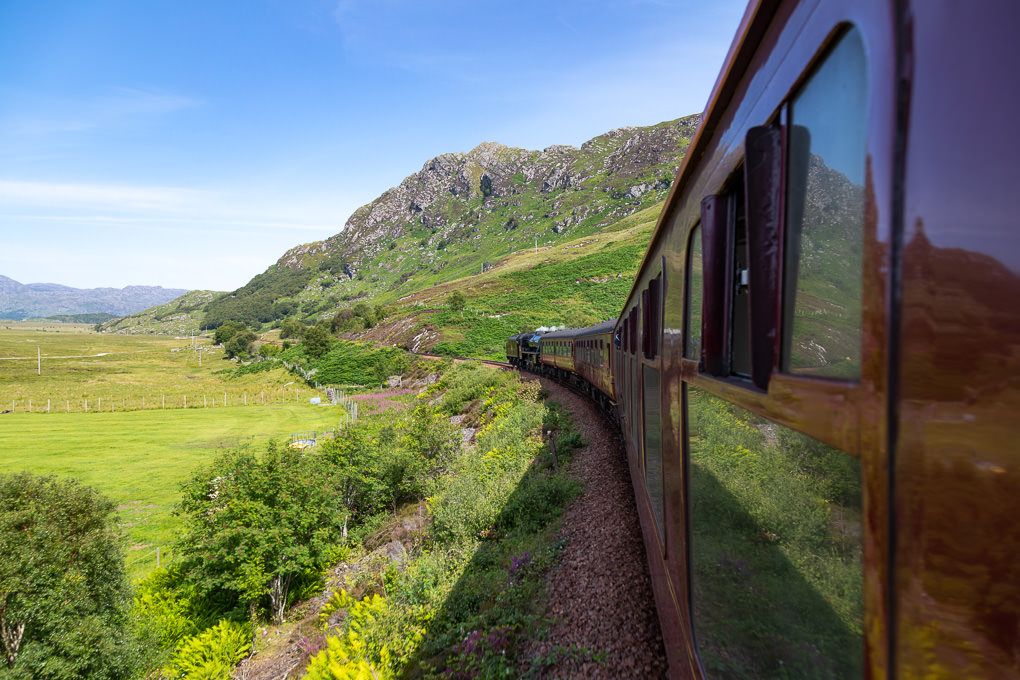
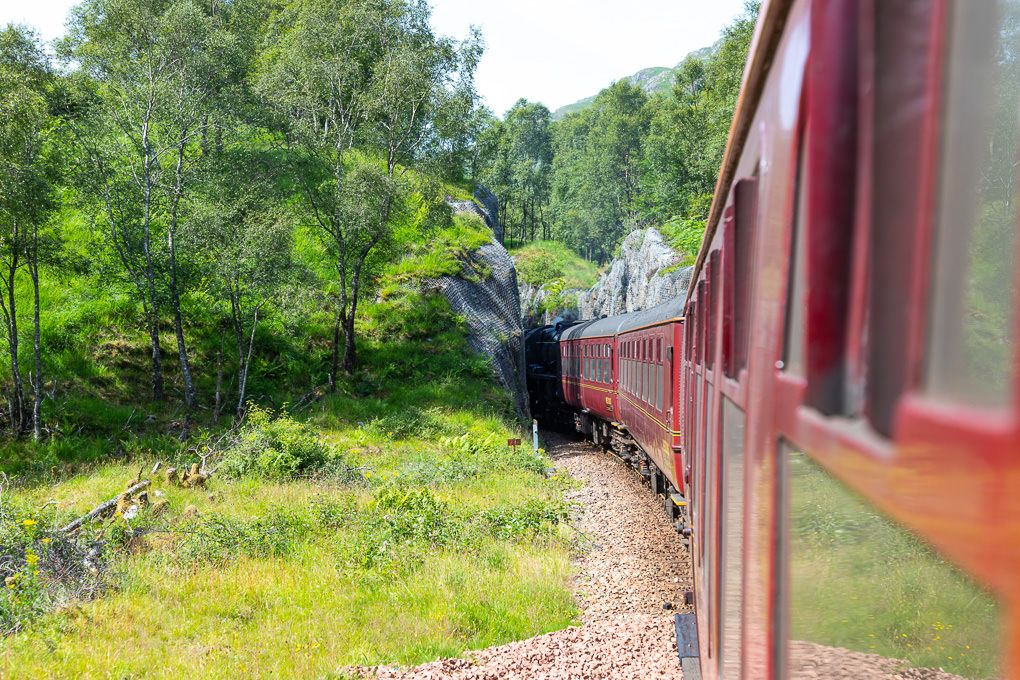
I also photographed from the Jacobite during the journey between Fort William and Mallaig. Shooting through a train window introduces reflections and movement, but it can still produce useful images of the landscape and the experience of travelling through it.
Photography lesson: At a famous location, decide whether your real subject is the landmark, the landscape or the visitor experience. That decision will determine where you stand and what you include.
Arisaig and Mallaig: photographing the west coast
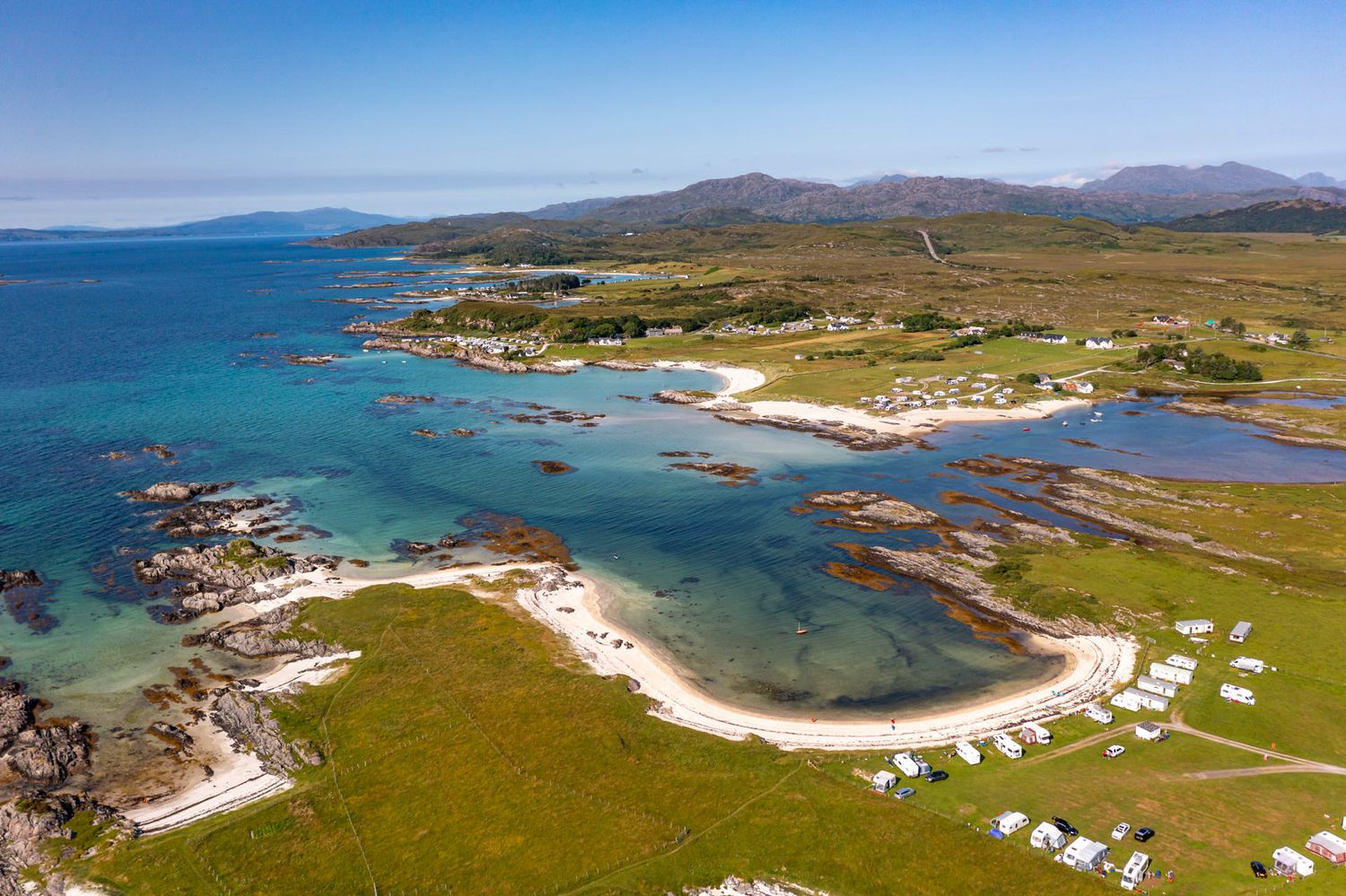
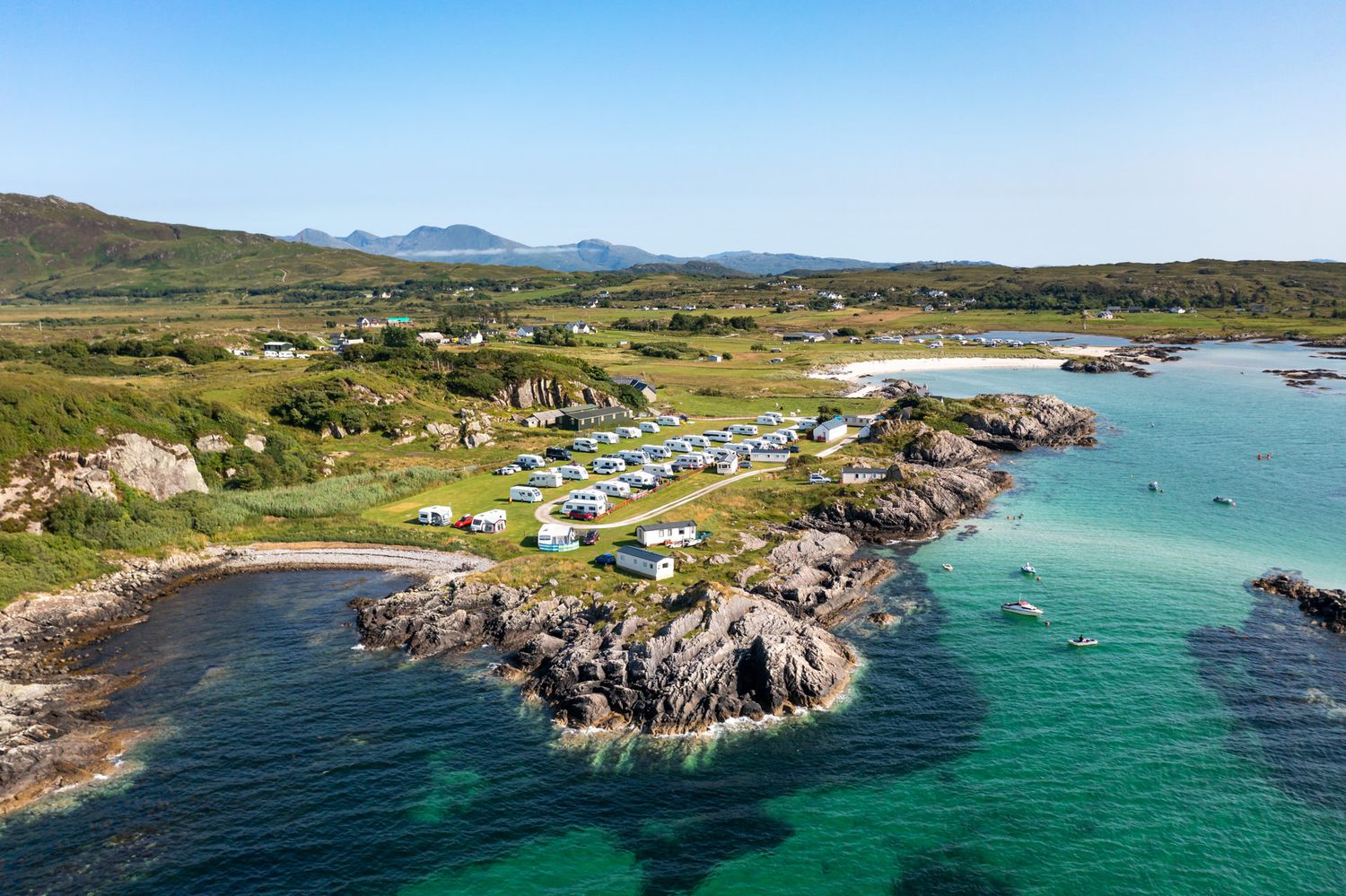
The coastline around Arisaig provided some of the most surprising scenery of the trip.
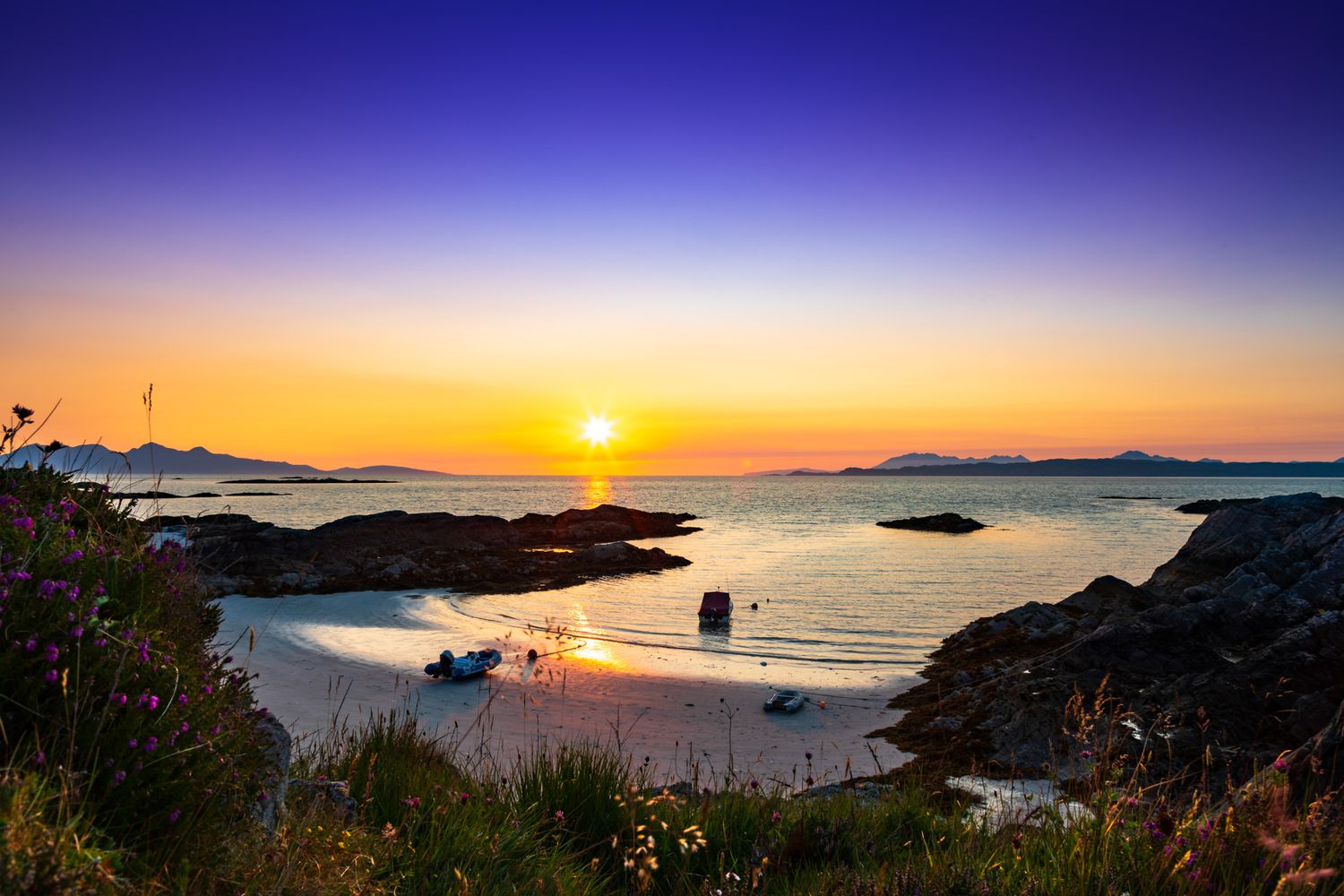
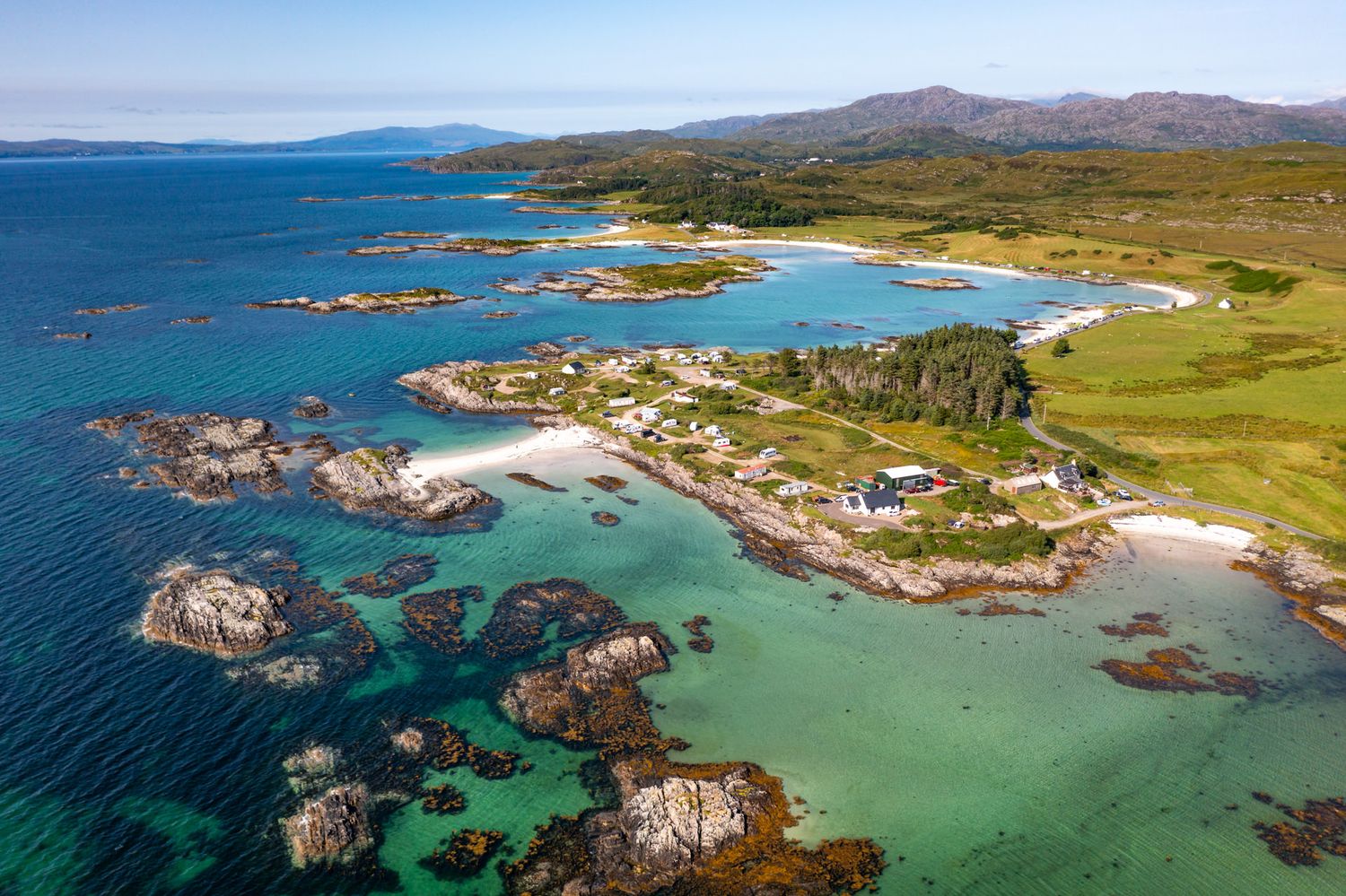
Pale sand, clear turquoise water, rocky shoreline and views towards the Small Isles give this part of Scotland a very different character from Glencoe. Mallaig adds harbour activity, boats and working coastal details to the story.
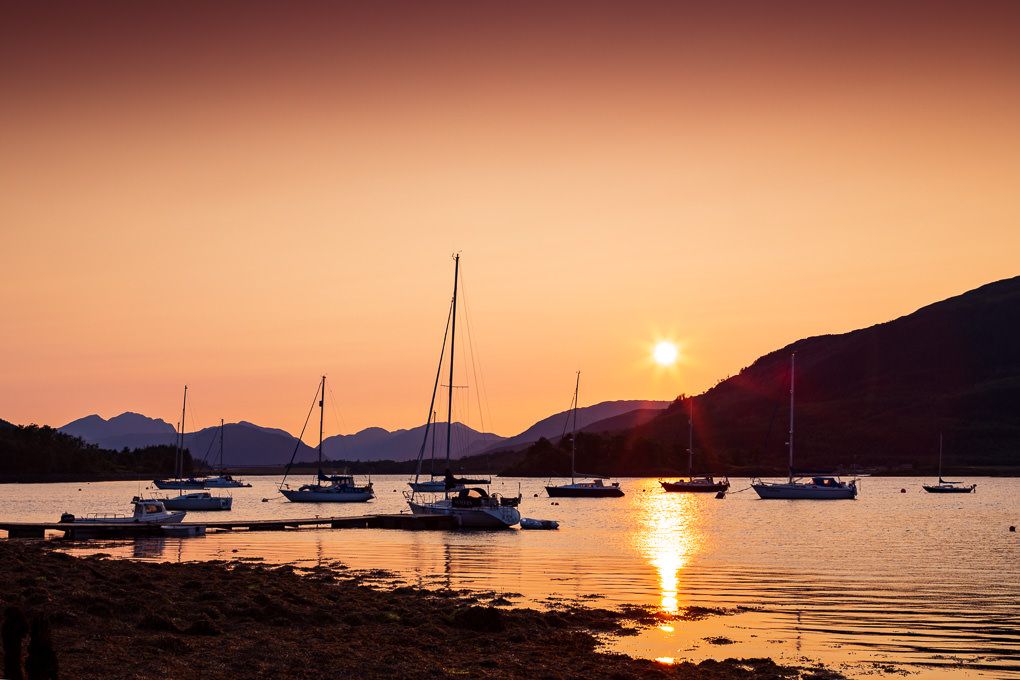
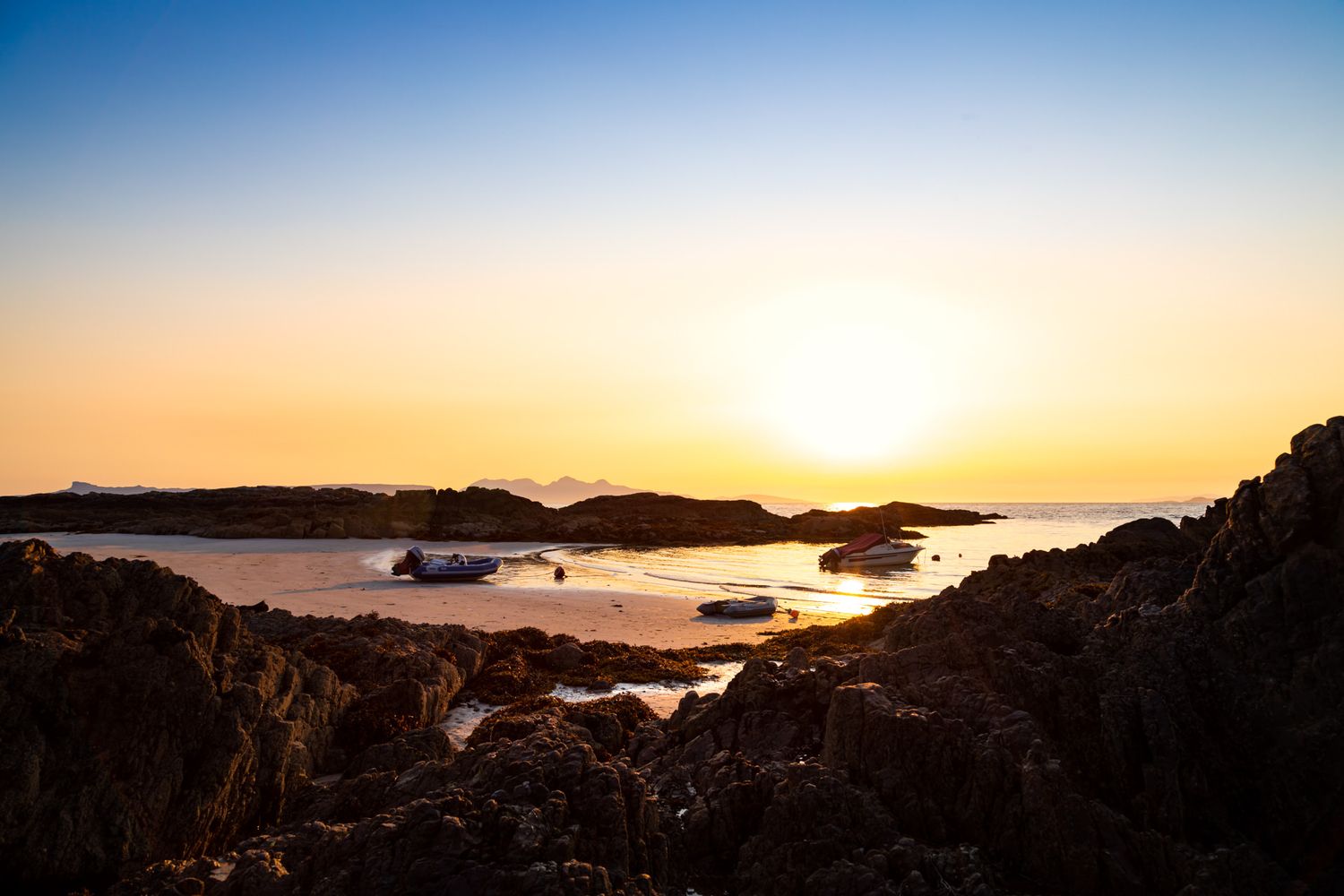
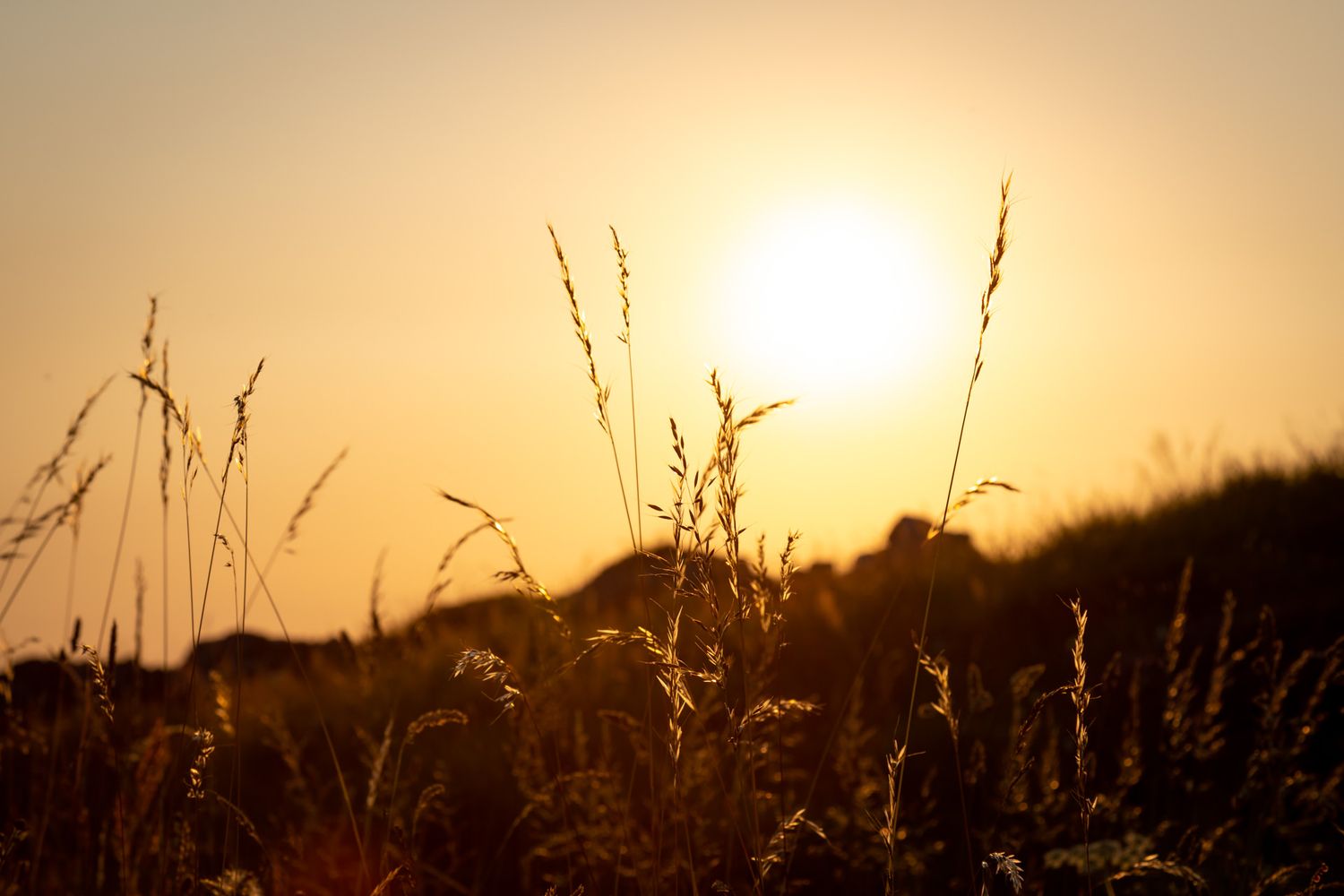
The coast worked particularly well around sunset and into twilight. I continued photographing after the sun had disappeared because colour remained in the sky and the calmer light produced softer reflections across the water.
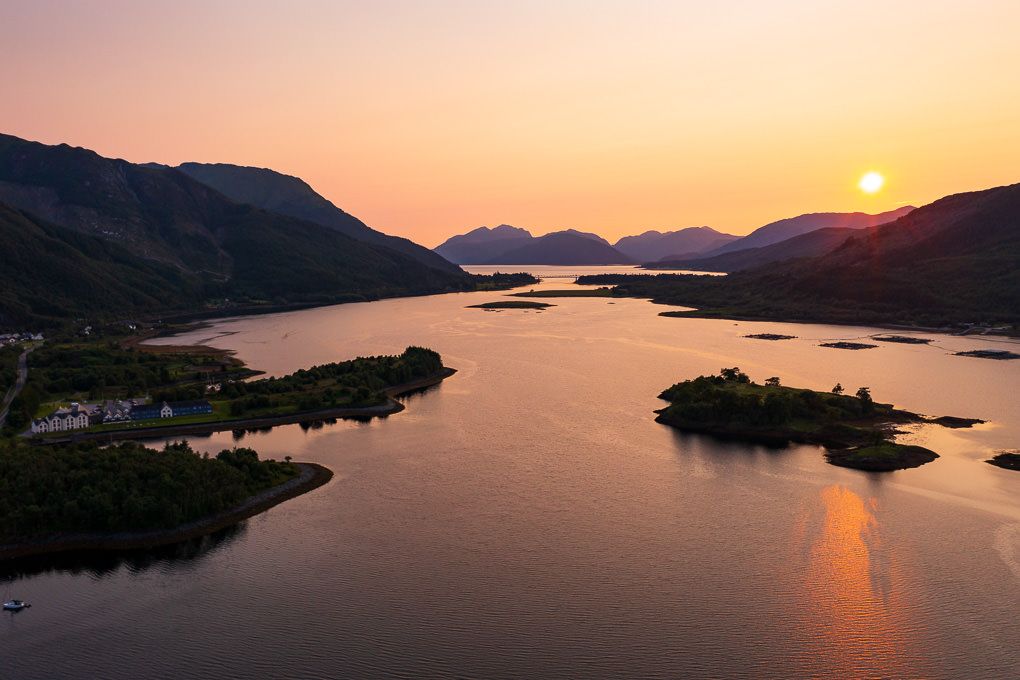
This was also an opportunity to create aerial images where conditions, access and regulations allowed. From above, the shape of the shoreline and relationship between the beaches, rocks and water became much clearer.
Photography lesson: Do not pack away immediately after sunset. The softer colour and lower contrast during twilight can produce some of the most balanced photographs of the day.
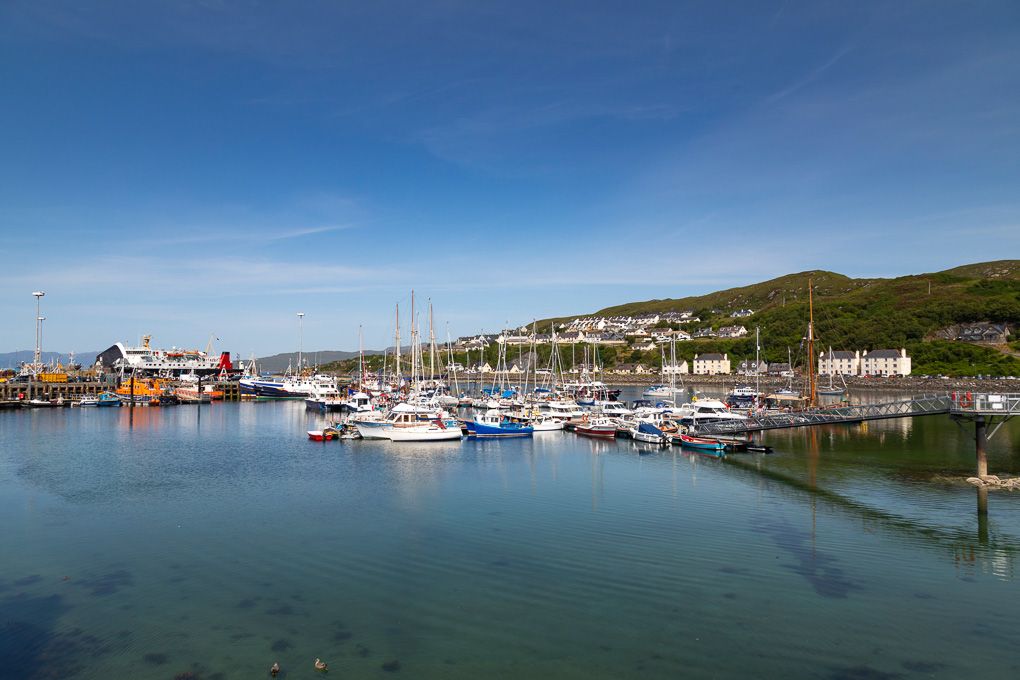
Photographing the Isle of Skye by campervan
Skye is exceptionally rewarding, but it requires realistic planning.
Many roads are single-track and use passing places. A campervan journey can therefore take considerably longer than an online route estimate suggests, particularly during busy periods. Passing places should be kept clear and can also be used to let vehicles behind overtake.
The island offers an enormous range of subjects: mountains, sea cliffs, rock formations, waterfalls, moorland, castles and the colourful harbour at Portree. Trying to photograph too many of them in one day would make the experience rushed.
The weather changed repeatedly while I was there. Instead of treating that as a problem, I watched how the clouds interacted with the landscape and waited for short patches of directional light.
Travelling with Fudge also affected the schedule. Some locations involved longer or more demanding walks, so I needed to consider what was realistic for both of us rather than treating every landmark as an essential stop.
Photography lesson: Allow more time than you think you need on Skye. A shorter list photographed properly is more valuable than a rushed collection of identical viewpoints.
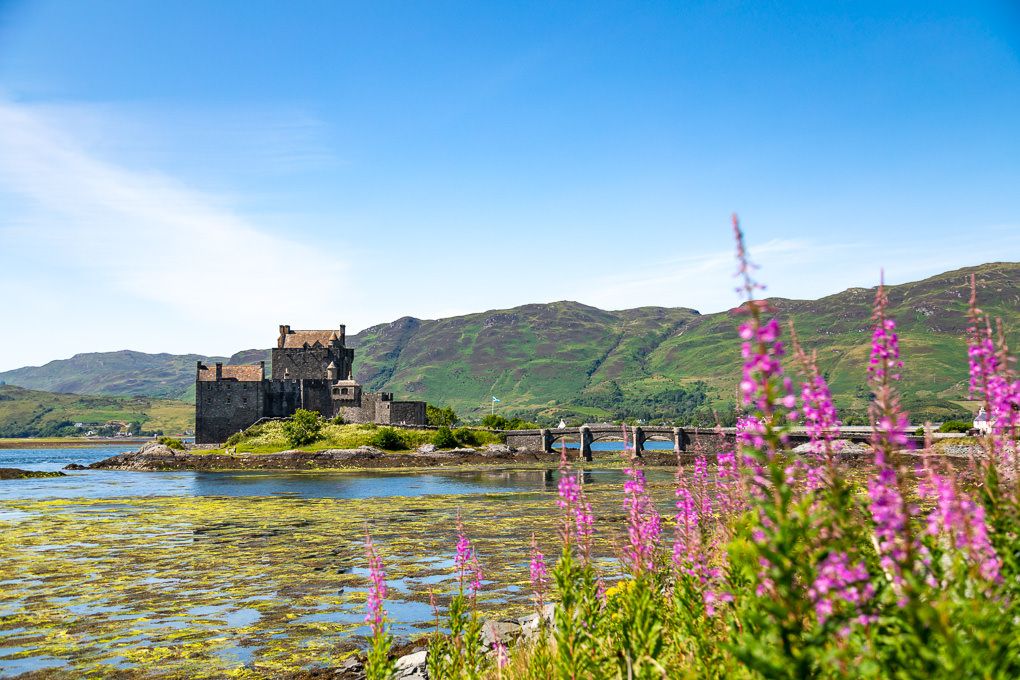
Eilean Donan Castle
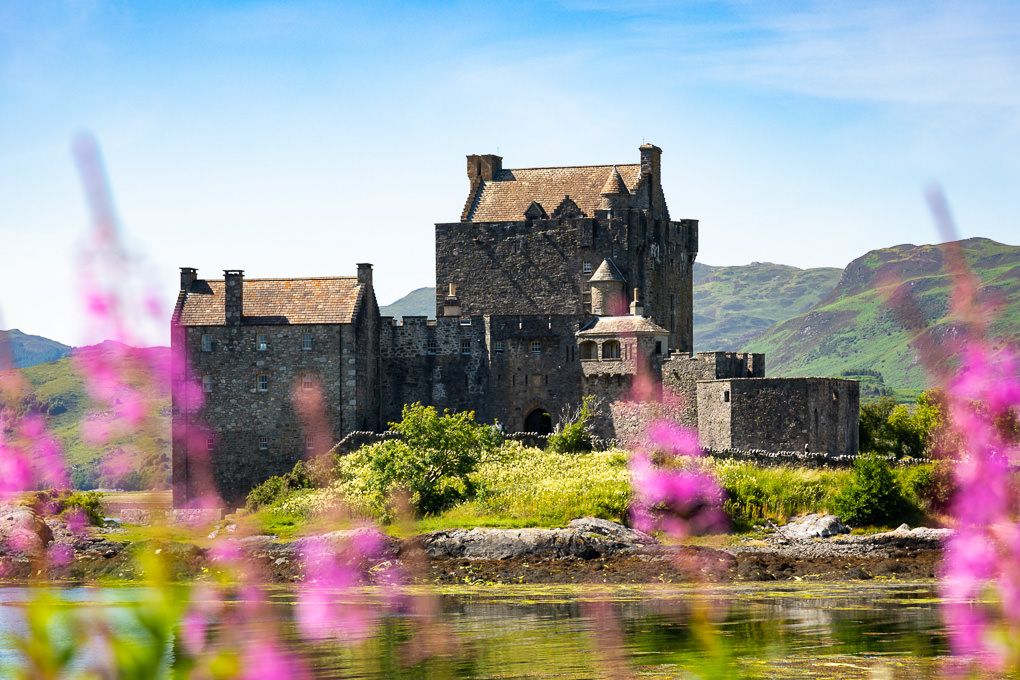
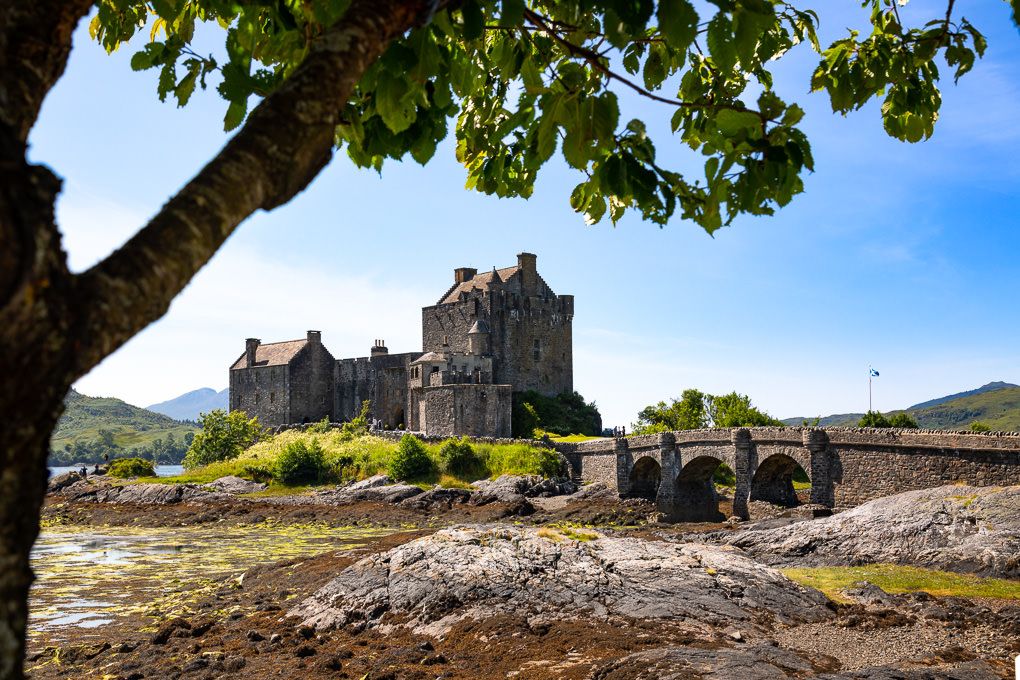
Eilean Donan Castle is one of Scotland’s most photographed landmarks, which makes finding a considered composition especially important.
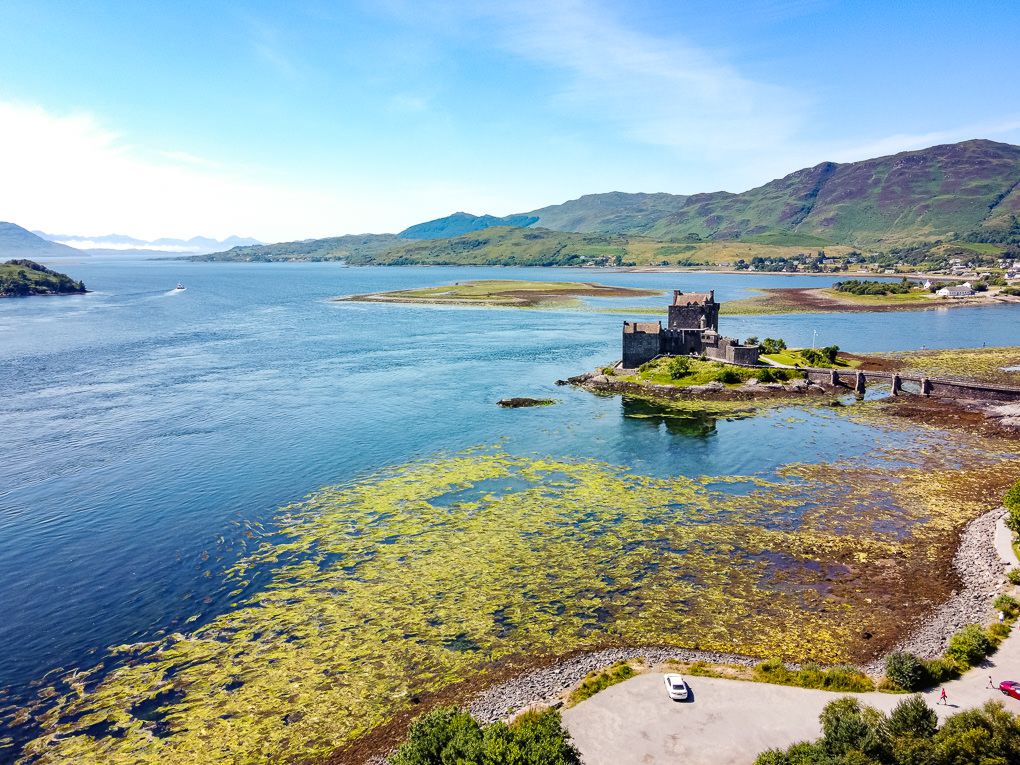
The bridge naturally leads towards the castle, while the shoreline, wildflowers and surrounding mountains can provide foreground and context. Water level and weather both affect the result. Calm water may produce a reflection, while low tide reveals more shoreline and creates a more textured foreground.
I photographed the castle from both ground level and the air where flying was permitted. The aerial perspective showed its position at the meeting of the lochs, while the ground-level photographs gave the castle more presence.
Photography lesson: When a location has been photographed thousands of times, changing the foreground, height or distance can make more difference than using unusual editing.
Oban: finishing with harbour photography
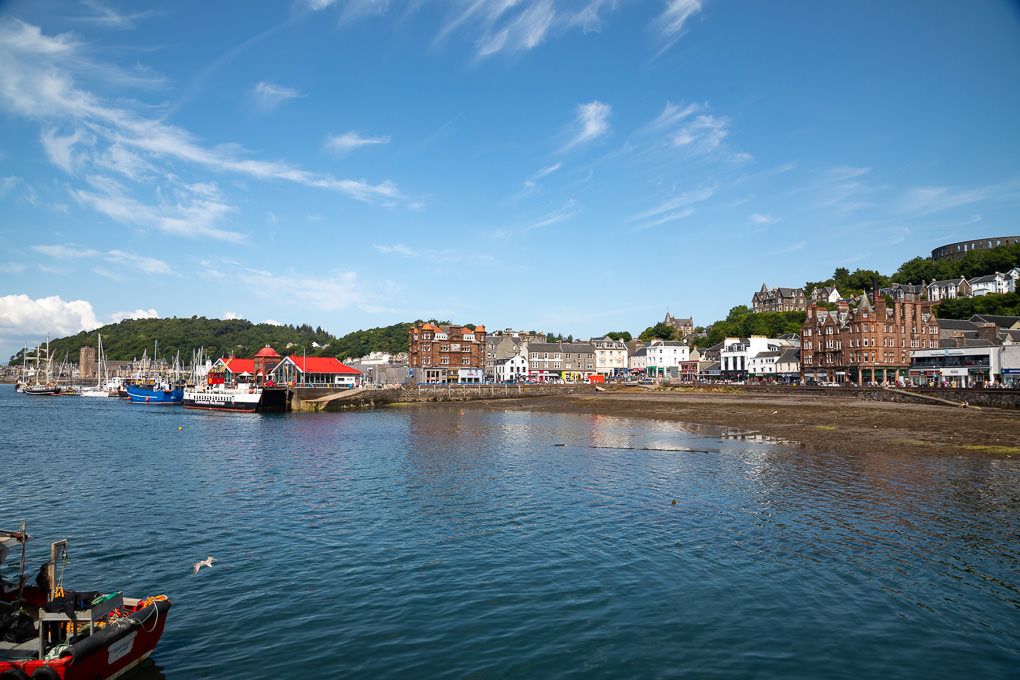
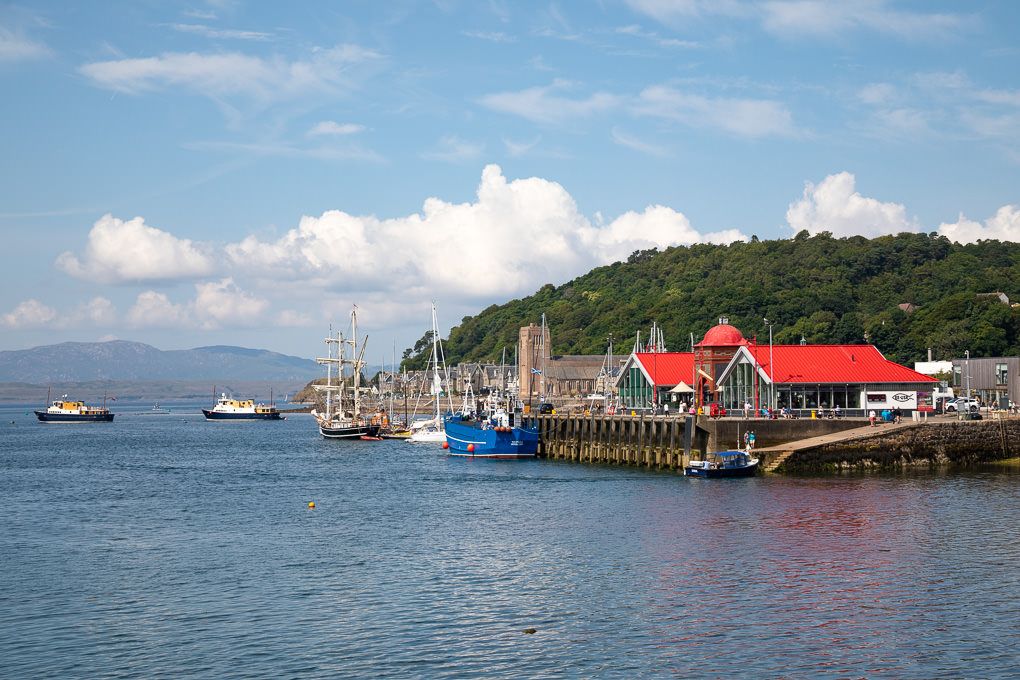
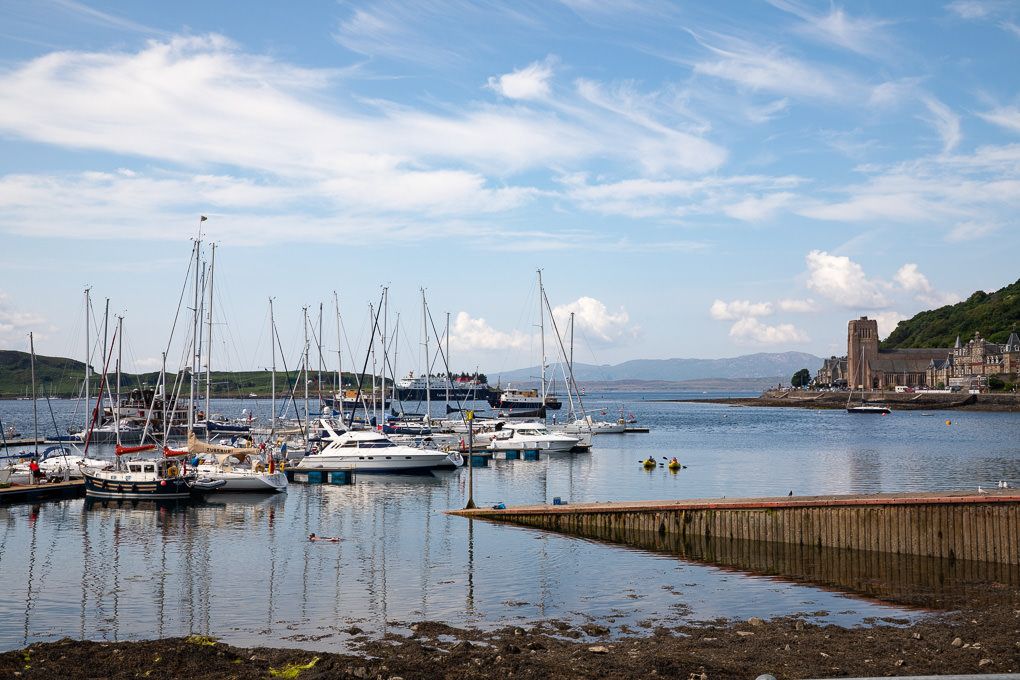
Oban brought the trip back to a busier, more human landscape.
The harbour contains ferries, fishing boats, shopfronts and views towards the islands. McCaig’s Tower overlooks the town and provides a wider perspective, while the waterfront works well for more detailed travel photographs.
I photographed the harbour in changing evening light, looking for reflections and relationships between the boats and surrounding buildings. The mixture of landscape, architecture and maritime activity made Oban a useful final chapter in the journey.
Photography lesson: A travel collection benefits from people, buildings, transport and local activity. Landscapes alone rarely tell the full story of a destination.
How I photographed the journey
My approach was to create variety rather than return with hundreds of similar landscape images.
I looked for:
- Wide photographs that established each location
- Mid-range compositions showing buildings, boats and roads within the landscape
- Details that added local character
- Both horizontal and vertical photographs
- Foregrounds that created depth
- Changing weather rather than only clear conditions
- Ground-level and aerial perspectives where appropriate
This is also how I approach commercial destination assignments. A tourism business normally needs more than one dramatic hero photograph; it needs a flexible collection suitable for websites, social media, brochures, editorial content and campaigns.
My TUI and National Geographic Day Tours photography case study explains how I apply that approach on a commissioned travel project.
Editing my Scotland photographs
I kept the editing sympathetic to the conditions I experienced.
For misty and overcast photographs, I avoided adding excessive clarity or dehaze because it could remove the softness that made the scene atmospheric. For sunset images, I adjusted the white balance and colour carefully rather than pushing saturation beyond what I remembered seeing.
I recovered shadow detail where necessary but retained enough contrast to preserve the shape of the mountains. Noise reduction was used selectively on images taken at higher ISO, with enough natural texture left in the final photograph.
Scotland already provides strong colour, light and atmosphere. The edit should support those qualities rather than replace them.
Responsible campervan travel in Scotland
Scotland’s outdoor access rights should not be confused with a general right to park or sleep in a vehicle anywhere.
Access rights principally cover responsible non-motorised recreation. Overnight parking in a campervan is subject to landowner permission, parking rules, local restrictions and road traffic regulations.
Use established campsites, authorised overnight areas or clearly designated schemes. Forestry and Land Scotland operates a Stay the Night scheme for self-contained campervans and motorhomes at selected car parks.
When travelling:
- Keep passing places clear
- Follow local parking and overnight signs
- Do not block gates, roads or property access
- Dispose of grey and toilet waste at appropriate facilities
- Take litter away
- Avoid disturbing residents, livestock and wildlife
- Support local shops, cafés, campsites and other businesses
VisitScotland also provides current guidance for driving in Scotland.
Drone photography in Scotland
UK drone rules apply throughout Scotland, but individual locations can have additional airspace, wildlife, land access or site restrictions.
The general requirements include remaining below 120 metres from the closest point of the earth’s surface, maintaining direct visual contact with the aircraft and avoiding restricted airspace and crowds. Requirements vary according to the aircraft and type of flight.
Do not rely solely on the absence of a “no drones” sign. Check the airspace, the current CAA rules and permission for take-off and landing before every flight.
The CAA Drone and Model Aircraft Code should always be checked before flying.
I am a CAA-qualified drone pilot and provide professional drone and aerial photography for tourism, property, event and commercial clients where conditions and permissions allow.
Frequently asked questions
What are the best photography stops on this Scotland campervan route?
Glencoe, Glenfinnan, Arisaig, the Isle of Skye and Eilean Donan Castle produced the most dramatic landscapes. Luss, Mallaig and Oban added villages, harbours, boats and other details that helped create a more varied travel story.
Is a campervan a good way to photograph Scotland?
Yes. A campervan gives you more freedom to adapt to changing light and weather. However, driving takes longer on narrow roads, and overnight stops must be planned legally and responsibly.
Can you wild camp anywhere in Scotland in a campervan?
No. Scotland’s responsible access rights do not create a general right to park or sleep anywhere in a motor vehicle. Use campsites, authorised stopovers, designated schemes or locations where you have the necessary permission.
Is the Isle of Skye difficult to drive in a campervan?
It is manageable, but many roads are single-track and journeys can take longer than expected. Use passing places correctly, allow traffic behind to overtake and avoid creating an overambitious daily itinerary.
Can you fly a drone in the Scottish Highlands?
Drone flying is possible in some locations, but you must follow current CAA rules and check airspace, local restrictions, wildlife considerations and take-off or landing permission. Some popular or environmentally sensitive locations may not be suitable.
What is the best weather for photographing Scotland?
There is no single perfect condition. Clear weather works well for wide landscapes, while rain, mist and low cloud can add scale and atmosphere. The most important factor is allowing enough time to respond when the light changes.
Is this route suitable when travelling with a dog?
Much of the route can be explored with a dog, but individual attractions, paths, transport and accommodation may have restrictions. Some walks on Skye and in the Highlands can also be longer or more demanding than they initially appear.
What is the best time of year for a Scotland campervan photography trip?
Spring and autumn offer a good balance of softer light, changing colour and fewer visitors. Summer provides much longer daylight hours, but popular locations and roads can be busier. Winter can produce dramatic conditions and snow-covered landscapes, although daylight is limited and some roads may be more difficult. The best choice depends on the photographs you want to create and your confidence driving in changing conditions.
Looking for a travel and tourism photographer?
I work with tourism businesses, hotels, visitor attractions, tour operators and destination marketing organisations across the UK and internationally.
My photography is created to do more than record how a destination looks. It helps potential visitors understand the place, experience or activity and gives marketing teams a varied collection for websites, campaigns, brochures, PR and social media.
View my travel and tourism photography or get in touch to discuss your project.
About the Lee Charlton
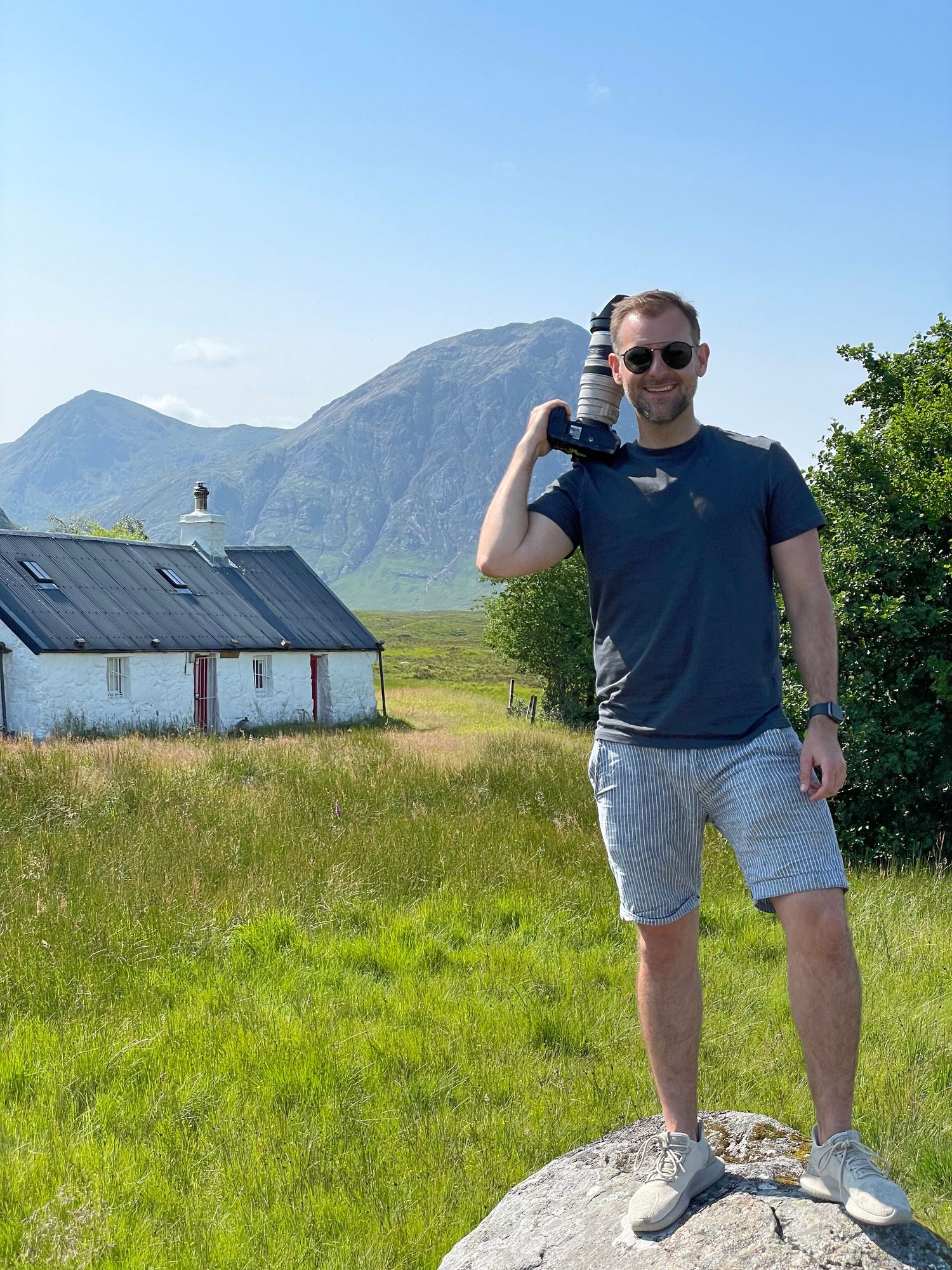
Lee Charlton is a UK-based commercial, travel and tourism photographer with more than 16 years of professional experience.
He previously spent nine years working for TUI, becoming its Global Photography Manager and sole in-house photographer. His work has included destinations, hotels, resorts, excursions, visitor attractions, commercial campaigns and aerial photography across the UK and internationally.
Continue exploring: