
Quick low-light conference photography settings
Low-light conference photography requires a shutter speed fast enough to freeze speaker movement, a wide aperture, careful control of bright stage highlights and restrained noise reduction during editing.
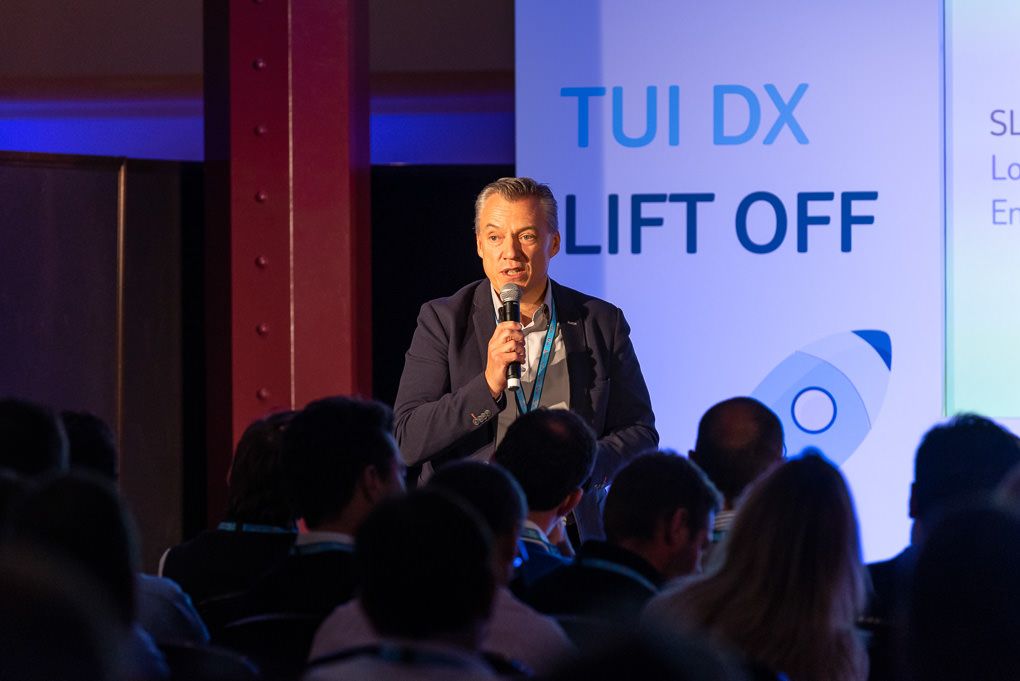
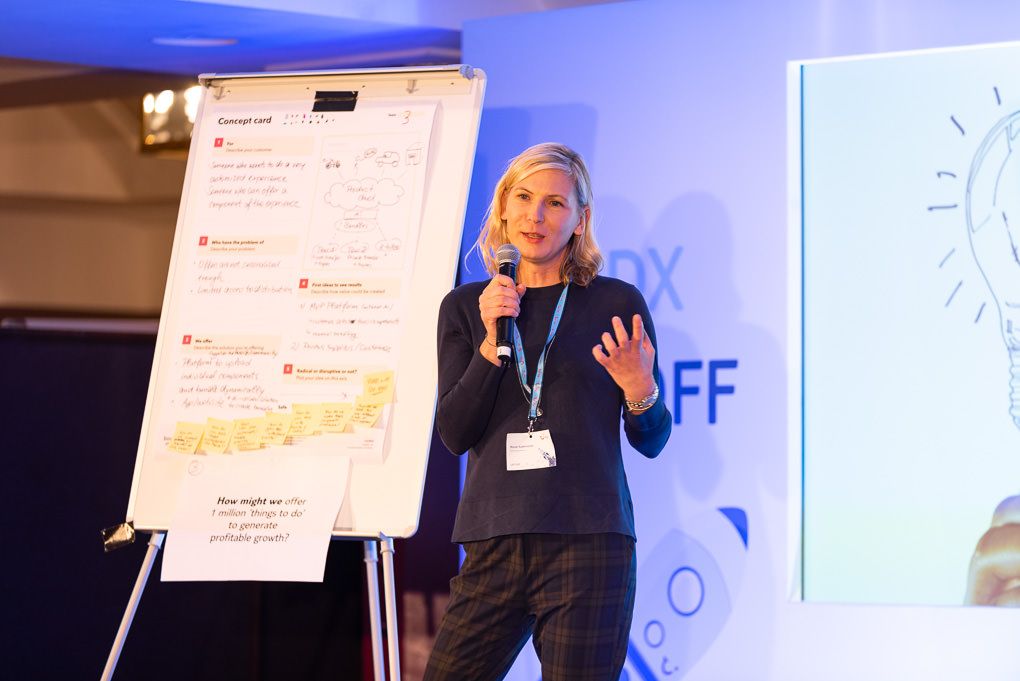
In this guide, I explain the approach I used while photographing TUI’s two-day Lift Off senior leadership event at The Brewery in London.
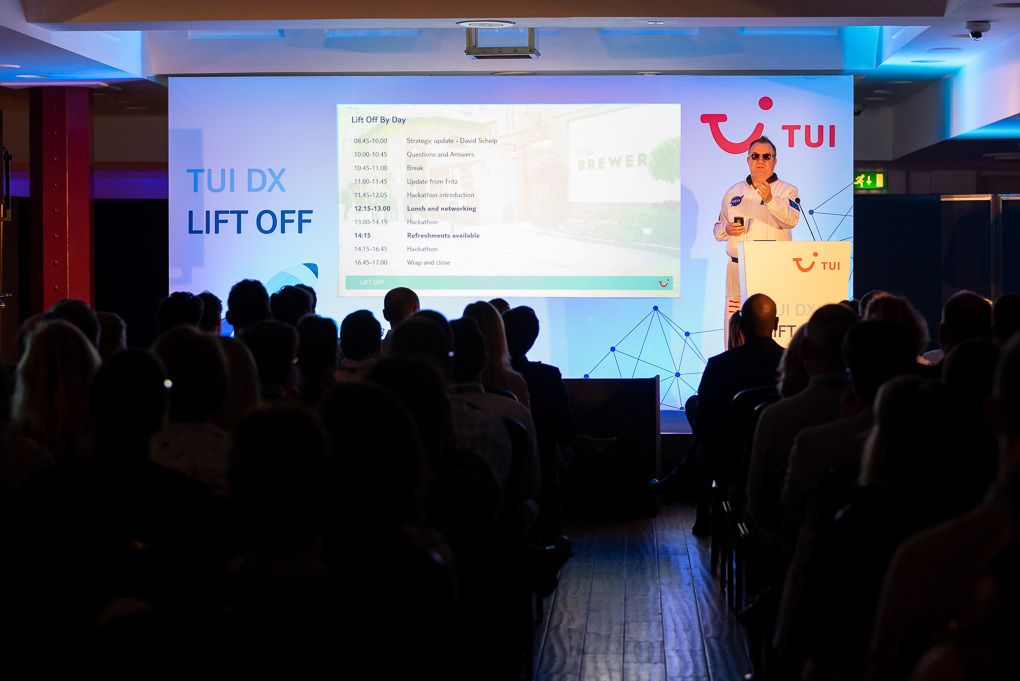
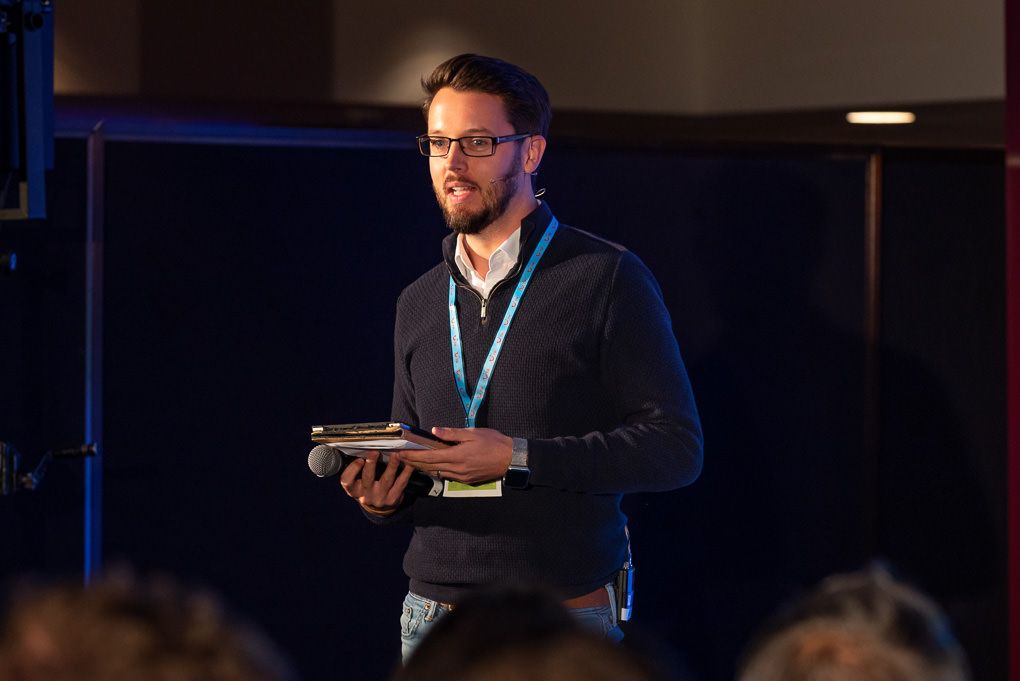
The venue had no natural light in the main conference space. I was working with a challenging mixture of spotlights, presentation screens, LEDs, deep shadows and warmer ambient lighting. Despite those conditions, the final photographs needed to be sharp, consistent and suitable for TUI’s internal communications and intranet.
Quick low-light conference photography settings
These are useful starting points rather than fixed rules:
- Exposure mode: Manual exposure with Auto ISO
- Shutter speed: Start around 1/200 second for moving speakers
- Aperture: f/2.8 when light is limited
- ISO: Allow it to rise rather than accepting motion blur
- File format: RAW
- White balance: Auto when lighting changes frequently
- Flash: Usually avoided during presentations
- Focusing: Continuous autofocus with an appropriate subject-tracking mode
During the TUI event, my ISO regularly reached 12,800. That was preferable to lowering the shutter speed and producing blurred photographs.
The correct settings will always depend on the venue, subject movement and available light. They should be treated as a starting point, not a universal formula.
The TUI Lift Off leadership event
The assignment took place at The Brewery in London in 2019.
At the time, I was employed by TUI and understood the organisation, its leadership team and the requirements of its internal communications department.
The brief covered:
- Senior leaders and keynote speakers
- Presentations and panel discussions
- Audience reactions
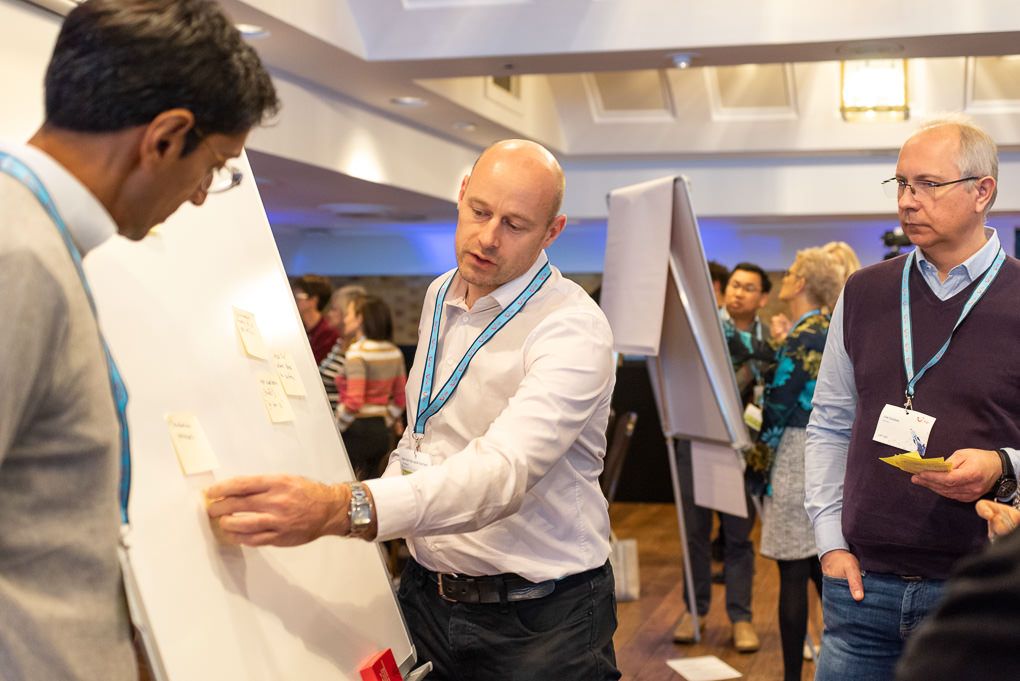
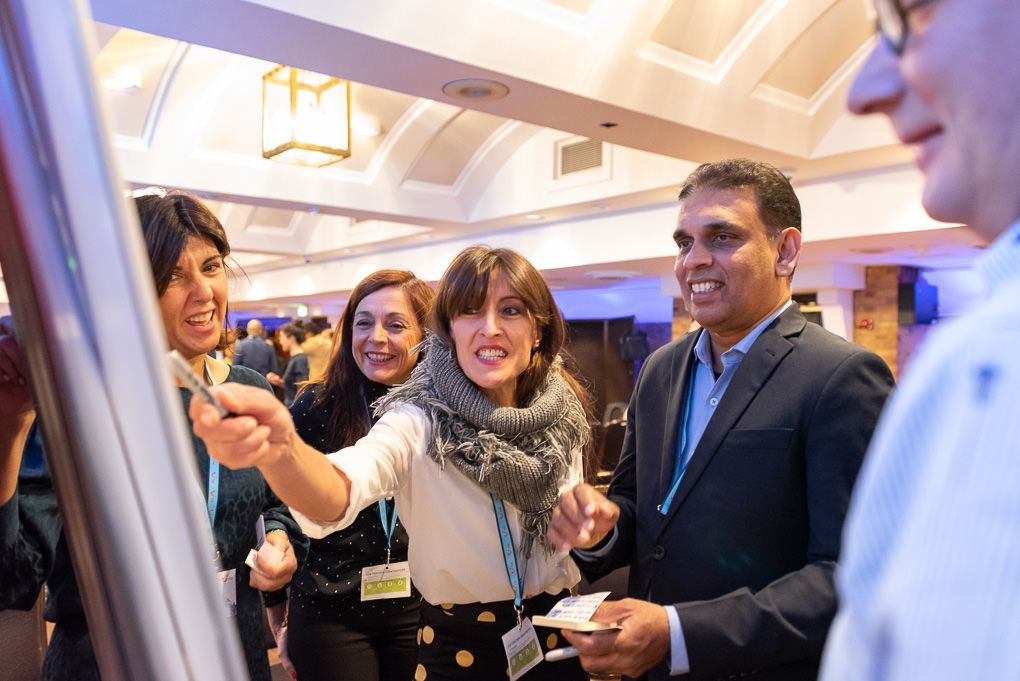
- Breakout sessions
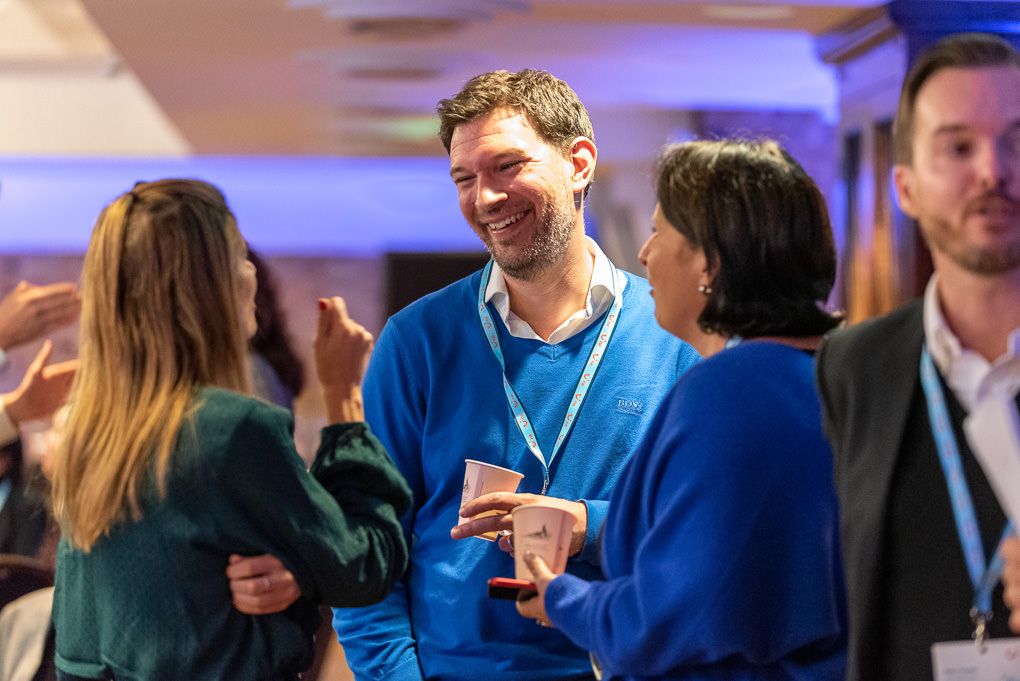
- Networking and informal conversations
- TUI branding and presentation details
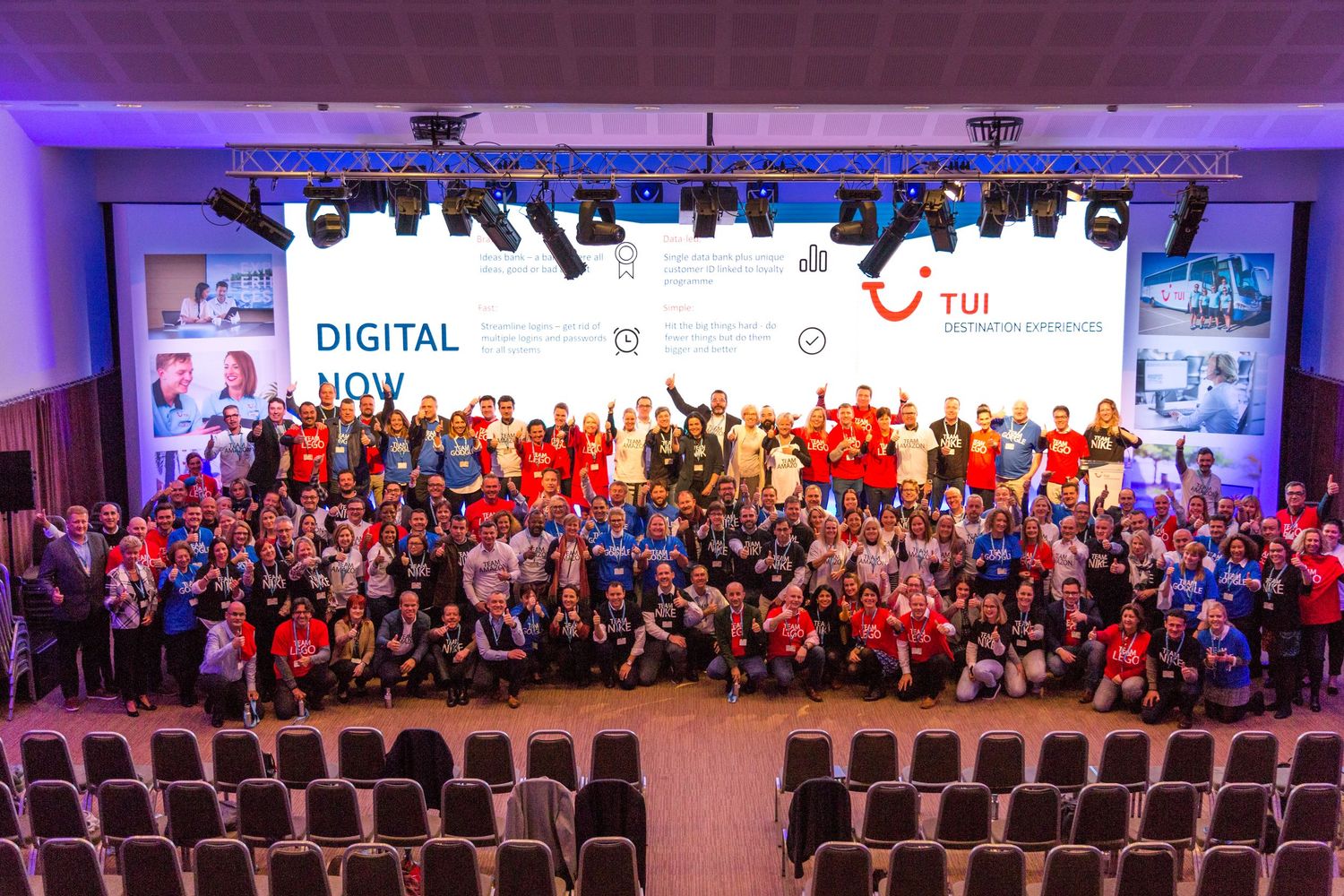
- Wide photographs showing the venue and atmosphere
- Group photographs
- A consistent record of the complete event
Photography took place over two days and involved an overnight stay. The edited gallery was delivered within 48 hours for internal communications and intranet use.
This was not simply a matter of photographing people standing behind a lectern. The final gallery needed to show leadership, participation, discussion and the atmosphere of the event.
Why is low-light conference photography difficult?
Conference venues are designed for the audience and speakers, not for photographers.
A room can appear atmospheric and comfortable to the human eye while still being extremely dark for a camera. Stage lighting also creates large differences between the brightest and darkest parts of the scene.
Common problems include:
- Speakers moving between bright and dark areas
- Bright presentation screens beside darker faces
- Mixed colour temperatures
- LED flicker and banding
- Strongly coloured stage lighting
- Deep shadows around the audience
- Rapid changes between presentations
- Restrictions on where the photographer can stand
- The need to work without distracting delegates
At The Brewery, there was no natural light in the main conference room. Different parts of the stage also produced noticeably different exposure and colour.
The challenge was to retain the atmosphere created by the event lighting while still producing clean, professional photographs that TUI could use.
This ability is something organisers should look for when choosing a corporate event photographer.
What is the best shutter speed for conference photography?
For speakers and active audience moments, I generally start at around 1/200 second.
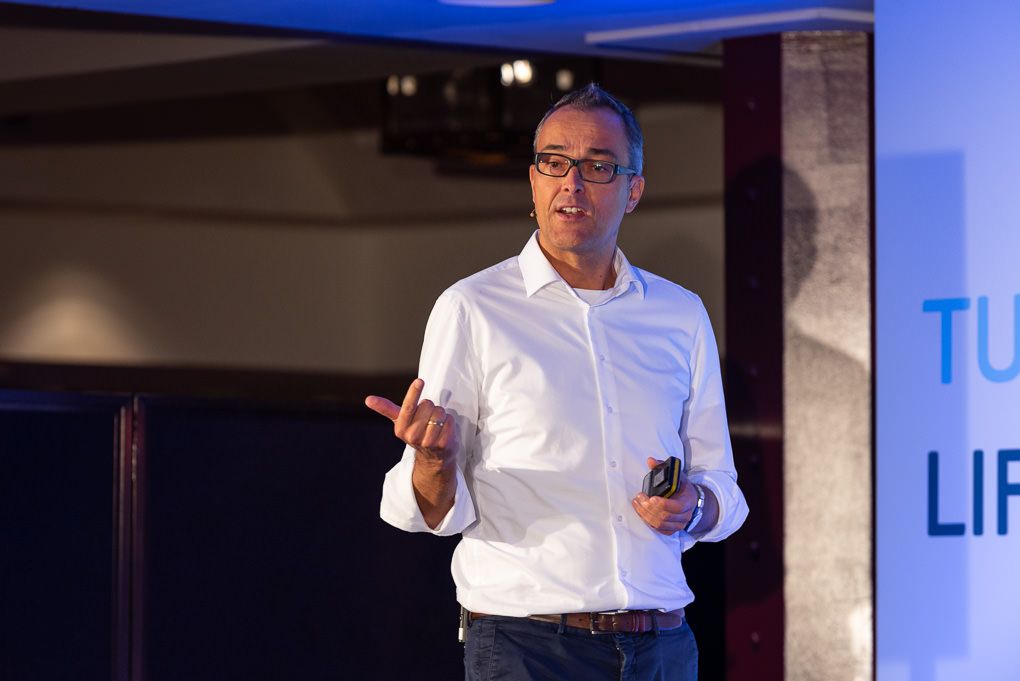
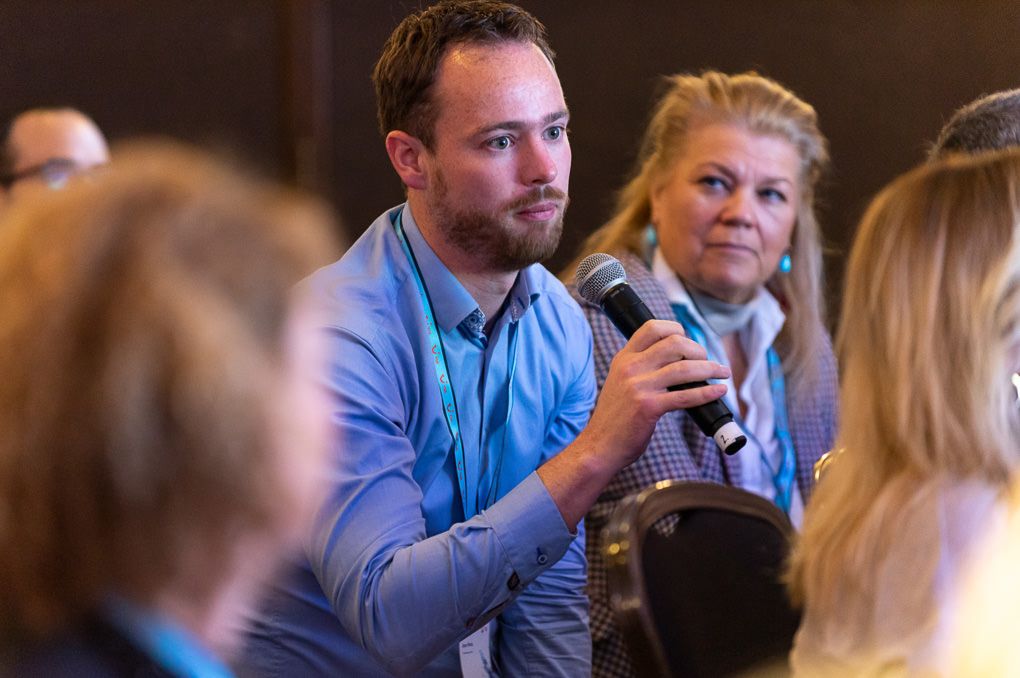
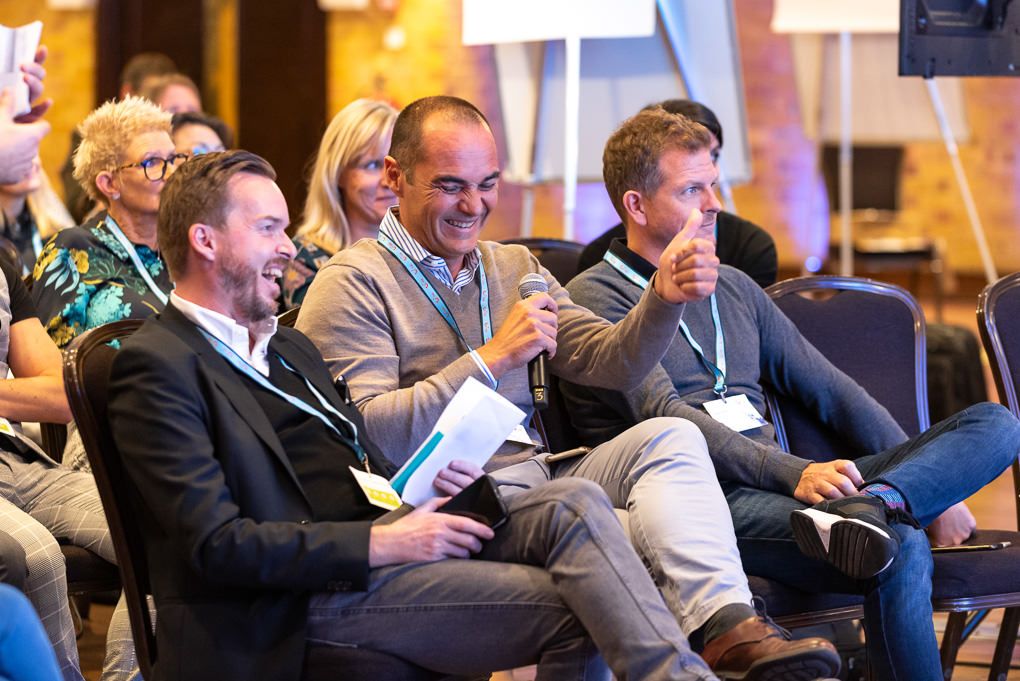
Speakers rarely remain completely still. They gesture, turn towards screens, walk across the stage and change expression quickly. Audience members laugh, applaud and interact with one another.
A slower shutter speed may produce a lower ISO, but it also increases the risk of subtle motion blur. This can be difficult to notice on the back of the camera and obvious when the photograph is viewed at full size.
For the TUI event, I generally kept my shutter speed at or above 1/200 second. I adjusted it when the subject and lighting allowed, but I did not sacrifice sharpness simply to achieve a cleaner-looking ISO figure.
A sharp photograph with some visible noise is normally more useful than a smooth but blurred image.
What aperture should you use in a dark conference venue?
I photographed much of the event at f/2.8.
A wide aperture allows more light to reach the sensor and can create useful separation between the subject and a distracting conference background.
However, working at f/2.8 also produces a shallower depth of field. Accurate focusing becomes important, particularly when photographing several people on a panel or delegates sitting at different distances from the camera.
For an individual speaker, f/2.8 is often a practical choice. For group photographs or panels, I will use a smaller aperture when the available light and required depth of field allow.
The aperture should serve the photograph. It should not remain fixed purely because the room is dark.
How high can the ISO go?
During the darkest parts of the TUI event, the Canon 5D Mark IV regularly reached ISO 12,800.
High ISO introduces noise and can reduce fine detail and colour quality. However, modern editing software can reduce noise far more effectively than it can repair subject movement.
The aim is not to use the lowest possible ISO. The aim is to produce a sharp, well-timed and usable photograph.
A correctly exposed high-ISO image will also normally respond better to editing than a severely underexposed photograph that has to be brightened aggressively afterwards.
I therefore allow Auto ISO to respond to changing conditions while retaining control over the shutter speed and aperture.
Manual exposure with Auto ISO
For changing conference light, I often work in Manual mode with Auto ISO.
This allows me to choose the two settings that most directly affect the appearance of a moving subject:
- The shutter speed needed to control movement
- The aperture needed for light and depth of field
The camera then adjusts the ISO as the speaker moves through brighter and darker parts of the stage.
I still monitor the exposure and use exposure compensation where necessary. Auto ISO is not a substitute for paying attention, particularly when bright screens or spotlights could mislead the camera’s metering system.
Protecting stage highlights and screens
Conference stages can contain extreme differences in brightness.
A speaker may be illuminated by a strong spotlight while the surrounding room remains almost black. Presentation screens, illuminated branding and white shirts can be brighter still.
Once important highlights are completely overexposed, the missing detail cannot always be recovered.
I therefore watched the brightest parts of the scene carefully. In some situations, I allowed the overall photograph to sit slightly darker to protect a speaker’s face, clothing or the content of a nearby screen.
That does not mean deliberately underexposing every image. It means deciding which detail matters and exposing accordingly.
Photographing in RAW gave me greater flexibility to balance highlights and shadows during editing.
Should you use flash for conference photography?
Flash can be useful for:
- Arrivals and red-carpet photographs
- Arranged group photographs
- Networking in extremely dark reception spaces
- Step-and-repeat or branded backdrops
- Situations where additional lighting has been agreed in advance
- During presentations, however, repeated flash can distract the speaker, affect the audience and remove the atmosphere created by the event lighting.
I therefore photographed the TUI stage sessions using the available light.
Working without flash requires confidence in exposure, focusing and high-ISO editing. It also helps the photographer remain unobtrusive during important presentations.
The decision should always be based on the event. Flash is a useful tool, but it should not become the only way a photographer can work in a dark room.
Camera and lens choice
I photographed this event using a Canon 5D Mark IV and an EF 70–200mm f/2.8 lens.
The 5D Mark IV was an excellent professional camera, although newer mirrorless bodies now offer improved focusing and high-ISO performance.
That is part of what makes this assignment a useful example. Successful low-light conference photography does not depend entirely on owning the latest camera.
The 70–200mm f/2.8 was particularly useful because it allowed me to:
- Photograph speakers from a respectful distance
- Move quickly between close portraits and wider compositions
- Isolate subjects from distracting backgrounds
- Capture natural audience reactions
- Work at f/2.8 when light levels were extremely low
- Avoid repeatedly changing lenses
A faster prime lens can admit more light, but it also limits how quickly the composition can be changed.
At a live conference, the flexibility of a professional zoom is often more valuable than gaining one additional stop of light.
White balance under mixed conference lighting
Mixed lighting was one of the most difficult parts of the assignment.
The room contained warmer ambient lighting, presentation screens, coloured stage lights and LEDs. These sources did not always reproduce colour consistently, particularly across a rapid sequence of photographs.
I used Auto White Balance while photographing because one fixed value would not have worked throughout the room.
During editing, I corrected groups of photographs individually, paying particular attention to:
- Natural skin tones
- Neutral clothing
- Consistent TUI brand colours
- Unwanted green or magenta casts
- Colour changes caused by LED lighting
- Consistency between consecutive photographs
Photographing in RAW was essential. A RAW file contains considerably more information for correcting colour and exposure than a finished JPEG.



A strong gallery needs more than speaker photographs
Perfect settings will not create a successful conference gallery if the photographer does not observe what is happening around the room.
The communications team needed more than repetitive photographs of speakers behind a lectern. They needed a varied collection that showed what the event felt like.
Throughout the two days, I looked for:
- Speakers reacting to questions
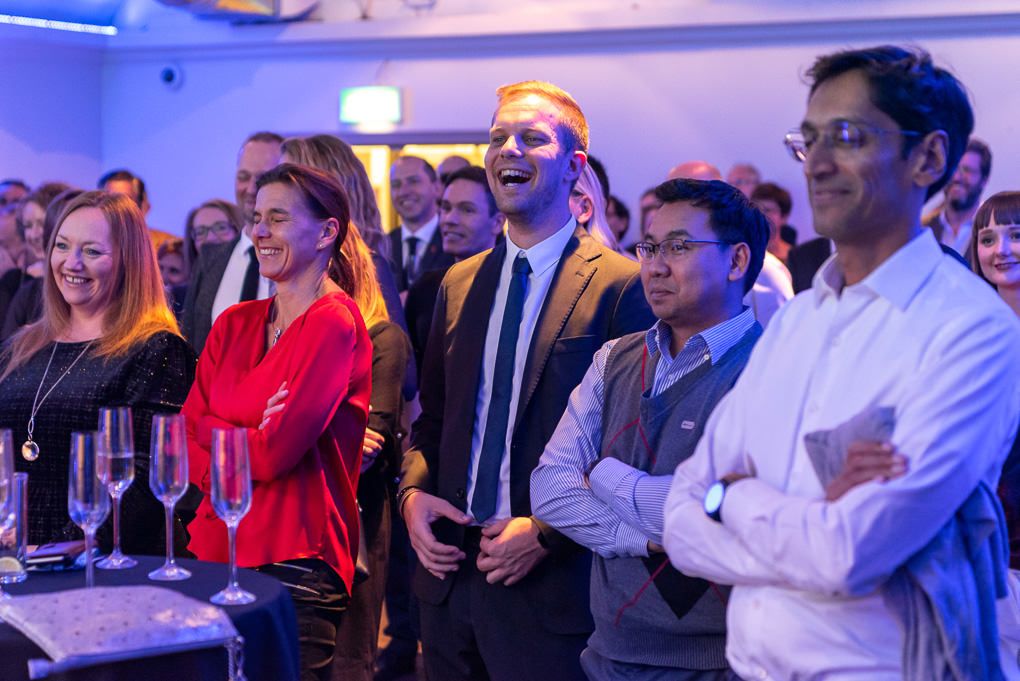
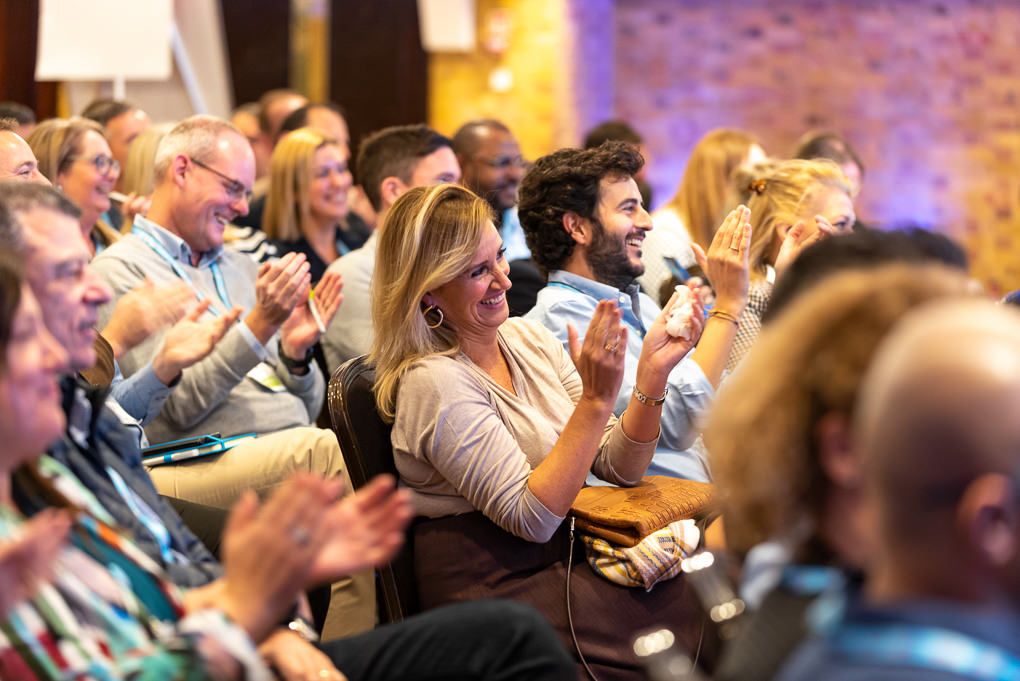
- Audience members laughing or applauding
- Delegates concentrating on a presentation
- Discussions during breakout sessions
- Natural conversations between senior leaders
- Networking during breaks
- Gestures and expressions
- TUI branding and event details
- Wide views of the venue
- Foreground elements that created a sense of being in the audience
These images gave the final gallery greater variety and made it more useful for internal communications.
The same principle applies when planning any event. My conference photography checklist explains the speakers, branding, audience moments and supporting details organisers should consider before the event.
Moving around without becoming a distraction
Remaining unobtrusive does not mean standing in one position at the back of the room all day.
I moved between the back, sides and front of the space whenever access and the event schedule allowed. I also photographed through gaps in the audience and used foreground delegates to frame speakers.
This produced:
- Clean close-ups of individual speakers
- Wider images showing the scale of the room
- Audience-perspective photographs
- Natural reactions
- Stronger visual connections between speakers and delegates
The key is to move with purpose.
I avoid changing position during quiet or sensitive moments when movement would be noticed. Applause, speaker transitions and breaks often provide better opportunities to relocate discreetly.
Understanding when to move is as important as knowing where to stand.
Editing noisy conference photographs
The purpose of editing is to produce a consistent, natural gallery—not to make every photograph look unnaturally smooth.
My editing process included:
- Correcting exposure
- Balancing white balance
- Removing unwanted colour casts
- Recovering highlights where possible
- Lifting shadow detail selectively
- Applying restrained noise reduction
- Checking skin tones
- Making local adjustments to guide attention
- Maintaining consistency across both event days
Noise reduction was applied carefully. Excessive processing can remove skin texture and fine detail, leaving people looking artificial.
When using Lightroom’s Denoise, I generally keep the amount restrained, often around 30 or below, although the correct level depends on the individual file.
I also avoid applying excessive Clarity or sharpening to portraits. People should look natural, even when the original photograph was taken at a very high ISO.
Delivery within 48 hours
The assignment covered two days and required an overnight stay. Once the event ended, the photographs still needed to be selected, edited, checked and prepared for delivery.
The completed gallery was supplied within 48 hours for TUI’s internal communications and intranet.
The photography received positive internal feedback and provided a varied visual record of the speakers, leadership team, delegates, breakout sessions and wider atmosphere.
Turnaround is an important part of conference planning. My guide to conference photography costs in the UK explains how event length, travel, accommodation, delivery speed and intended image use can affect a quote.
How can organisers improve photographs in dark venues?
An experienced photographer can adapt to difficult conditions, but advance planning can make a substantial difference.
Before the event, provide:
- A complete running order
- Speaker names and job titles
- Details of senior attendees and VIPs
- Sponsor and branding requirements
- Breakout-room locations and timings
- Advance notice of group photographs
- Any restrictions on where the photographer can stand
- Details of required turnaround times
- Information about how the photographs will be used
Where possible, test the lighting with a person standing in the speaker’s position. An empty stage or lectern does not show how the light will fall on a face.
Speakers should also be encouraged to remain within the properly illuminated area. A presenter who repeatedly walks beyond the stage lighting will be much harder to photograph consistently.
A clear brief allows the photographer to work independently while ensuring that commercially important moments are not missed.
What this event taught me about low-light conference photography
There is no single camera setting that solves every dark conference venue.
Successful coverage requires the photographer to balance:
- Subject movement
- Available light
- Stage highlights
- Depth of field
- High-ISO noise
- Changing colour
- Event etiquette
- Brand requirements
- The needs of the communications team
- Reliable editing and delivery
The most important lesson is that technical settings should support the story of the event.
A complete conference gallery needs sharp speakers, but it also needs audience reactions, branding, networking, scale, details and genuine moments between people.
That combination is what turns a set of photographs into a useful communications asset.

Frequently asked questions
How do you photograph a conference in very low light?
Use a fast lens, select a shutter speed capable of freezing speaker movement and allow the ISO to increase when necessary. Photograph in RAW so exposure, colour and noise can be corrected carefully afterwards.
What is the best shutter speed for conference photography?
Around 1/200 second is a useful starting point for moving speakers. Faster movement may require a higher shutter speed, while a genuinely static subject may allow a slightly slower one.
What aperture is best for low-light conference photography?
For an individual speaker, f/2.8 is often a practical starting point. Panels and group photographs may require a smaller aperture to keep several people sharp.
Is ISO 12,800 too high for professional photographs?
Not necessarily. A sharp, correctly timed photograph at ISO 12,800 can be more useful than a lower-ISO image affected by motion blur. Exposure quality, camera performance and careful editing all affect the final result.
Do conference photographers use flash?
Flash may be used for posed groups, arrivals, networking or branded backdrops. During presentations, many experienced conference photographers work with the available light to avoid distracting speakers and changing the atmosphere.
How do you correct mixed lighting at a conference?
Photographing in RAW provides the greatest flexibility. White balance, colour casts, exposure and individual skin tones can then be corrected across related groups of photographs.
How quickly can conference photographs be delivered?
Standard delivery is normally within a few working days, depending on the size of the assignment. Same-day, next-day and priority options may also be available when agreed before the event.
Do you photograph multi-day conferences?
Yes. I photograph single and multi-day conferences across London, Hertfordshire, the UK and internationally. Travel, accommodation, required coverage and delivery deadlines are agreed before the event.
Professional event and conference photography
I have more than 16 years of professional photography experience, including over 11 years photographing corporate events, conferences, awards, exhibitions and major public events.
My approach is calm, observant and unobtrusive. I capture the planned speakers and formal moments while also looking for the reactions, interactions and details that give the final gallery its value.
You can view more examples of my professional event and conference photography.
If you are planning a conference, leadership event, exhibition or awards ceremony, get in touch to discuss your event.
Lee Charlton is a professional photographer with more than 16 years of experience and over 11 years specialising in corporate events and conferences.
His experience includes working as Global Photography Manager at TUI and Photography and Digital Asset Manager at the RHS. He has photographed leadership conferences, corporate events, exhibitions, awards and commercial assignments across the UK and internationally.