The Final Chapter of My RHS Glow Season
Glow at RHS Bridgewater was the third and final assignment in my series photographing illuminated winter trails for the Royal Horticultural Society.
I began at RHS Harlow Carr, where controlling saturated LEDs, mixed colour temperatures and deep shadows became the main technical challenge. I then travelled to RHS Wisley, where the larger garden, heavier visitor flow, reflective water and aerial photography required a different approach.
By the time I reached RHS Garden Bridgewater in Salford, Greater Manchester, I had developed a reliable workflow for photographing illuminated gardens after dark. Bridgewater still presented its own challenges, however. Wide lawns gave way to the Weston Walled Garden and darker woodland, while a live LED juggling performance introduced movement and unpredictability that had not featured at the other two locations.
This final shoot became an opportunity to bring together everything I had learned across the previous events: controlling highlights, responding to changing light, working around visitors and creating a collection that showed the trail as a complete experience.
Understanding RHS Bridgewater & the Photography Challenge
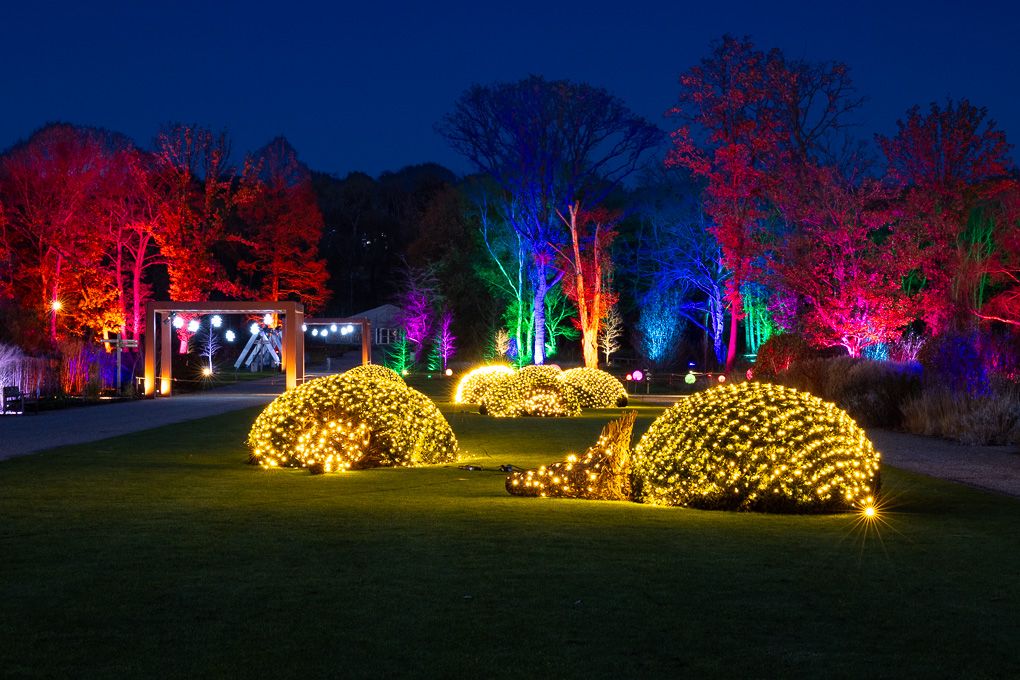
What immediately stood out at Bridgewater was the variety of environments along the route.
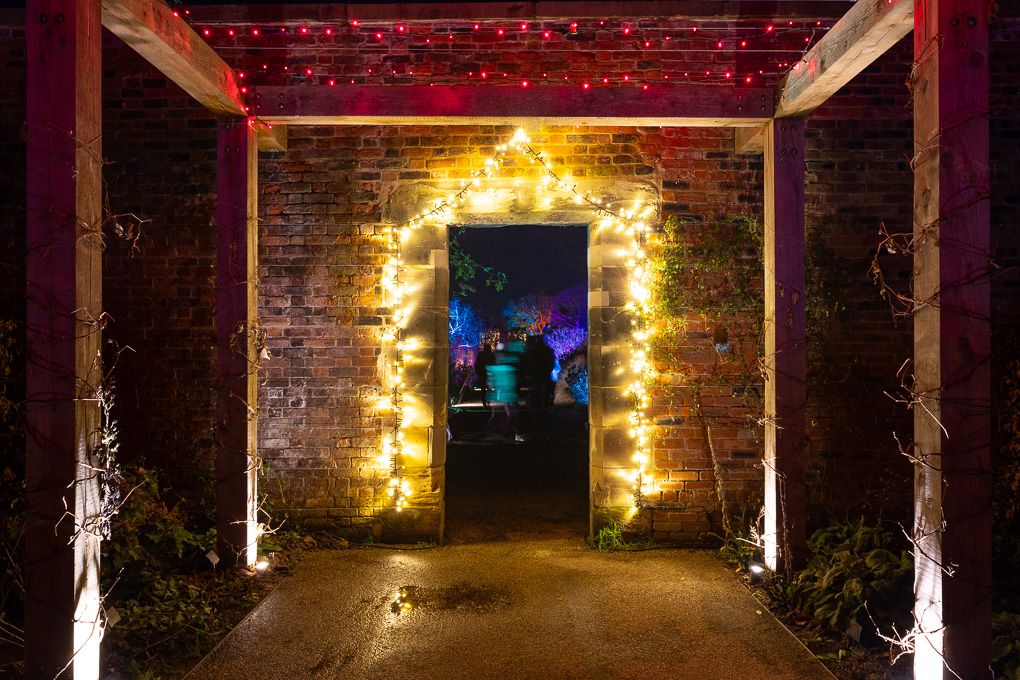
One moment I was photographing open lawns filled with bold colour; the next I was moving through enclosed garden spaces, warm illuminated archways or woodland where the surrounding darkness became a much stronger part of the composition.
This created several photographic challenges:
- Bright LED installations surrounded by deep shadow
- Rapid changes in the intensity and colour of the light
- Visitors moving continuously through narrow sections
- Large open scenes followed by smaller, more intimate spaces
- A live performance requiring completely different shutter-speed decisions
- The need to make the whole set feel visually consistent
Working for the RHS, I needed to capture more than individual installations. The photographs also had to communicate the relationship between the lights and the garden, show how visitors experienced the route and provide a useful mixture of wide, medium and detailed images.
Unlike Harlow Carr and Wisley, I did not use a drone at Bridgewater. The visual story was created entirely from ground level, so viewpoint, pacing and the relationship between successive photographs became especially important.
Pre-Event Planning: Applying Lessons from Harlow Carr and Wisley
Having already photographed two RHS Glow events that week, I arrived at Bridgewater with a much clearer understanding of how these trails behave after dark.
Before photographing the first section properly, I walked through part of the route and watched how the lighting changed between different areas. I looked for the strongest colours, the darker transitions, potential tripod positions and places where visitors would naturally become part of the composition.
My preparation included:
Checking the route: I wanted to understand how the trail progressed and where its main visual peaks occurred.
Identifying exposure extremes: Some installations were considerably brighter than their surroundings and needed careful highlight control.
Watching visitor movement: This helped me decide where people would add atmosphere and where I should wait for a cleaner frame.
Planning equipment changes: I moved between handheld and tripod photography according to the light and the amount of movement in the scene.
Looking for visual transitions: Wide views, quieter pathways and smaller details were all needed to give the final sequence a natural rhythm.
Walking the location before becoming absorbed in individual photographs is a simple step, but it makes the rest of the shoot more efficient. It also helps prevent the final gallery from becoming a collection of unrelated installations.
For more on how I approach locations, pathways and changing conditions, see my guide to professional garden photography.
Gear & Settings: My Approach at RHS Bridgewater
I used the same core equipment as I had at Harlow Carr and Wisley:
- Canon EOS R5
- Canon RF 24–105mm f/2.8 zoom
- Sturdy tripod
- Spare batteries and memory cards
The 24–105mm range was particularly useful because it allowed me to move quickly between wider establishing views and tighter compositions without repeatedly changing lenses in the dark.
As with the previous shoots, I alternated between handheld and tripod-mounted photography.
For static installations and carefully composed scenes, the tripod allowed me to use slower shutter speeds and maintain good image quality. When visitors were moving through the trail or the scene was changing quickly, working handheld gave me the responsiveness I needed.
My general exposure approach remained similar to the earlier Glow assignments:
- I exposed carefully for the brightest LED elements to avoid losing colour and detail.
- I often underexposed slightly, by approximately two-thirds of a stop, and recovered darker areas selectively during editing.
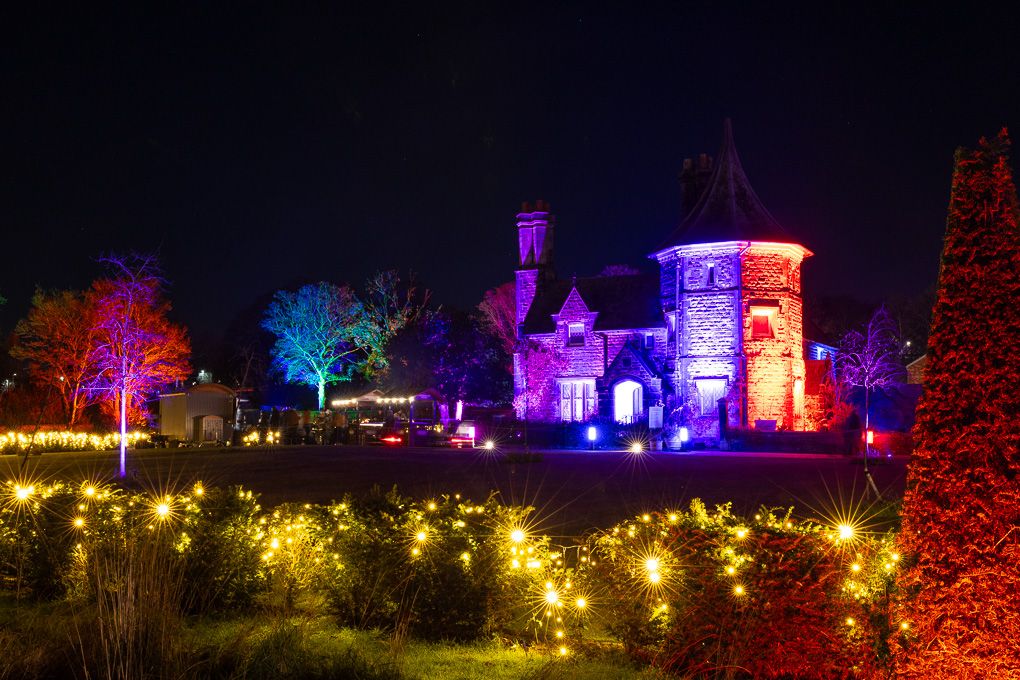
- Where point lights suited the composition, I stopped the lens down towards f/16 to create defined starbursts.
- For handheld photographs, I allowed the ISO to rise when necessary rather than risking unwanted camera movement.
- On the tripod, I could use lower ISO settings and longer shutter speeds where subject movement allowed.
- I checked the histogram and highlight warning regularly because the brightness of each installation varied considerably.
There was no single correct setting for the whole trail. The light, subject movement and intended effect changed too often. The important thing was to understand what needed protecting in each frame and adapt accordingly.
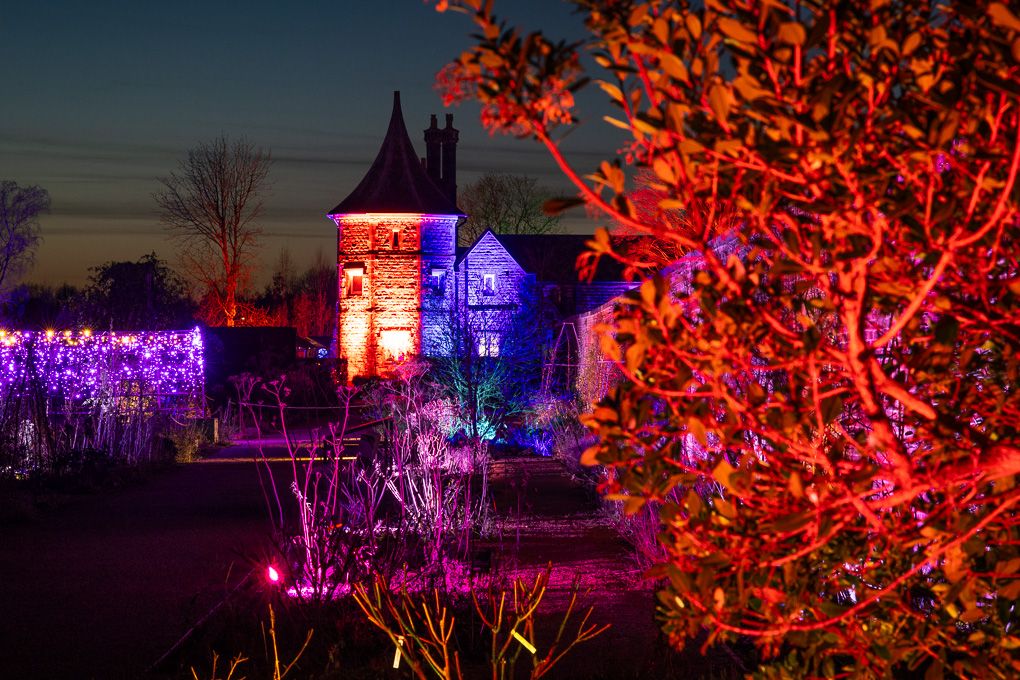
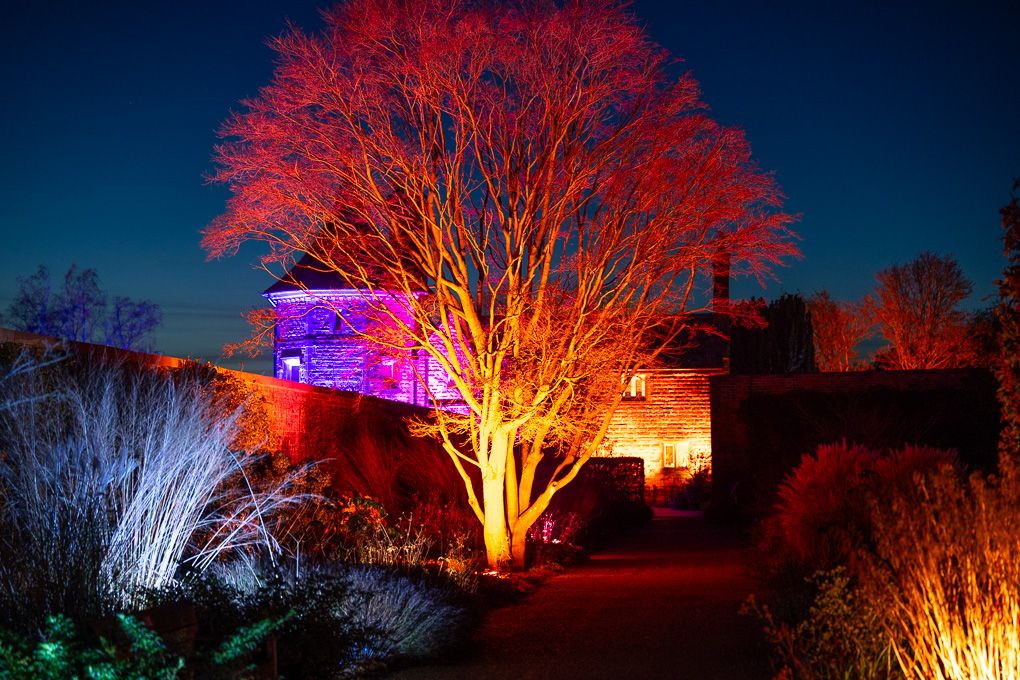
On-Site Execution: From Open Lawns to Woodland
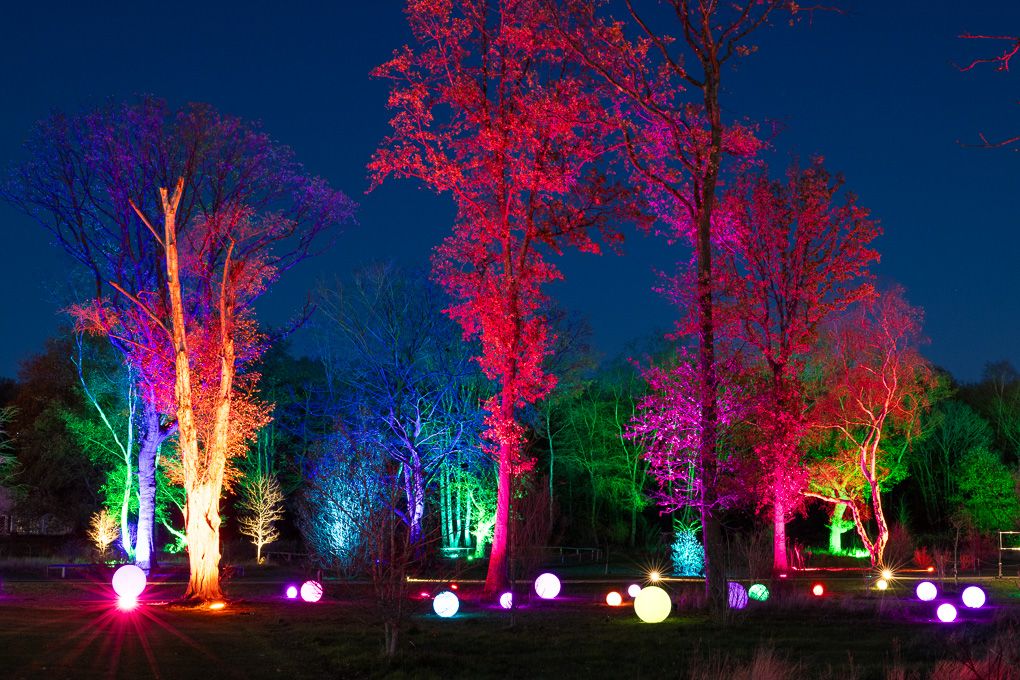
One of the most interesting aspects of Bridgewater was the way the atmosphere changed as the trail progressed.
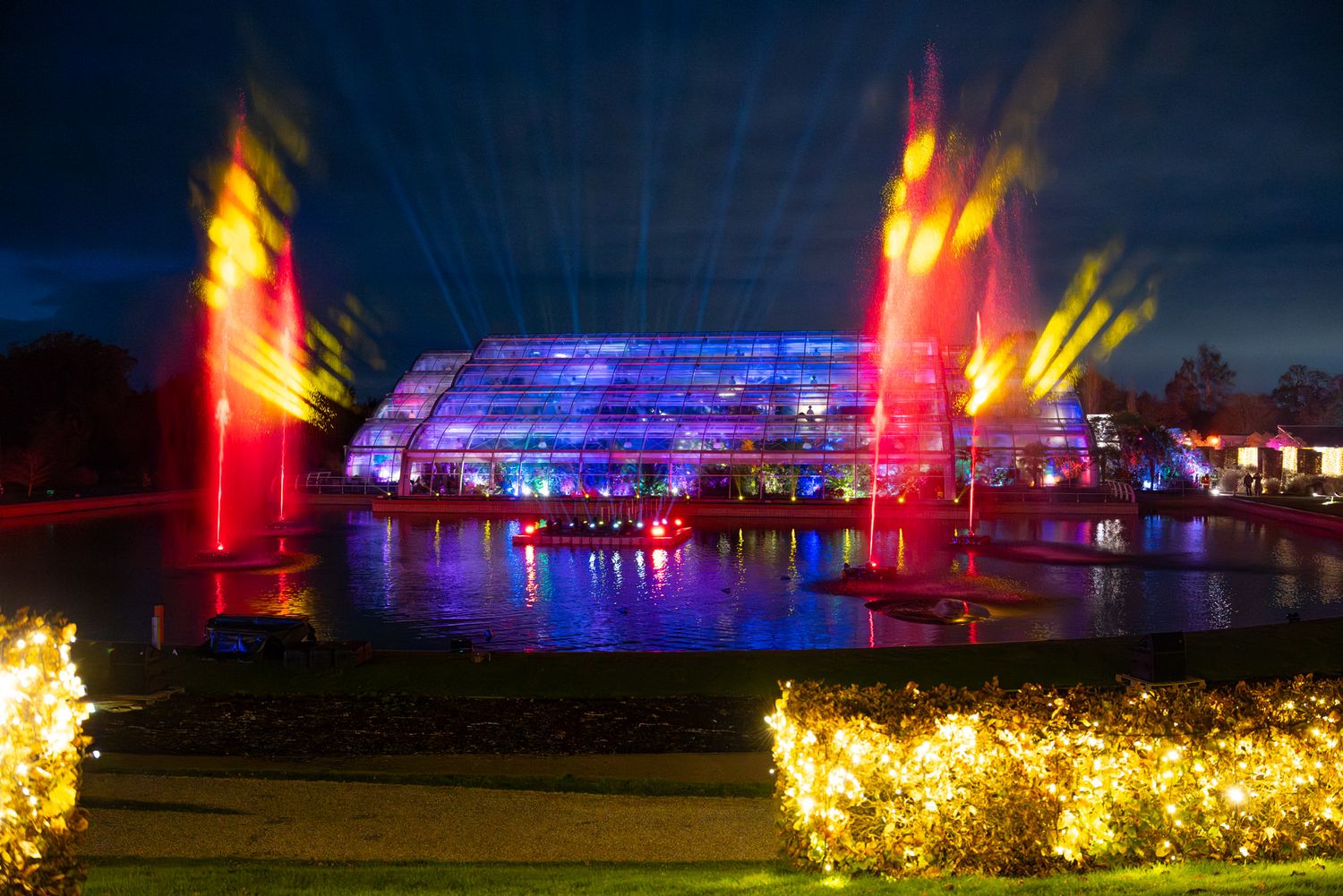
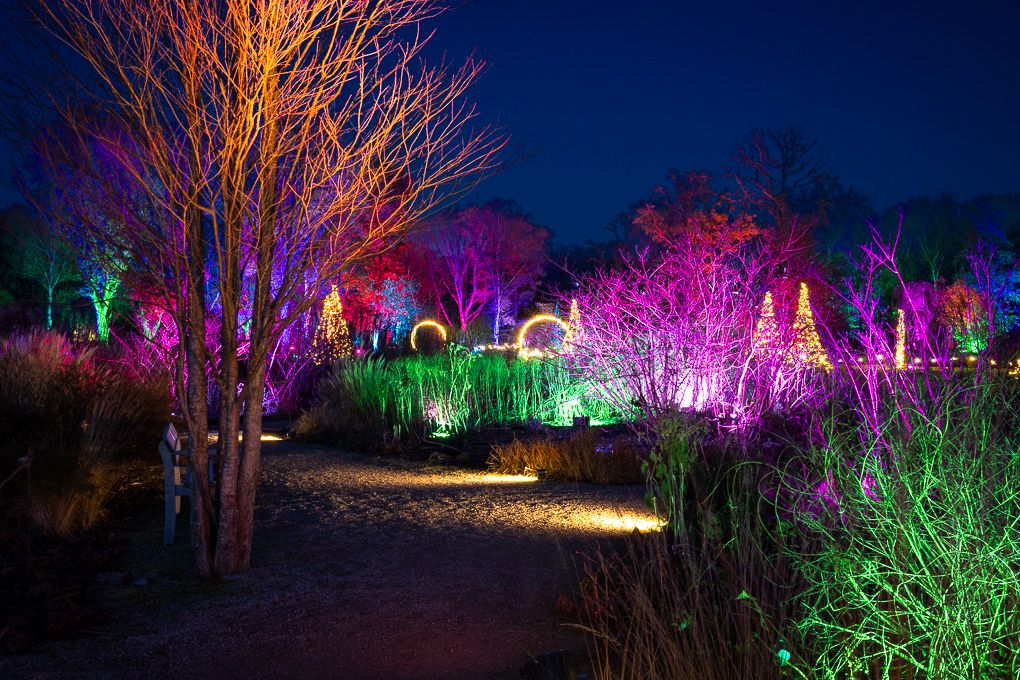
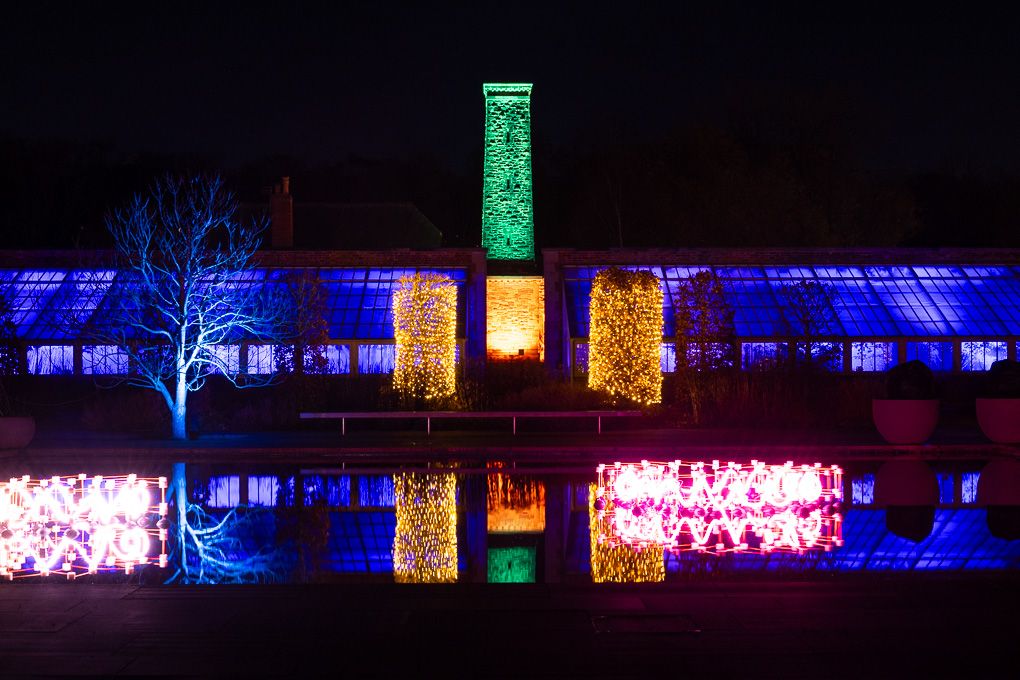
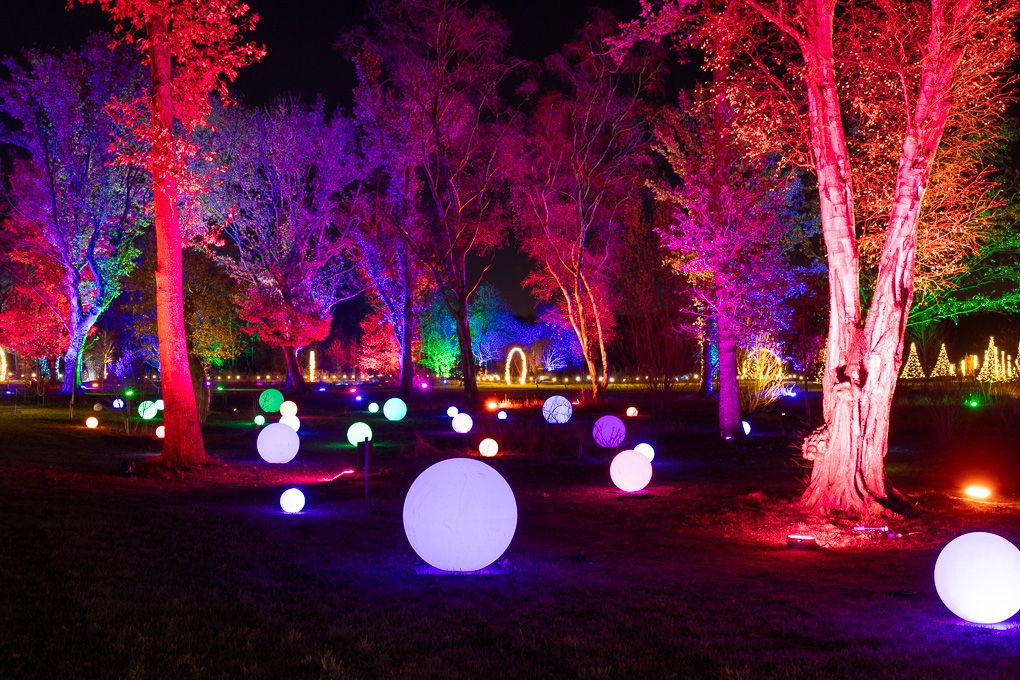
The wider areas allowed me to step back and place the illuminated installations within the landscape. Paths and lines of light became useful compositional tools, guiding the viewer through the frame and communicating the scale of the event.
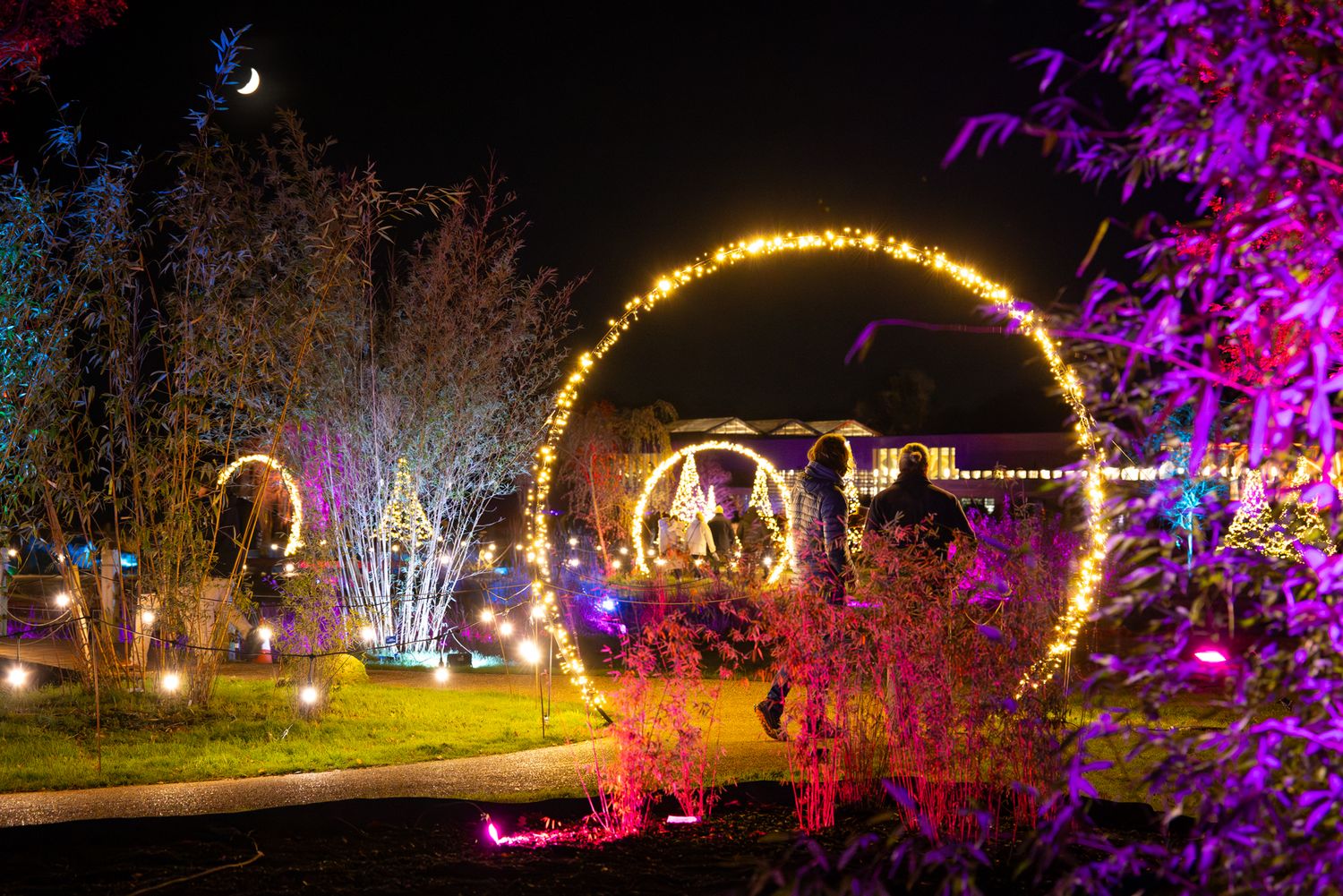
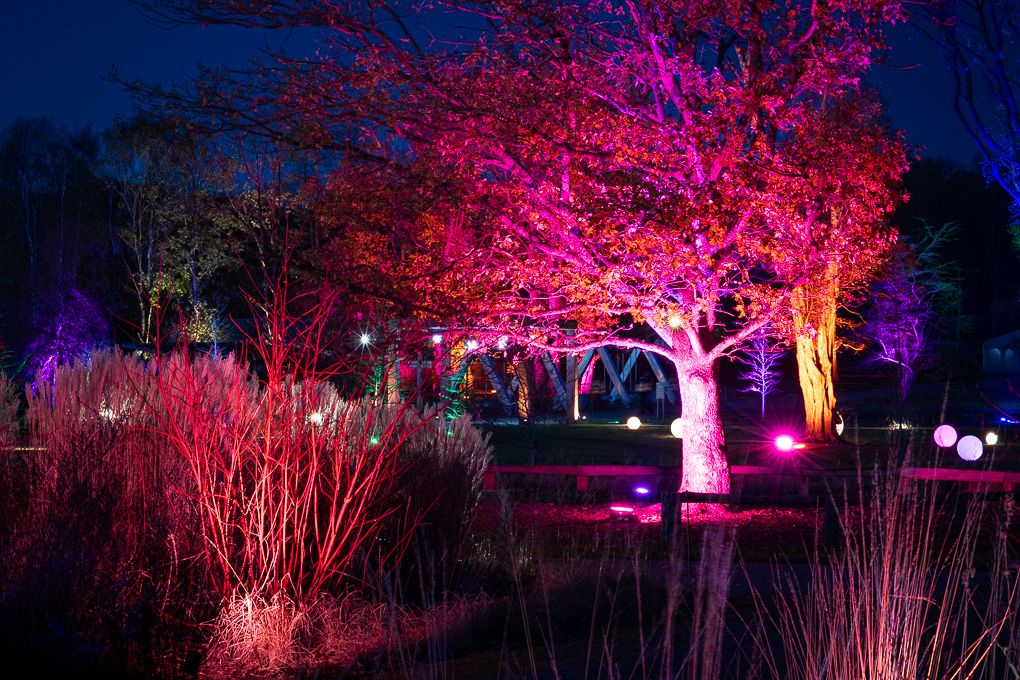
In the enclosed sections, the approach became more intimate. Trees, arches and garden structures could be used as foreground elements, while the surrounding darkness helped isolate smaller areas of colour.
I looked for:
- Paths that created strong leading lines
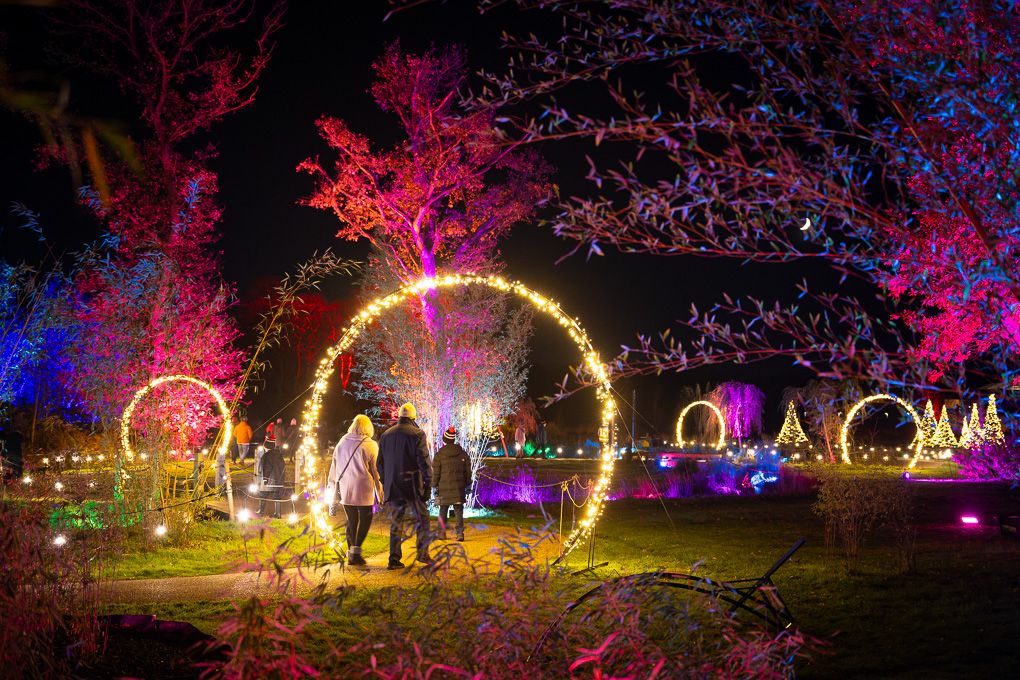
- Repeating arches and illuminated structures
- Trees that framed the installations
- Contrasting warm and cool areas of light
- Silhouettes that established scale
- Reflections and surfaces that extended the colour through the scene
- Vertical compositions suitable for social media and mobile use
Without aerial photography, I paid greater attention to building scale from ground level. Shooting from lower viewpoints, including foreground elements and allowing pathways to run through the frame helped the garden feel more expansive.
This combination of broad context and smaller details is important in both visitor attraction photography and event coverage. The strongest collection should show where an experience takes place, what happens there and how it feels to attend.
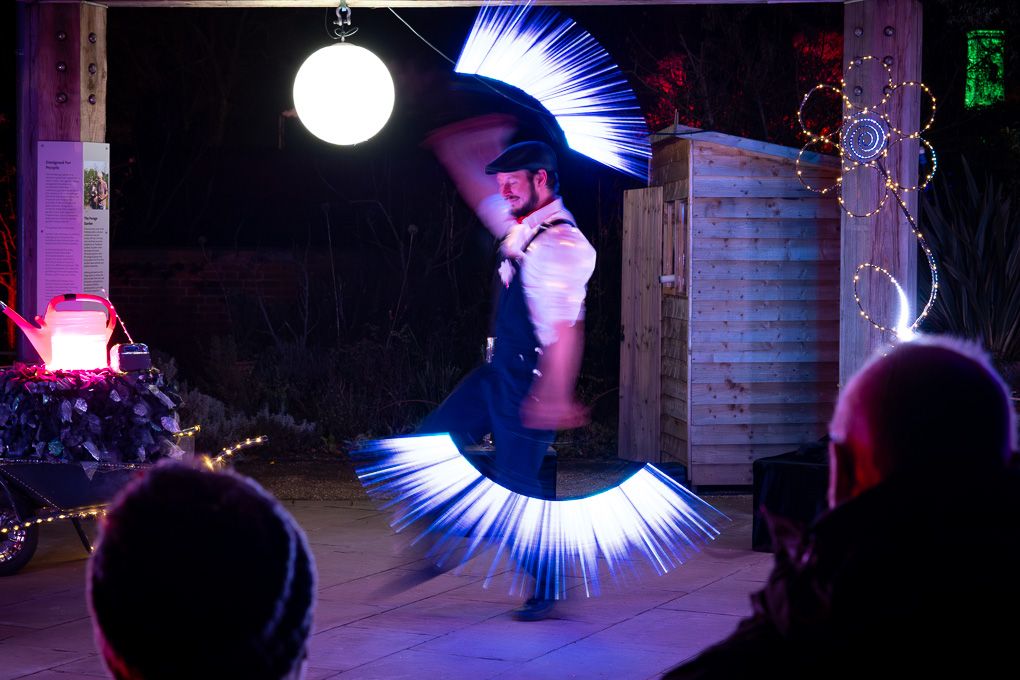
Capturing the Juggling Light Show at 1/6 Second
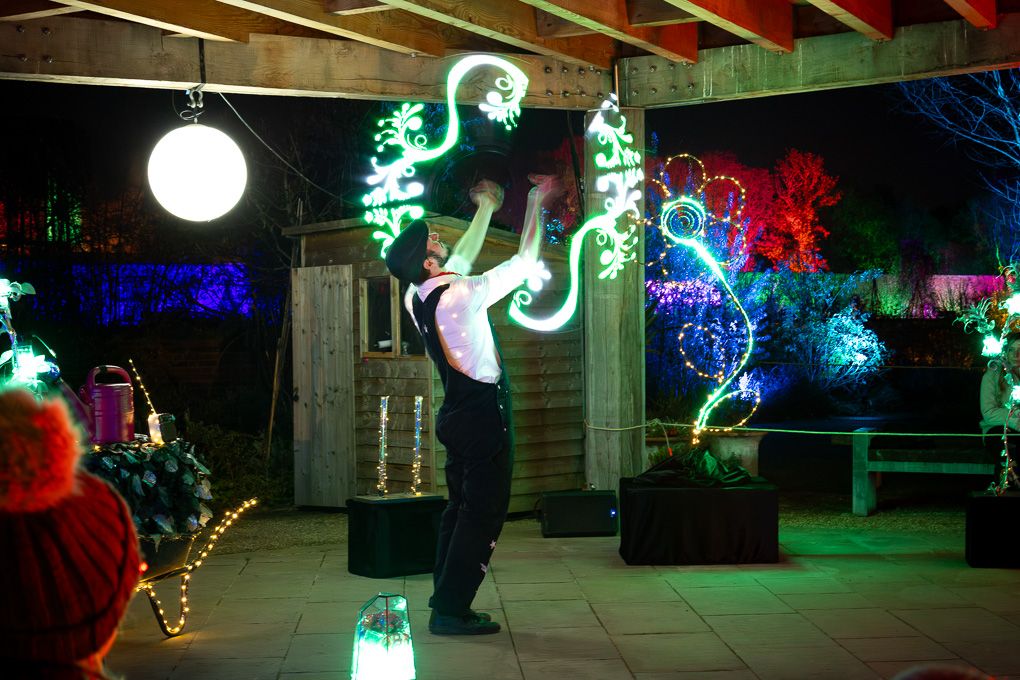
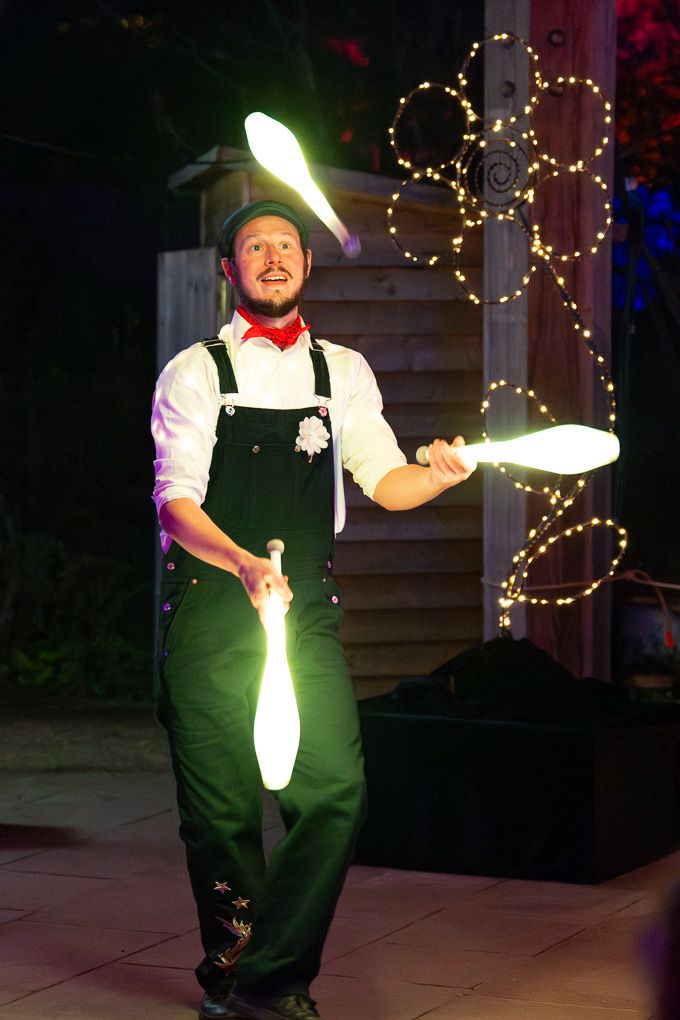
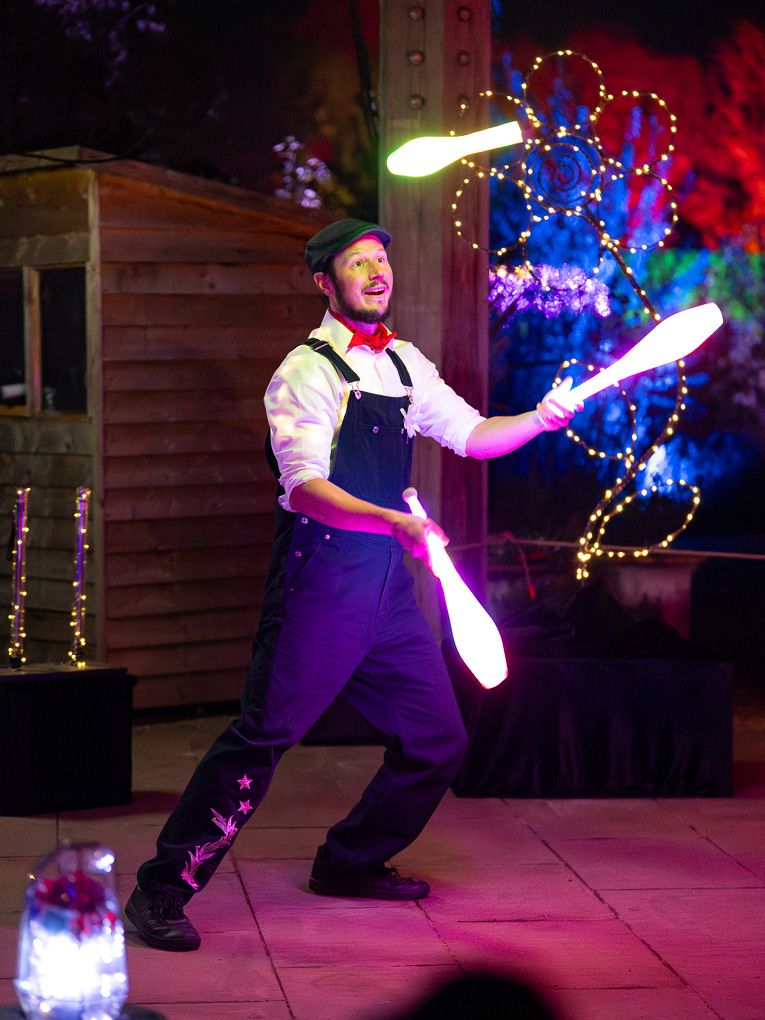
The most distinctive moment of the Bridgewater trail was a live performer using illuminated juggling clubs and programmable LED poi.
This created a completely different challenge from photographing static garden installations. The patterns only became visible through movement, so the shutter speed determined whether the final image worked.
A shutter speed that was too fast recorded disconnected fragments of light. If the exposure was too long, the patterns overlapped and became difficult to read.
After testing several exposures, I found that 1/6 of a second produced the best result. It allowed the clubs and poi to create recognisable arcs, spirals and shapes while retaining enough of the performer to provide context.
I increased the ISO as required to achieve the exposure. I do not remember the exact value, but the important decision was accepting some additional noise in exchange for the shutter speed needed to record the performance successfully.
Timing was just as important as exposure. The shapes changed constantly, and the most successful photographs came when the performer’s position, the programmed pattern and the background lighting worked together.
This was where my experience of professional event photography became particularly relevant. Unlike a fixed installation, a live performance cannot simply be photographed again in exactly the same way. You have to watch, anticipate and respond.
Working With Visitors, Movement & Changing Light
Visitors were not simply obstacles to work around. In several parts of the trail, they helped communicate scale, atmosphere and the experience of being there.
I created a mixture of clean installation photographs and images containing people. In some compositions, I waited for a quieter moment. In others, silhouettes and moving visitors made the image more effective.
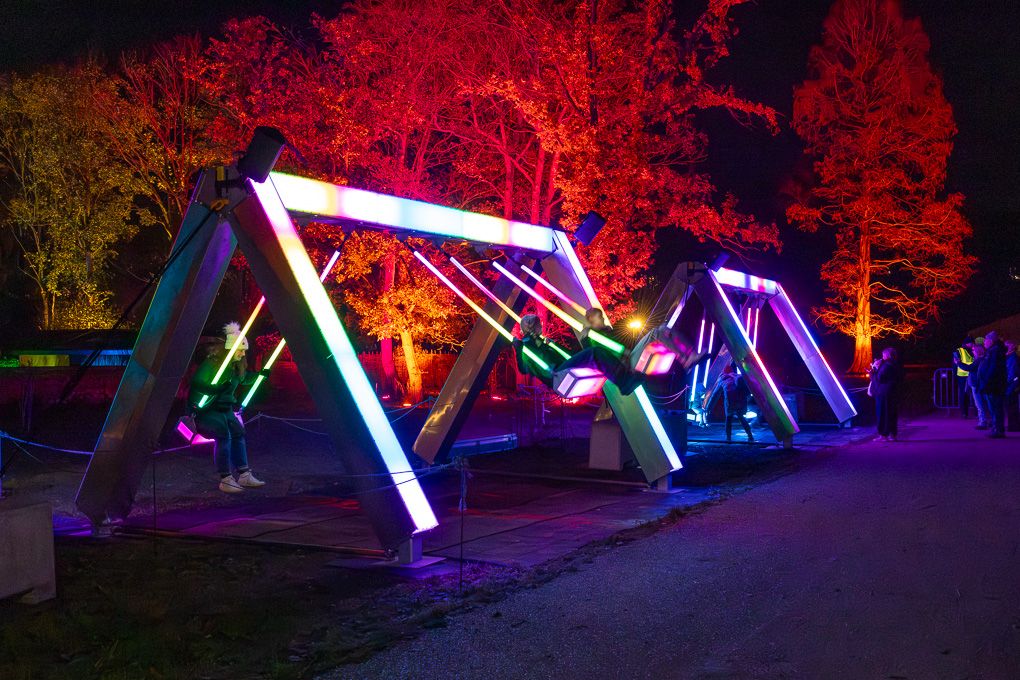
The human moments at Bridgewater included people enjoying the illuminated swings, friends gathering around fire pits and visitors moving through glowing archways. I also photographed my partner, Lucie, toasting a marshmallow beside the fire.
That image was very different from the more dramatic installation photographs, but it added warmth and authenticity to the sequence. It showed that Glow was not only a visual display; it was a seasonal experience that people enjoyed together.
When photographing visitors at an event like this, I considered:
- Whether a person added useful scale
- Whether their position strengthened or obscured the composition
- Whether movement should be frozen or allowed to blur
- Whether a silhouette would work better than visible facial detail
- Whether the frame communicated a genuine part of the visitor experience
The aim was not to make every photograph look empty and perfect. It was to create a balanced set that showed both the installations and the atmosphere around them.
Post-Production: Keeping the Glow Colours Natural
My post-production workflow was similar to the process used for the Harlow Carr and Wisley shoots.
I imported the RAW files into Adobe Lightroom Classic and worked through the collection in stages:
- Apply lens corrections and select the strongest frames.
- Check white balance and make small adjustments where mixed lighting created unwanted colour casts.
- Lift exposure and shadow detail carefully where I had underexposed to protect the LEDs.
- Reduce highlights selectively without flattening the glow of the installations.
- Use Lightroom’s Denoise feature where higher ISO settings had introduced visible noise.
- Adjust individual colours through the HSL controls when one LED colour dominated the frame.
- Apply sharpening with masking so that noise in dark areas was not exaggerated.
- Check crops, verticals and the balance of horizontal and portrait-format photographs.
- Export high-resolution files and appropriately sized versions for digital use.
Colour consistency was particularly important. Each section of the route used a different palette, but the final gallery still needed to feel like one event.
I avoided removing too much contrast or lifting every shadow. These photographs were made at night, and allowing some areas to remain dark preserved their depth and atmosphere.
Completing the RHS Glow Photography Series
Bridgewater completed a three-part photography journey across very different RHS Gardens.
At Harlow Carr, the main lesson was controlling highlights and intense colour within a smaller, more intimate trail. It became the technical foundation of the series.
At Wisley, scale and logistics became more important. Large open spaces, water, heavier visitor flow and aerial photography required greater planning.
At Bridgewater, those technical and logistical lessons came together. The changing environments, visitor moments and live illuminated performance placed more emphasis on sequencing and visual storytelling.
The three articles are:
- How I Shot the Light Trail: Glow at RHS Harlow Carr
- Light Trail Photographer: Glow at RHS Wisley
- Light Trail Photographer: Glow at RHS Bridgewater
Each garden required a different response, but the overall objective remained consistent: protect the character of the lighting, show the relationship between the installations and the landscape, and create photographs that communicate the visitor experience.
Why This Photography Matters for Event Organisers
A winter light trail needs more than a few photographs of its brightest installations.
A commercially useful collection should include:
- Wide images that establish the location and scale
- Strong hero photographs for event promotion
- Horizontal and vertical compositions
- Individual installations and supporting details
- Natural visitor interactions
- Live performers and entertainment
- Both populated and quieter versions of important scenes
- Images that leave room for headlines or promotional graphics
These photographs can support websites, social media, PR, email campaigns, printed material and promotion for future events.
Giving a photographer time to understand the route and, where possible, access to quieter periods makes it much easier to create that variety. It allows important installations to be photographed cleanly while still leaving time to capture the event once visitors bring it to life.
Final Thoughts & Key Takeaways
- Walk part of the trail before committing to individual compositions.
- Protect bright LED highlights rather than trying to expose every shadow.
- Move between handheld and tripod photography according to the scene.
- Use paths, trees and structures to create depth from ground level.
- Include visitors where they add atmosphere, scale or meaning.
- Test shutter speeds deliberately when photographing moving LED performances.
- Keep post-production vibrant but avoid making the colours look artificial.
- Build a complete visual sequence rather than a gallery of unrelated installations.
Photographing Glow at RHS Bridgewater was an ideal conclusion to the series. Harlow Carr established the technical approach, Wisley expanded it across a larger site, and Bridgewater introduced the strongest combination of changing environments, visitor experience and live performance.
For me, that is what makes light trail photography so rewarding. The camera settings matter, but the real challenge is understanding how light, landscape and people come together to tell the story of an event.
Need a Photographer for a Light Trail or Illuminated Event?
Planning a winter light trail, illuminated garden, outdoor performance or visitor attraction?
I provide professional low-light and event photography for organisations across the UK. Coverage can include installations, live performers, natural visitor interactions and ground-level storytelling, with drone and aerial photography available where the location, permissions and event conditions allow.
You’ll receive a varied collection of professionally edited images suitable for websites, PR, social media, advertising and future event promotion.
Frequently Asked Questions About Light Trail Photography
What is light trail photography?
Light trail photography captures illuminated outdoor experiences such as winter garden trails, light festivals and after-dark visitor attractions. It involves balancing bright artificial lights against dark surroundings while photographing installations, landscapes, performers and visitors. The aim is to show both the visual spectacle and what it feels like to attend the event.
What camera settings did you use at Glow, RHS Bridgewater?
I used a Canon EOS R5 with a 24–105mm f/2.8 lens, working both handheld and on a tripod. My settings changed throughout the trail, but I generally exposed carefully for the brightest LEDs and often underexposed by around two-thirds of a stop. I also stopped down towards f/16 when I wanted defined starbursts around point lights.
Do you need a tripod for light trail photography?
A tripod is useful but not essential for every photograph. I used one for carefully composed scenes, lower ISO settings and longer exposures. I worked handheld when photographing visitors, changing light or live performance because it allowed me to respond more quickly. Using both approaches gave me a more varied collection.
How do you stop illuminated displays from becoming overexposed?
I expose for the brightest important parts of the installation and monitor the highlights throughout the shoot. Once a bright LED has become completely white, its colour and detail can be impossible to recover. I therefore prefer to underexpose slightly and lift selected shadow areas carefully during post-production.
How did you photograph the LED juggling performance?
After testing several shutter speeds, I found that 1/6 of a second produced the clearest results. Faster exposures recorded disconnected fragments of light, while longer exposures caused the patterns to overlap. I increased the ISO as required and timed each photograph to capture a recognisable pattern while retaining enough detail in the performer.
Did you use a drone at RHS Bridgewater Glow?
No. Unlike my Glow photography at RHS Harlow Carr and RHS Wisley, I did not use a drone at Bridgewater. I created the complete visual story from ground level, using paths, foreground elements, structures and changes in viewpoint to communicate the scale and layout of the trail.
Should light trail photographs include visitors?
Yes, when they add scale, atmosphere or meaning. At Bridgewater, silhouettes, visitors using illuminated swings and people gathering beside fire pits helped show how the event was experienced. I also created cleaner photographs without people, giving the RHS a balanced mixture of installation images and visitor-focused event photography.
What should an event organiser include in a light trail photography brief?
The brief should identify priority installations, performances, sponsors, visitor activities and required image formats. It should explain how the photographs will be used and whether horizontal, vertical or text-friendly compositions are required. Early access or a quieter photography period can also help produce clean promotional images before visitors enter the trail.
Can you photograph other illuminated events and visitor attractions?
Yes. I photograph illuminated trails, outdoor events, gardens, live performances and visitor attractions across the UK. Coverage can include wide establishing photographs, individual installations, natural visitor interactions and commercially useful images for websites, press, marketing and social media. View my event photography services or contact me to discuss a project.
How far in advance should light trail photography be booked?
Booking early is recommended, particularly for winter events with fixed preview dates or limited access. Early planning gives us time to discuss the route, priority installations, performers, image requirements and any permissions involved. However, I can sometimes accommodate shorter-notice assignments, depending on the location and my availability.
ABOUT THE PHOTOGRAPHER
Lee Charlton is a commercial photographer with more than 16 years of professional experience.
He worked with the Royal Horticultural Society for four years, photographing gardens, flower shows, events, people and commercial campaigns across the UK. His garden photography has appeared multiple times in The Garden magazine, including as cover photography.
Lee provides professional event, visitor attraction, garden and low-light photography across the UK.