Bringing people into the picture with a real guide and local staff as models
In June 2022, I photographed Pompeii for TUI as part of a project to bring more people into its excursion imagery. As Global Photography Manager at the time, I helped develop the approach. The brief was to create photographs that could promote selected TUI Collection excursions, showing the experience of visiting as well as the archaeological site itself.
We worked with a real guide and TUI Musement office staff from the local team who volunteered as models. I set up scenes at stops along the route, working around other visitors and the strong midday sun. Photographs from that shoot are still appearing on TUI’s excursion listings in October 2026.
It is a useful example of my travel and tourism photography: combining the location, the people and the experience a business wants to sell.
The assignment at a glance
Photographed for: TUI
Location: Pompeii, near Naples, Italy
Date: June 2022
My role: Global Photography Manager, helping develop the approach and photographing the assignment
People featured: A real guide and local TUI Musement office staff volunteering as models
Purpose: Marketing photography for selected TUI Collection excursions
Pompeii was part of a wider Italy assignment that began in Naples before continuing to Rome and Milan. The in-resort team selected the excursions, giving the shoot a clear connection to the products TUI wanted to promote.
This article is part of a series about my June 2022 tourism photography assignment around Naples for TUI. The series covers Pompeii, Herculaneum, Mount Vesuvius, the Royal Palace of Caserta, a vineyard experience and Naples itself. Each looks at a different part of the assignment and the photographic decisions behind it.
Why add people to photographs of Pompeii?
For this project, TUI wanted to explore a more people-focused approach alongside its photographs of points of interest and sightseeing locations.
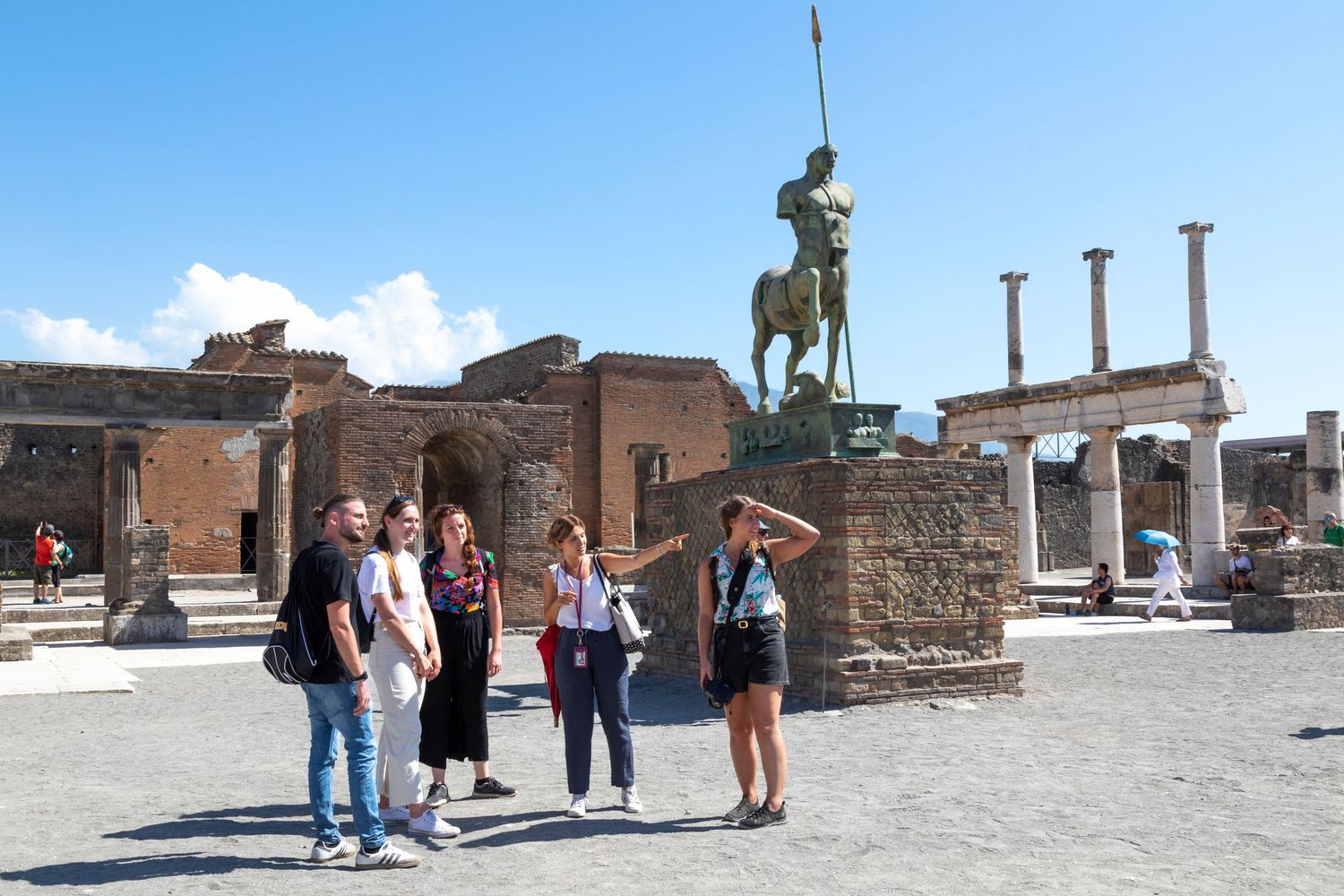
A wide view of Pompeii shows the streets, buildings and scale of the site. A photograph with a guide and a small group can explain another part of the offer: exploring the place with someone who knows it, stopping along the way and sharing the visit with other people.
That was the extra layer we were working on. The location still needed to be recognisable, with enough room in the frame to show where the group was and what surrounded them.
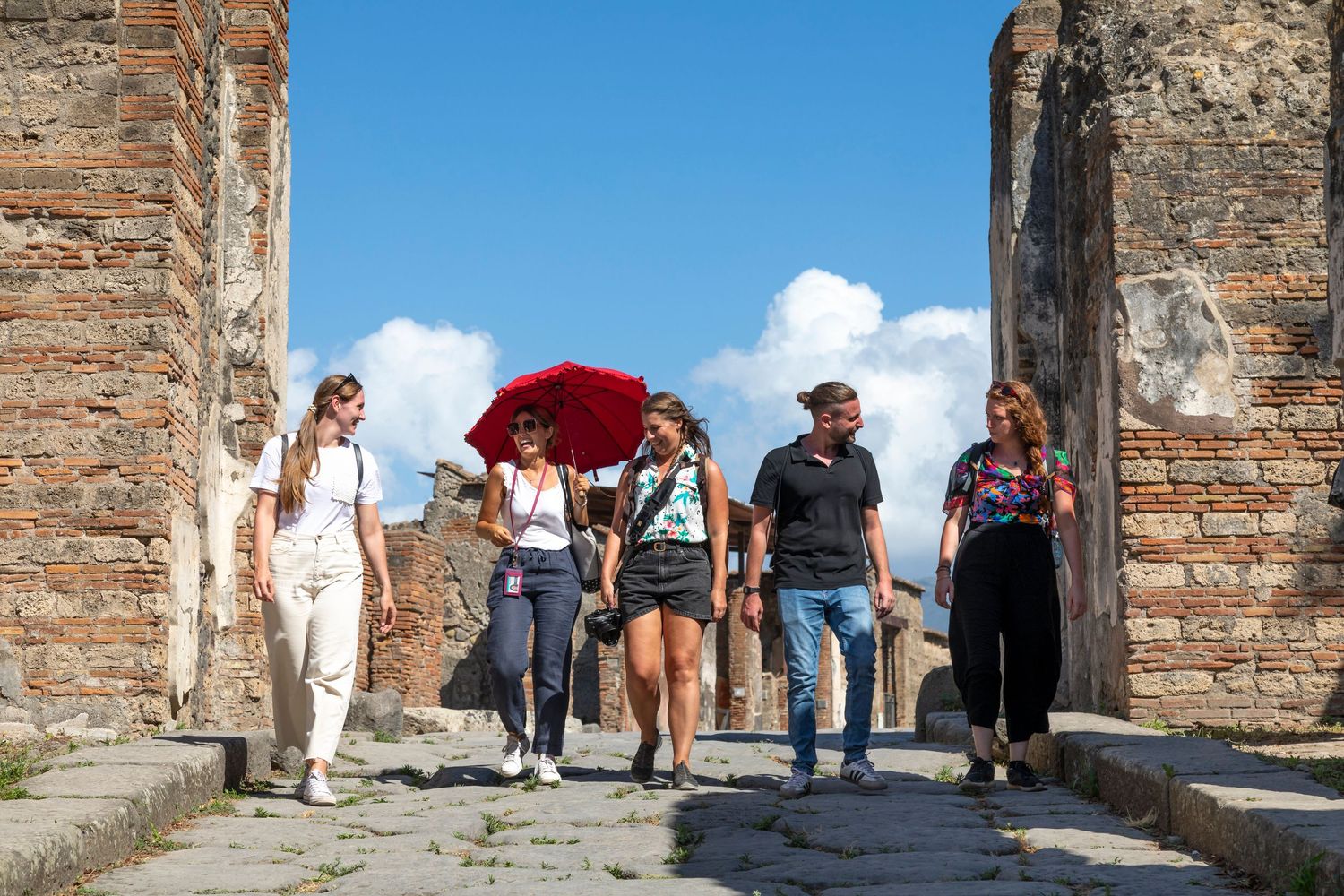
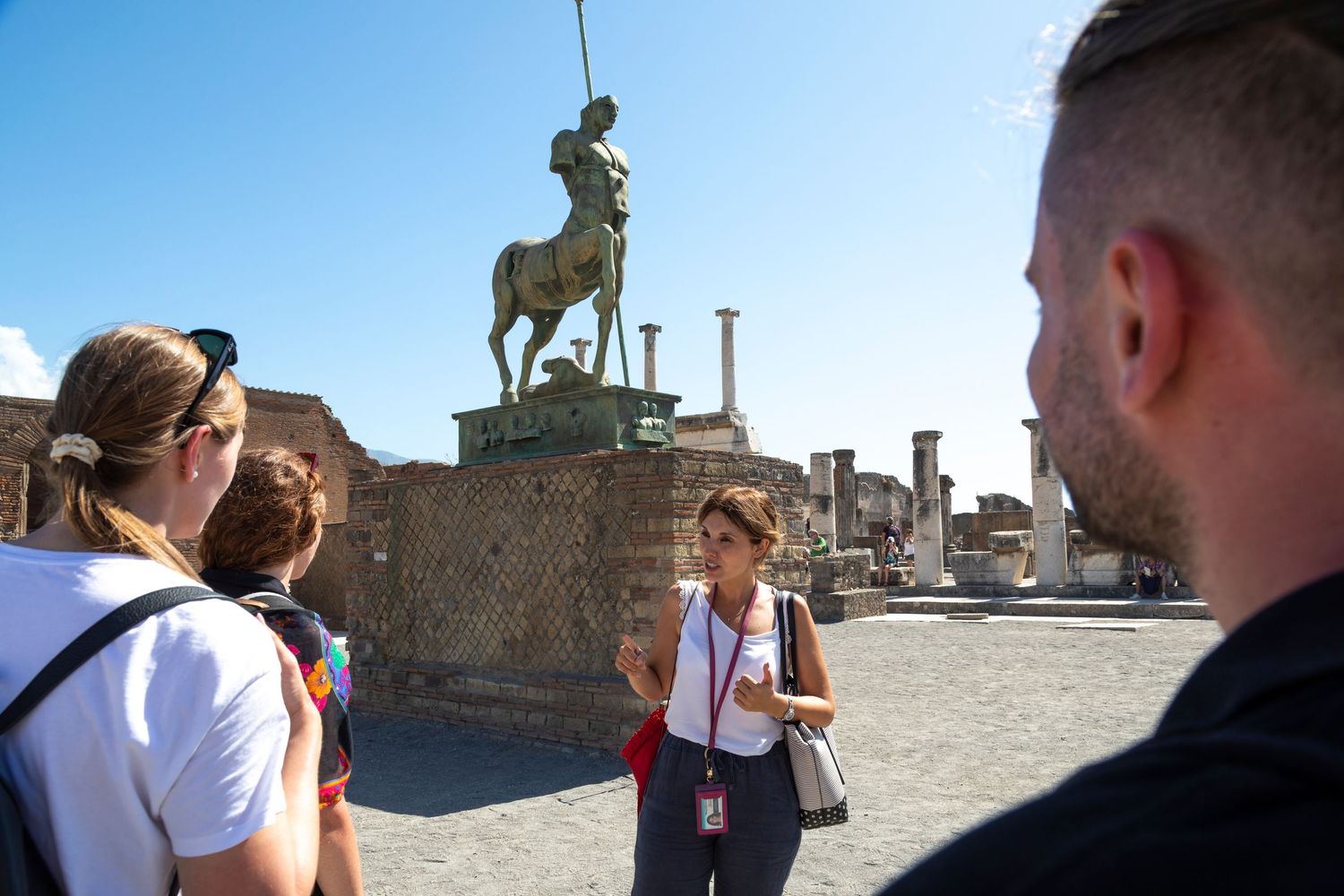
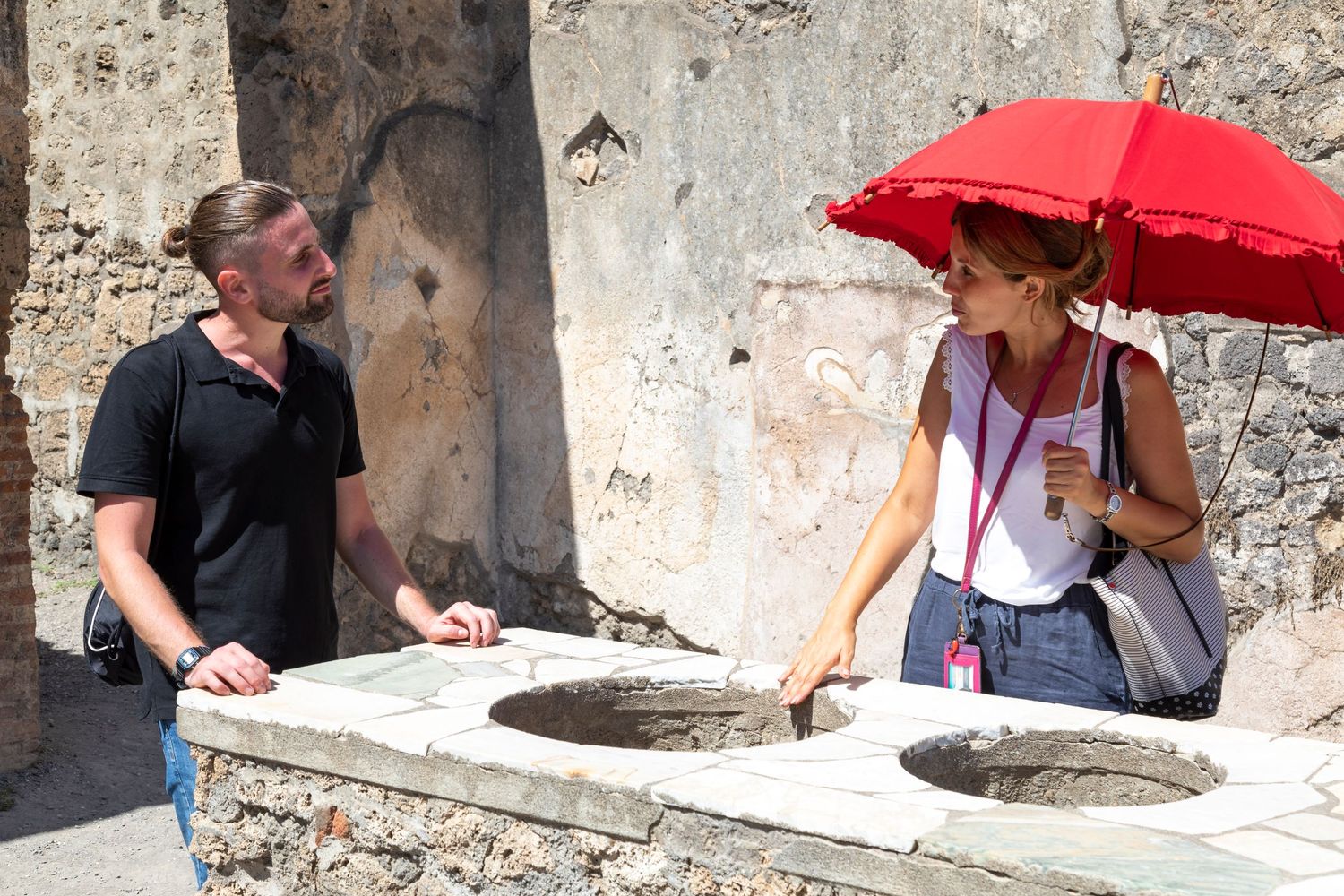
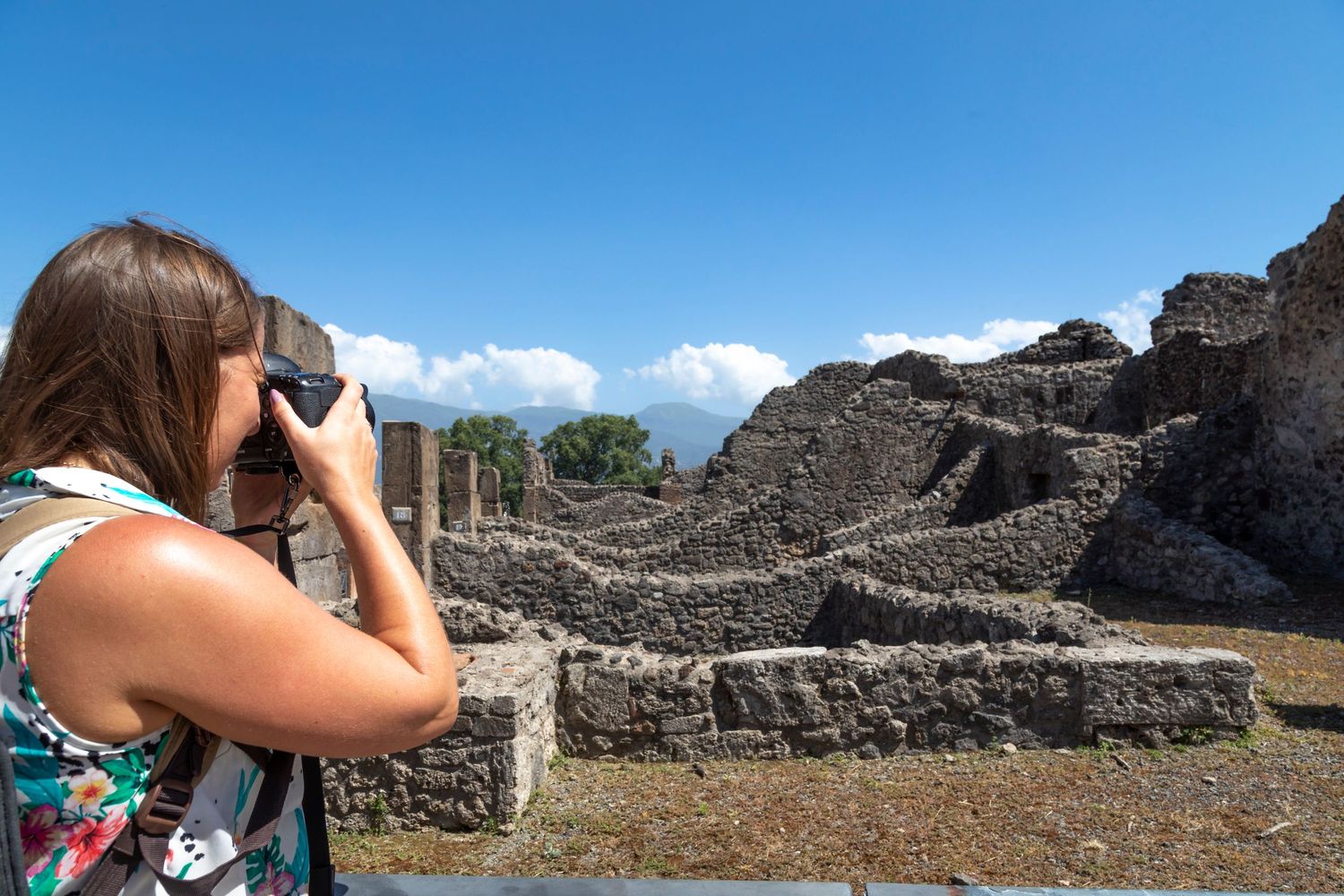
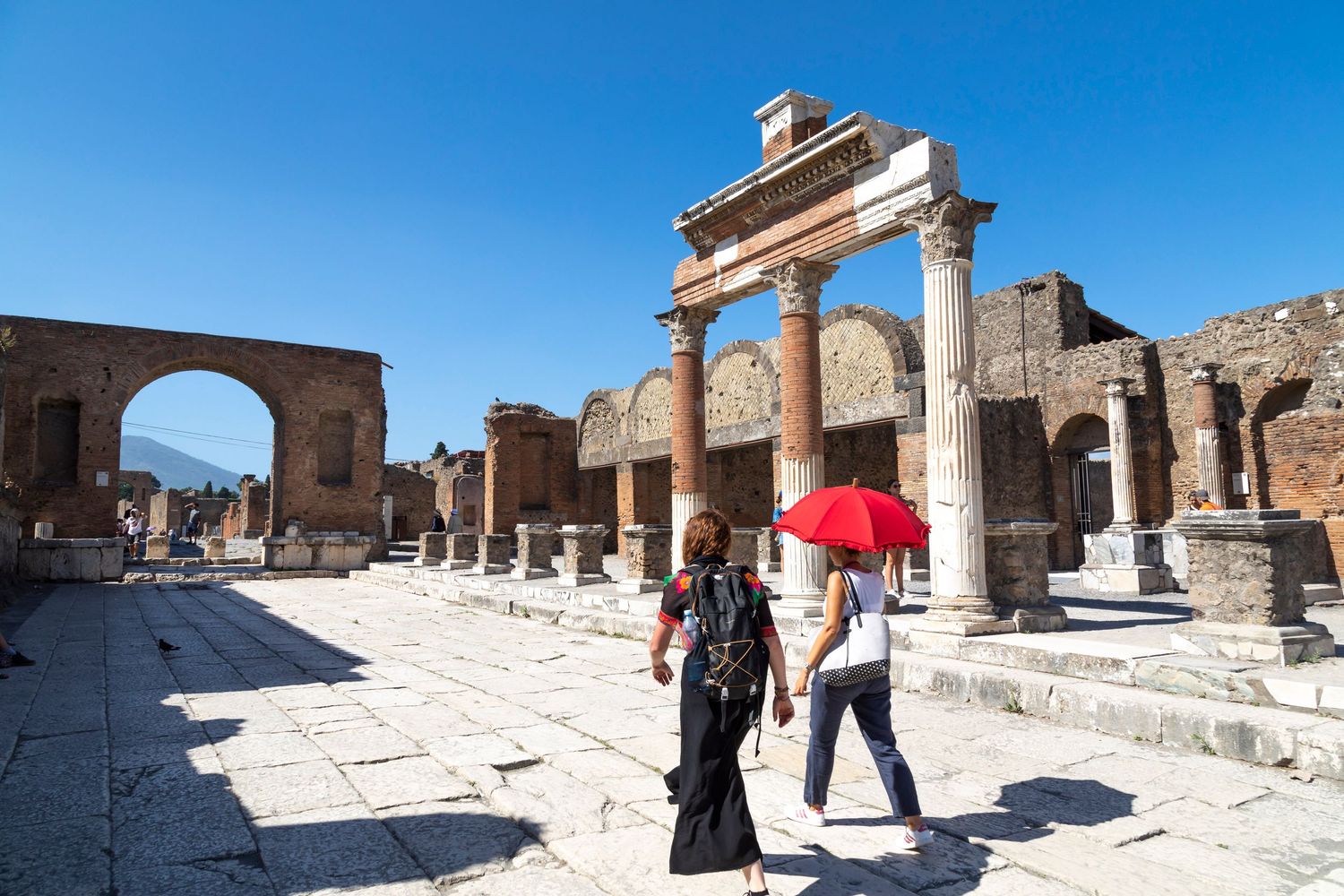
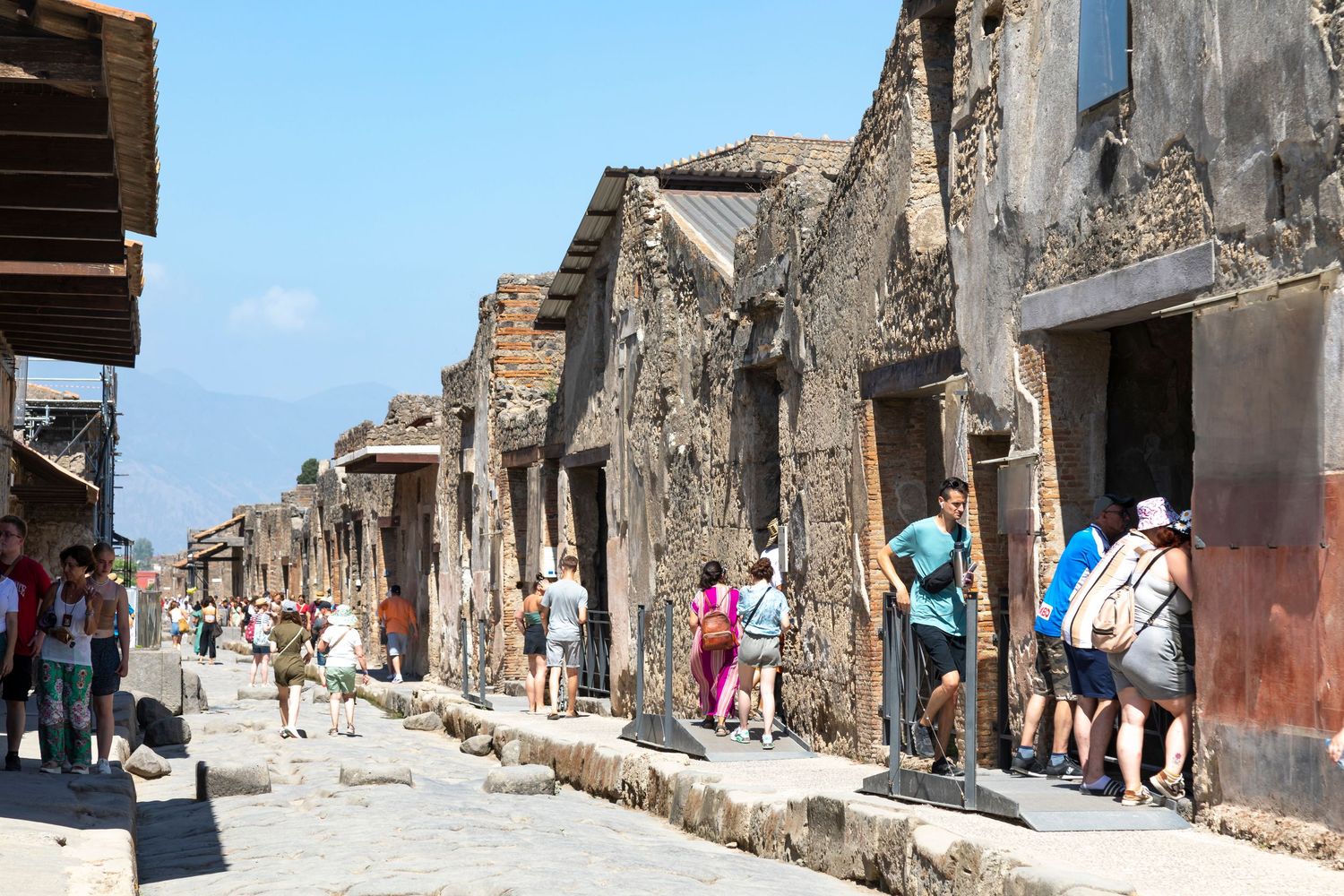
In the finished collection, there are wider walking scenes, closer views of the guide with the group, and people looking at or photographing details. Each gives the marketing team a different way to present the visit.
Who were the models, and how were the scenes arranged?
The guide was a real guide. The other people featured in the staged scenes were office staff from TUI Musement’s local team, volunteering to take part in the shoot.
We stopped at interesting locations where the guide would usually spend time during a visit. From there, I set up the photographs around the group and the surroundings.
Although the images show what looks like a guided visit, she was chatting with her colleagues rather than delivering historical facts for the camera. The conversation gave us something to photograph within the scene I had arranged.
That distinction matters when describing the work: these were deliberately staged marketing photographs. The people were colleagues taking part in a production, rather than paying customers photographed during their holiday.
Having a real guide involved helped connect the shoot to the places where a tour would actually pause. We had a reason to stop at each location and a relevant setting in which to arrange the group.
It was a different way of working from my horse-riding excursion photography at Rancho Grande, where I photographed regular customers during their outing. Both approaches have a place; the choice depends on what the assignment needs.
Working with midday sunlight and a packed itinerary
As I remember it, we had around half a day at Pompeii. Our wider itinerary was packed, and this was the time available to photograph the site.
The sunlight was harsh. We couldn't move the whole visit to early morning or take a slow day working through every possible viewpoint. I had to work with the conditions in front of me.
We also had other visitors to work around. Fortunately, it was relatively quiet during the heat of the day, so we could wait for people to pass before taking a photograph. That gave us brief opportunities to make the group clear within the scene.
The photographs show those conditions honestly: bright stone, strong shadows and people exploring in daylight. The production had to fit within the available time while still giving TUI a useful selection.
For a tourism business planning a shoot, this is why the schedule deserves as much attention as the list of locations. If you have flexibility, use it to consider the light and visitor flow. If the timing is fixed, agree the priority photographs so the available time goes towards the images you need most.
Showing the place as well as the people
The group photographs work best as part of a wider collection.
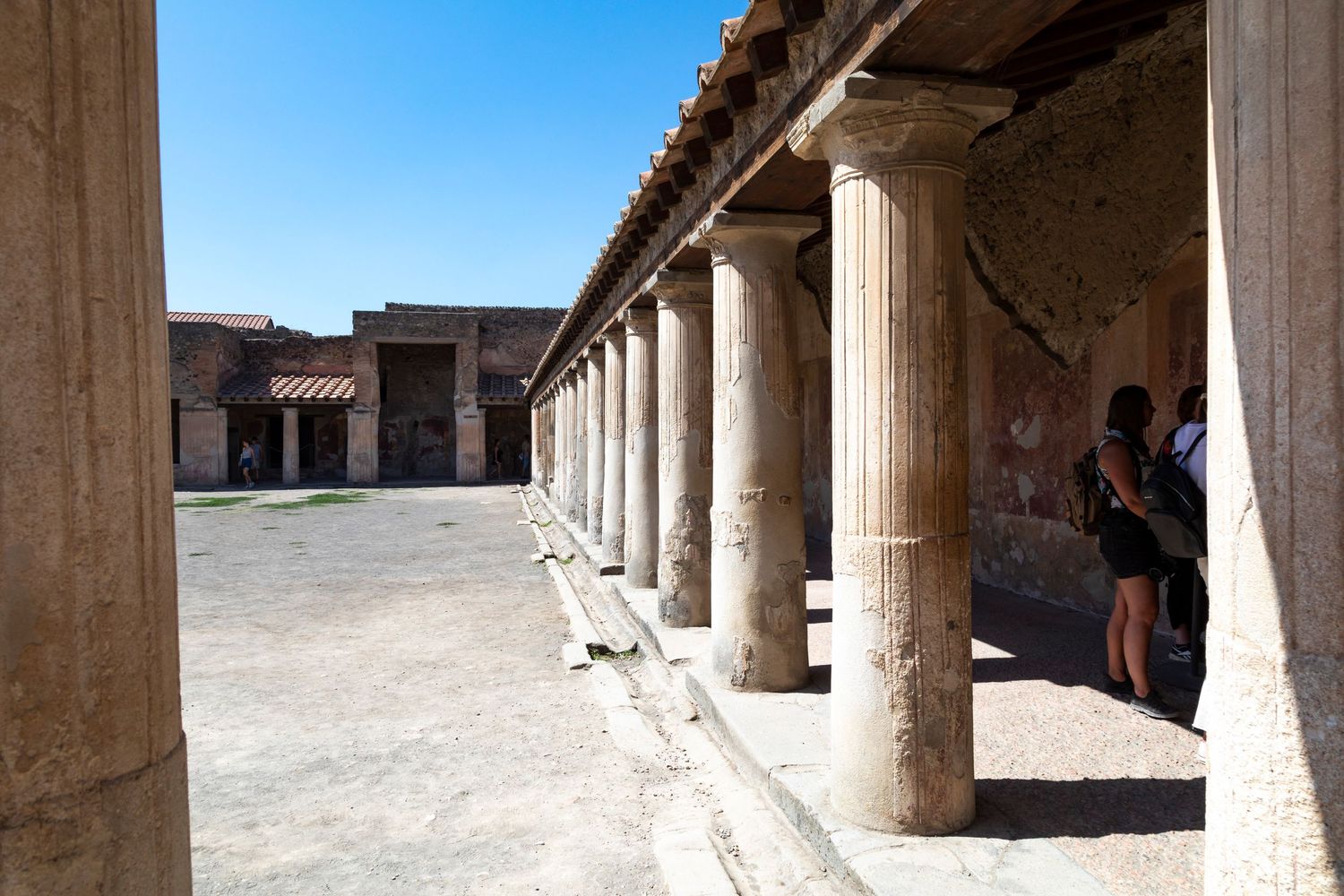
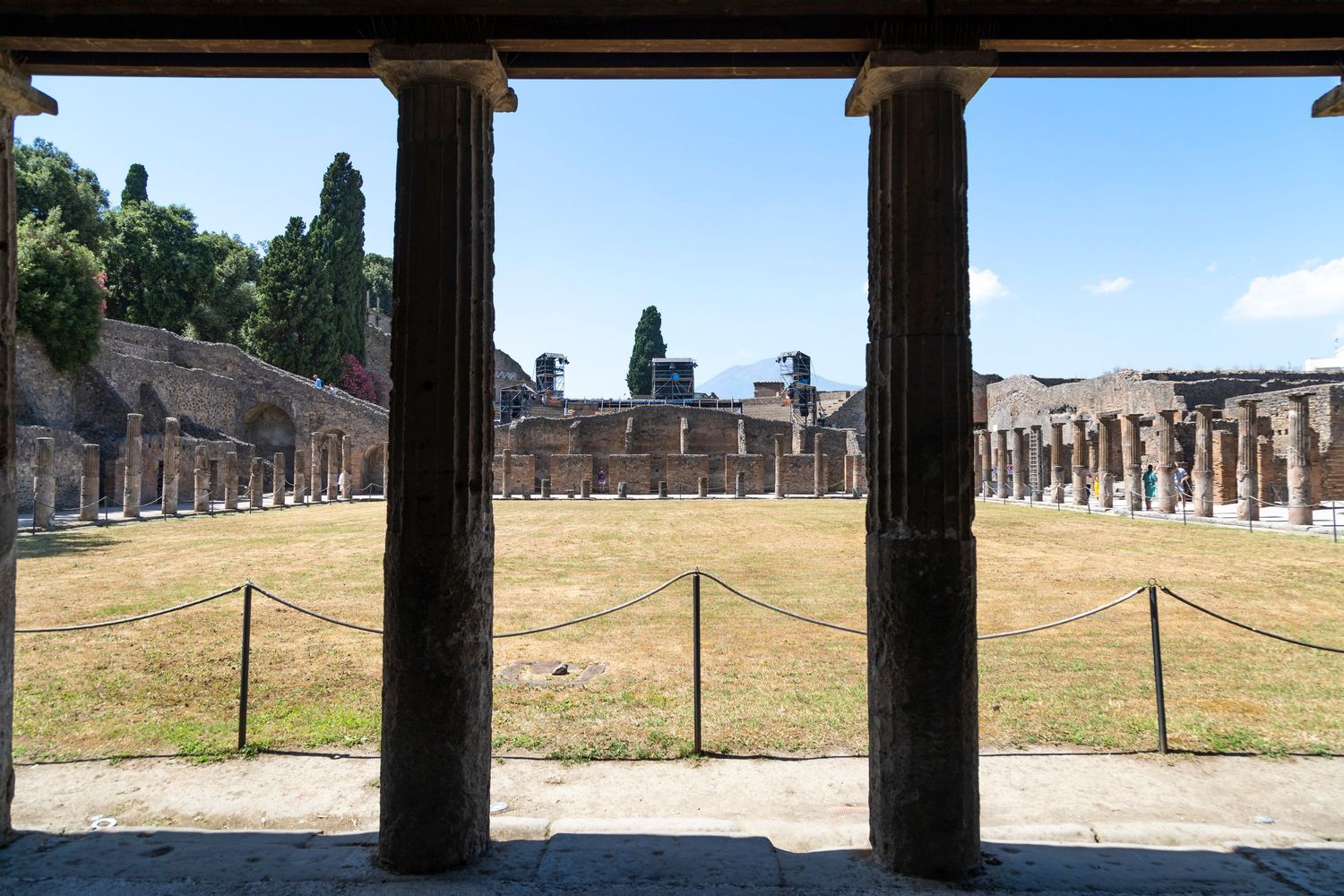
A walking scene places the models within Pompeii’s streets. A closer frame brings the guide into focus. Another view shows someone raising a camera towards a detail that has caught their attention. Alongside these are photographs of the site itself, including colonnades, stone streets and interiors.
Those location photographs give the viewer space to look at Pompeii. The people photographs then show how a visit might unfold within it.
For an excursion listing, that balance is useful. Someone considering a guided visit wants to see the attraction, but the guide and the experience of exploring are also part of what they are choosing.
It is a balance I would discuss with any heritage attraction or tour operator commissioning photography. The right mix depends on the product: what makes the place worth visiting, what the guide contributes and what customers will actually do there.
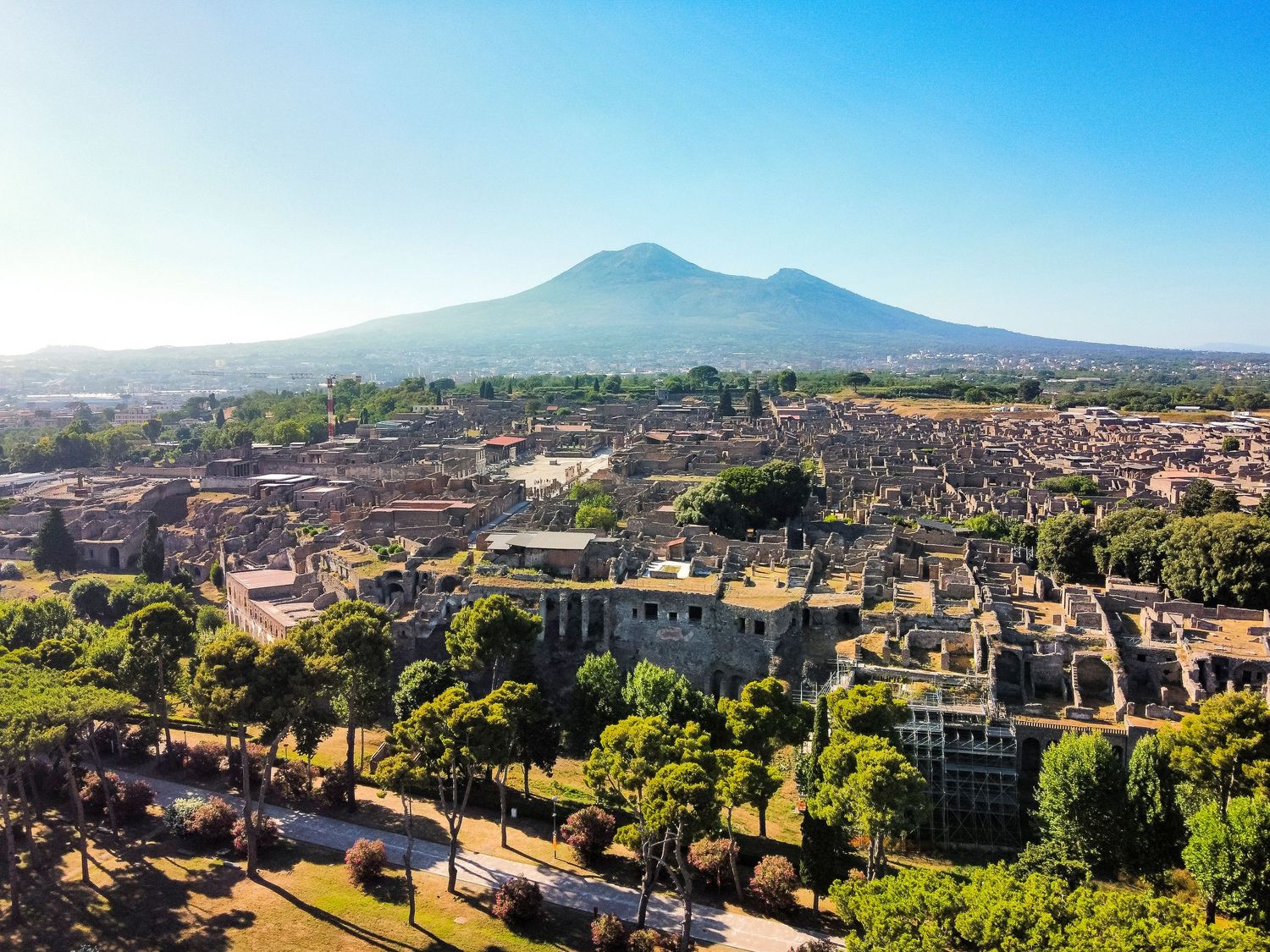
An aerial view from outside the site
I also photographed Pompeii from the air. Flying over the archaeological site wasn’t permitted, so I kept the drone outside the site and photographed towards it.
That viewpoint gave me a wider view of the ruins, the surrounding town and Vesuvius beyond. Alongside the photographs taken among the streets and buildings, it helps show the scale of Pompeii and its setting.
You can see more examples of my drone and aerial photography, including work for visitor attractions, tourism destinations and commercial clients.
Where are the Pompeii photographs being used?
As of October 2026, photographs from the assignment appear on TUI’s Pompeii and Herculaneum guided tour listing and its Pompeii and Mount Vesuvius excursion listing.
The published galleries include the guide with the group beneath her red umbrella and the models walking through the site. The Pompeii and Mount Vesuvius page uses one of the walking photographs as its main image.
Four years after the shoot, these photographs are still helping TUI present those excursions to prospective customers. They provide a visible example of the work in use on the booking pages it was created to support.
Explore the Naples example client gallery
You can browse more photographs from this assignment in my Naples tourism photography example client gallery, organised by location.
It shows how a collection from a wider destination shoot can be presented and browsed. Downloads, favouriting and the store are disabled in this public example; features in your own gallery are set up to suit your project.
Planning a guided-tour photography shoot
At Pompeii, the local team’s choice of excursions, the guide’s involvement and the staff volunteering as models all shaped the production. My part included helping develop the approach, setting up the scenes and making the photographs within the time available.
For a new assignment, I would start by discussing the experience you want to promote and the people who can help show it. Then we can plan suitable stops, the practical arrangements and a realistic amount of coverage.
My guide to planning tour and excursion photography covers the broader brief, including access, image priorities and the marketing formats to plan for.
More from the Naples photography assignment
Pompeii was one part of a wider collection covering heritage attractions, outdoor experiences, food, wine and city life. Explore the other shoots from the assignment:
- Herculaneum heritage attraction photography
- Mount Vesuvius excursion photography
- Wine tourism photography at Cantina del Vesuvio
- Heritage attraction photography at the Royal Palace of Caserta
- Naples city photography: streets, food and local character
For the wider project, read about my Naples tourism photography assignment for TUI.
Guided-tour photography FAQs
How should staff prepare if they are taking part as models?
Give them a clear idea of the activity, the time involved and where the photographs will be used. Agree clothing and anything they need to bring beforehand. They do not need to arrive with poses prepared; I can direct the scenes around the experience and the photographs we need.
Does an attraction need to close for a photography shoot?
Not necessarily. Pompeii remained open to other visitors during this assignment. Whether normal opening hours will work for your shoot depends on visitor numbers, access and how much space or control the photographs require. We can discuss that before agreeing the schedule.
What should we send you for a photography quote?
Send the location, the tour or attraction you want photographed, your preferred dates and where you intend to use the images. Let me know whether you already have staff, guides or models available. An existing excursion listing is a useful starting point, even if you have not written a full brief.
Need photography for your tours or visitor attraction?
I photograph guided tours, visitor attractions, activities and destinations for businesses and tourism organisations across the UK and internationally.
If you are planning a new excursion launch, updating a booking gallery or adding people to an existing collection of destination photographs, I can help plan and photograph the work.
You do not need to have everything arranged before enquiring. Tell me what you want to promote, and we can discuss the approach, availability and costs.
About the author
I’m Lee Charlton, a UK-based commercial photographer and former Global Photography Manager at TUI. My work includes destinations, excursions, activities and visitor attractions, creating photography for websites, listings and wider marketing campaigns.